Every restaurant has a general manager.
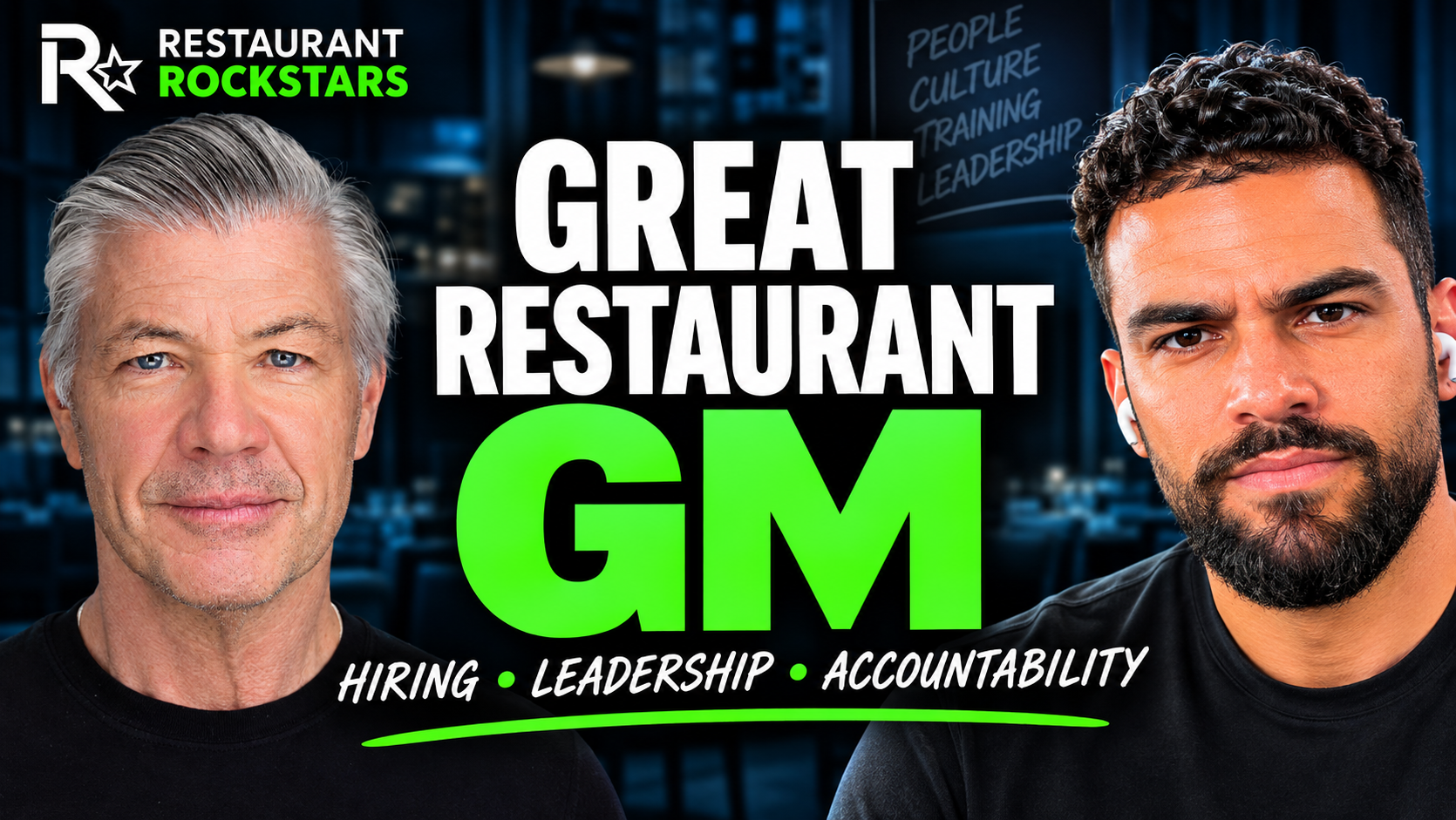
Not every restaurant has a leader. Will Dasco, founder of Hospitality By Will, was promoted to general manager at Hillstone Restaurant Group just after his 24th birthday and most recently ran food and beverage at a hotel with a members club. On the Restaurant Rockstars podcast, he and host Roger Beaudoin talked about what separates a great GM from a boss, and the habits that build a team people want to work for.
Lead With Emotional Intelligence
For Will, great leadership starts with reading the room. Every team member needs to be managed a little differently, and someone having a rough shift may be going through something outside work. When a mistake happens, he looks for the why behind the what instead of reacting only to the mistake.
Great GMs also appreciate every role, from the dishwasher and prep cook to the bartender and server. A restaurant is the sum of many parts. When one part isn't running at 100%, the GM's job is to peel back the layers, find out why, and know where to be and when.
Culture Is What You Live, Not What You Write
Anyone can write a mission statement. Culture is the set of values you show every day, especially under pressure. Will says leaders need to know who they are and what they value before they can guide a team anywhere. Guests can feel the difference the moment they walk in: a broken culture is palpable, and a great one feels like a warm welcome.
How Should You Hire and Onboard?
Will calls hiring the most important decision in any business. It starts with how your job post reads and how smoothly your interviews run. In interviews, he asks one thoughtful question and then stops talking, so the candidate can show him who they are. He also thinks like a casting director: someone applying to serve may be a natural maître d'.
Once someone is hired, treat them with the same hospitality you'd show a guest. Starting a new job is stressful, so:
- Hire in groups of at least two, so no one starts alone.
- Pair new hires with team members who want to train, and train your trainers first.
- Let new hires shadow a strong performer to see the target, then build skills over several days.
- Remember that people learn at different speeds.
- Keep one or two people in the hiring pipeline so you never have to rush someone onto the floor on a Saturday night.
How Do You Hold Staff Accountable Fairly?
Will calls a lack of accountability the number one killer of culture. His example: pre-shift starts at 4:30, the standard has been posted and shared, and two veterans walk in at 4:32. If nobody says anything, 4:32 becomes the new standard. Instead, he follows a simple path:
- First time: a private conversation that restates the standard.
- Second time: documentation.
- Third time: a different, more serious conversation.
It's uncomfortable, especially with long-time team members, but consistency is the point. Roger adds that fairness means holding top performers to the same standard as everyone else.
Make Pre-Shift the Most Important Part of the Day
Will's pre-shifts run at least 15 minutes, and 30 is best. He uses three I's:
- Inspect: Is everyone on time, dressed and ready to face guests?
- Inform: Specials, sold-out items, wine vintage changes and the week's focus.
- Inspire: Pick one value or idea and go all in on it.
The best pre-shifts become a conversation, where team members share moments from the floor instead of only listening.
Recognize What Goes Right
It's easy to focus on what goes wrong in a restaurant. Will balances that by calling out team members by name in pre-shift when a guest review mentions them, and by celebrating people who champion the standard and hold their peers to it.
Sell by Telling a Story
Suggestive selling turns guests off when it sounds like a car salesman. Will's approach is to know the product well enough to paint a picture, such as explaining why a velvety Napa Cabernet won't overpower the salmon a guest just ordered, and tying it to something the guest already told you they like.
Frequently Asked Questions
Q: What qualities make a great restaurant GM?
A: Emotional intelligence, empathy, an appreciation for every role on the team, and the consistency to hold everyone to the same standard.
Q: How long should a restaurant pre-shift meeting be?
A: At least 15 minutes, ideally 30. Use it to inspect, inform and inspire.
Q: What is progressive discipline in a restaurant?
A: A step-by-step way to hold someone accountable: a private conversation, then documentation, then a more serious conversation if the behavior continues.
Hear the full conversation with Will Dasco: listen to the Restaurant Rockstars episode "What Makes a Great Restaurant GM? Hiring, Pre-Shifts & Accountability" at https://www.restaurantrockstars.com/audio/510-what-makes-a-great-restaurant-gm?utm_source=blog&utm_medium=website&utm_campaign=ep510-what-makes-a-great-restaurant-gm