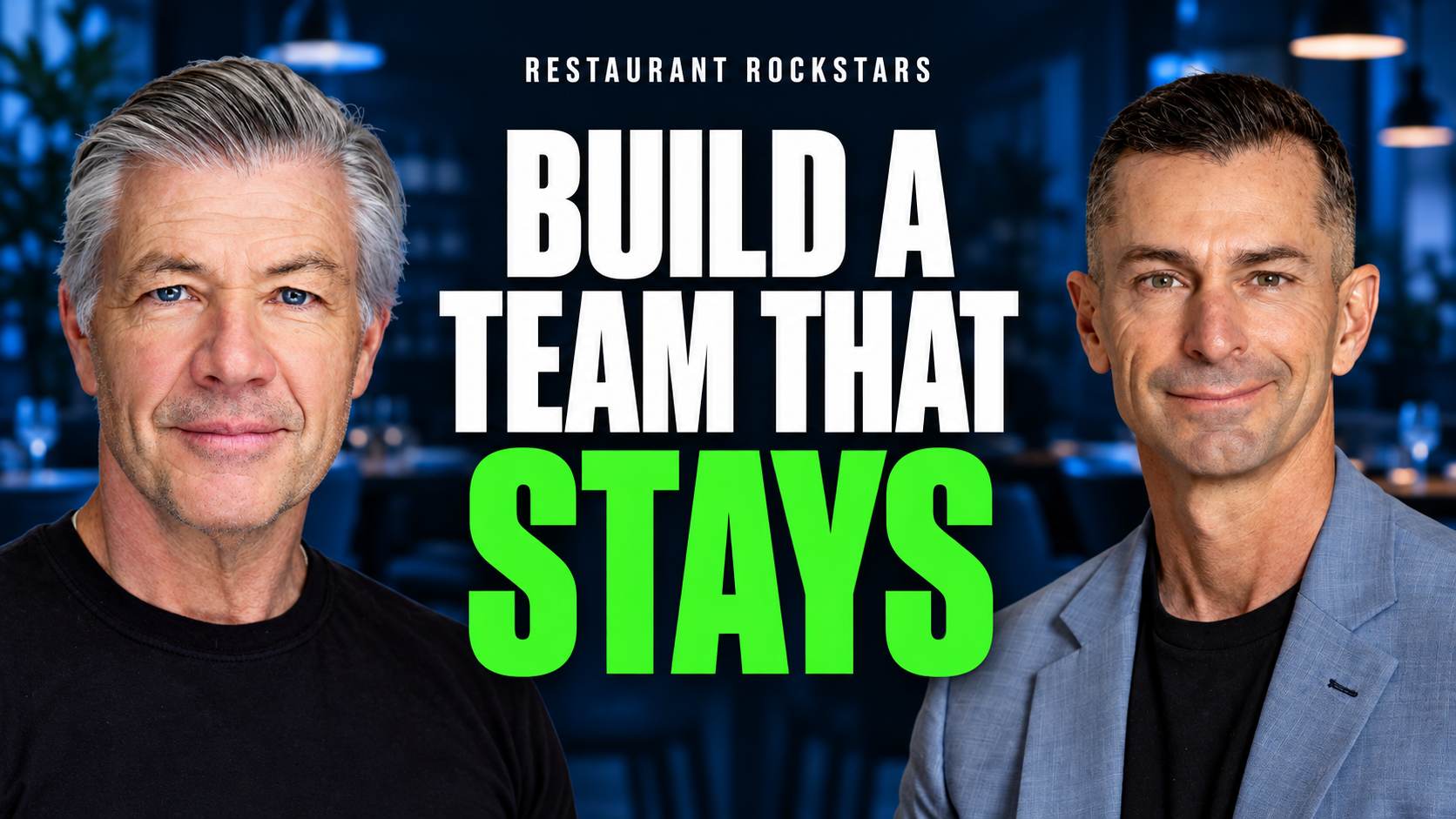
How to Build a Restaurant Team That Stays
How to Build a Restaurant Team That Stays
You fill an open position. You train someone. You finally get the schedule covered.
Then another employee leaves, and you’re right back where you started.
Sound familiar?
Restaurant employee retention starts with hiring people who meet your standards, welcoming them with a clear training plan, and giving them consistent support, feedback, and opportunities to contribute. Those practices give people reasons to stay and help protect the team you already have.
That was a major takeaway from my conversation with Dana DeVito on Episode 507 of the Restaurant Rockstars Podcast.
Dana is Co-Founder & COO of Elite Performance Associates and author of Now Hiring: Recruit Right, Grow Your Culture, Build Teams That Stay. He has hired and managed more than 6,000 people and faced 300% employee turnover in his own businesses.
He knows what it feels like to cover the gaps yourself. He also shared what he changed.
Define the person you need before you interview
When you’re short-staffed, the immediate problem is obvious: you need someone on the schedule.
But every person you bring into your restaurant affects the people already working there. A poor hire can mean more work for your strongest employees, inconsistent service, and another round of training when that person leaves.
Dana developed what he calls a “wanted poster” to identify the traits he wants in a candidate.
His core traits include drive, mindfulness, and humility. He then adds a quality that matters for the specific role, such as an outgoing personality for a barista.
Required skills still matter. But once a candidate has the fundamental ability to do the work, Dana looks closely at how that person approaches it.
Can they receive feedback? Do they consider the people around them? Do they show initiative?
Before your next interview, write down the behaviors you need to see in that position. Make those expectations concrete enough that your managers can recognize them, too.
Ask questions that get beyond rehearsed answers
Most applicants know they should say they’re dependable, hardworking, and good with people.
You need examples.
Dana asks candidates about their favorite customer or favorite person to work with. He listens for details that show an actual relationship. Can they remember the person’s name? What made the interaction meaningful?
He also asks about the hardest thing they have ever done, whether they succeeded or not.
That question helped him learn about a young candidate who had umpired baseball games beginning at age 11. Their conversation revealed how the candidate handled difficult interactions with adults.
The point is to understand how someone behaves when the situation gets challenging.
For someone without restaurant experience, look for examples from school, sports, volunteering, or other responsibilities. You’re looking for evidence of the qualities the role requires.
Make the first day feel like you were expecting them
Imagine showing up for your first shift and discovering that your manager forgot you were coming.
Nobody knows who will train you. Everyone is busy. You immediately feel like another problem to solve.
Dana brought up this scenario during our conversation, and it’s a detail worth paying attention to.
A new employee should arrive to a team that is prepared and happy to see them.
Before that first shift, decide who will welcome them, who will train them, and what they will learn. Schedule experienced people to support them when the work is likely to become difficult.
Dana also tells new employees that mistakes are part of learning and that the team is there to support them.
That doesn’t remove standards. It gives someone the confidence to ask a question before a small misunderstanding becomes a bigger problem.
Keep coaching after the initial training
You showed someone once. Does that mean they have mastered it?
We all know the answer.
Dana described a teaching approach built around setting expectations, demonstrating the work, allowing practice, and repeating the process.
That requires managers to stay engaged.
If an employee keeps missing the same expectation, find out why. Do they understand the standard? Have they practiced it? Are they getting consistent direction from different managers?
Address issues early and clearly. Give people the opportunity to improve before frustration builds on both sides.
And remember that your best technician may need help becoming a leader. Knowing how to perform a job doesn’t automatically teach someone how to coach, set boundaries, or have a difficult conversation.
Use five questions to make employee check-ins useful
Dana prefers ongoing conversations to relying on an annual performance review.
His approach gives employees a framework to prepare for and lead their own check-ins. Paraphrased from our conversation, the questions are:
What are your successes?
What are you working on?
What obstacles are getting in your way?
What can I do to help?
What are we committing to?
The employee comes prepared. The leader listens, asks for clarity, and helps remove obstacles.
Dana suggests weekly meetings when practical, or monthly meetings for larger teams. A focused conversation can take 15 to 20 minutes.
What I like about this is the ownership it creates. Your employee has a voice in their development, and you leave with a clearer understanding of what needs to happen next.
Give people a chance to improve the business
Some of the best ideas in my restaurants came from people who saw the same tasks every day.
A dishwasher might notice silverware ending up in the trash. A bartender might see a better way to organize service. Someone on the floor might recognize an opportunity to improve a guest’s experience.
But you have to invite those ideas.
In my businesses, I encouraged employees to propose improvements. When an idea produced a trackable bottom-line benefit, I could reward the person who contributed it.
Dana shared his own approach to involvement, including team-led initiatives that supported local first responders.
These examples give people something meaningful to contribute beyond completing their assigned tasks.
Ask your team: What is one thing we could do better, and how would you improve it?
Then listen and follow through.
Protect the team you already have
One of the hardest parts of Dana’s story was the morning he found himself with seven people in a business that needed 22, while he still had other locations operating.
He couldn’t solve that by expecting the remaining employees to carry everything indefinitely.
He described adjusting operating hours and recognizing his responsibility to support and protect his staff.
That matters. If your strongest people continually absorb the consequences of understaffing, you risk losing them, too.
Look honestly at what your team can deliver. Make thoughtful adjustments, communicate clearly, and show people that you understand what they’re carrying.
Start with one change this week
You don’t have to rebuild your entire operation tomorrow.
Choose one place to begin:
Define the character traits and behaviors needed for your next hire.
Prepare a clear first-day plan for your next employee.
Schedule a focused check-in with someone on your team.
Help a manager practice a difficult coaching conversation.
Invite one employee idea that could improve the business.
Building a restaurant team that stays requires consistent attention to the people doing the work.
Dana’s conversation reminded me how much leadership comes back to relationships, clear expectations, and giving people the opportunity to succeed.
Listen to Episode 507 of the Restaurant Rockstars Podcast, “Stop Restaurant Staff Turnover: Hire Better, Lead Better,” for my full conversation with Dana DeVito.
Roger
About Dana DeVito
Dana DeVito is Co-Founder & COO of Elite Performance Associates and author of Now Hiring: Recruit Right, Grow Your Culture, Build Teams That Stay. Having hired and managed more than 6,000 people and faced 300% employee turnover in his own businesses, he brings firsthand experience to restaurant staffing and leadership. He continues to operate coffee shops while helping leaders strengthen their teams.
Watch the Interview
Free Restaurant MasterClass
Get the systems, tools, and training you need to improve your team, operations, and profitability inside The Profitable Restaurant Operator Academy.