Episode Summary
This episode is for independent restaurant owners and operators who want to learn restaurant SOPs (standard operating procedures) from a national chain: Lance Trenary, President and CEO of Golden Corral, explains how the buffet brand plans prep, schedules labor, cross-trains teams, retains people and keeps delivering value when guest counts are unpredictable.
Roger and Lance cover how Golden Corral forecasts guest counts in 15-minute increments across about 150 buffet items, why the company focuses on retaining people more than recruiting them, and how it stays relevant after 53 years. Lance also shares how he stays close to the front line, how the brand markets to different guests, and the smaller building formats the company is testing.
What You'll Learn
- How to define value for guests: Lance says value is more than price and includes hospitality, a clean environment, and variety so everyone at the table finds something they enjoy.
- How to match labor to production: Golden Corral measured the production time for every item it makes, then matched those times to its prep schedule so it does not waste labor.
- How to use cross-training as a backup plan: cross-trained team members can help a coworker who is behind or move to another station when a teammate is ahead.
- How to build retention through culture: Lance says pay is usually third or fourth on the list of what people want, after whether their manager cares about them, listens to them and asks for their ideas.
- How to get front-line feedback: when visiting restaurants, Lance asks team members what the dumbest thing he has asked them to do lately is, and which menu items guests do not eat or get thrown away.
- How to stay relevant over decades: stay close to the guest, listen for signs they are changing habits, and follow a fail fast, fail forward approach to testing new ideas.
Frequently Asked Questions
How does Golden Corral forecast how much food to prepare?
Golden Corral forecasts guest counts in 15-minute increments and plans how much of each item to go through based on historical averages. Lance Trenary says the buffet has about 150 items, and some, like pot roast that takes 13 hours to slow roast, need to be planned the day before. He adds that guest counts have recently become more unpredictable, with spikes around holidays and erratic day-to-day dining.
How does Golden Corral manage kitchen labor with so many menu items?
Golden Corral measures the production time for every item it makes and matches that to its production cycle. Lance Trenary says a prep person can be assigned a set list of items, such as 19 for the day, with a known time to complete them. Team members are cross-trained so they can help each other if someone gets ahead or behind.
How does Golden Corral keep employee turnover low?
Golden Corral focuses on retaining people more than recruiting them, starting with careful early hiring for shared beliefs and values. Lance Trenary says retention in the corporate part of the business runs about 96 to 97 percent, or about 4 percent turnover. He says people want to know their manager cares, listens and asks for their ideas, and that pay is usually third or fourth on the list.
What does Golden Corral do to recognize and support its team?
Golden Corral offers wellness days for management teams, plus a financial assistance fund called GC Cares. Lance Trenary says wellness days are awarded midyear if the company is on plan, are based on tenure, and can run up to eight days, with the company paying for the trip. GC Cares helps coworkers with situations like medical issues, a death in the family or hurricane damage, and is funded partly by corporate and partly by voluntary franchisee contributions.
About Lance Trenary
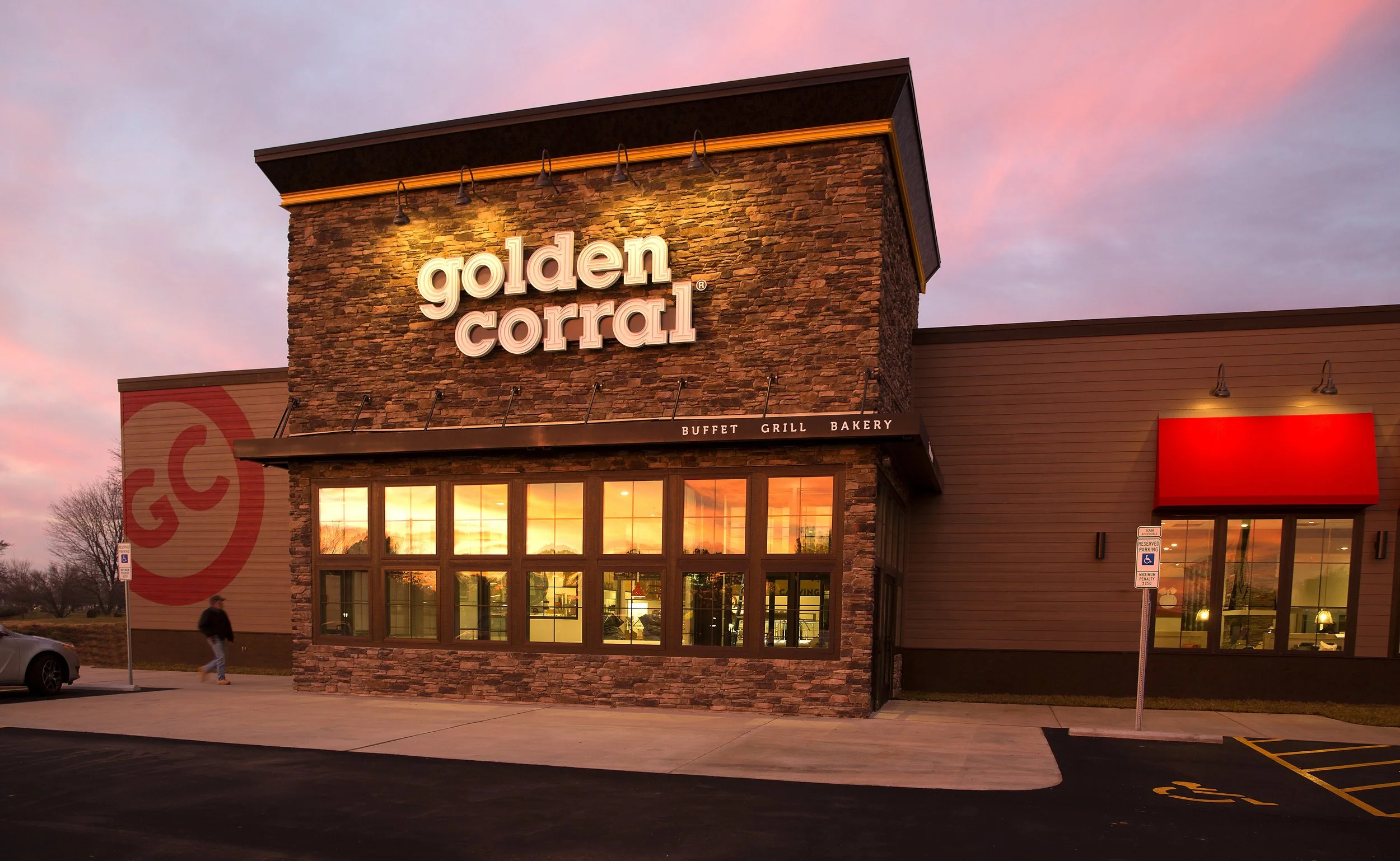
Lance Trenary is President and CEO of Golden Corral, a buffet restaurant brand that operates in 38 states. He is the third CEO in the company's 53-year history and has been with the company for 41 years. He started washing dishes in his father's restaurant at age eight.
About the Host
Roger is a restaurant entrepreneur with 25+ years of industry experience and the founder and host of Restaurant Rockstars, a trusted resource for owners who want to increase profits, streamline operations, and build thriving businesses. Through real-world strategies and conversations with industry leaders, he helps restaurant operators lead stronger teams, maximize profitability, and achieve lasting success.
Connect with Lance Trenary
Follow Lance Trenary on Instagram
Follow Lance Trenary on Facebook
Resources Mentioned
Kids Eat Well program from the National Restaurant Association: a program Golden Corral participates in to offer balanced meals for children.
GC Cares: Golden Corral's financial assistance fund for coworkers in its company and franchise system.
Run a Smarter, More Profitable Restaurant.
Discover the proven systems & solutions that drive sales, train staff, and maximize your margins.
Explore The Restaurant Academy now: https://restaurantrockstars.com/joinacademy
Connect with Restaurant Rockstars:
LinkedIn Restaurant Rockstars: https://www.linkedin.com/company/restaurant-rockstars
LinkedIn Roger Beaudoin: https://www.linkedin.com/in/roger-beaudoin/
Facebook: https://www.facebook.com/restaurantrockstars/
Instagram: https://www.instagram.com/restaurantrockstars
X: https://x.com/RestaurantRock1
Listen to the Restaurant Rockstars Podcast on Your Favorite Podcast Player:
iTunes - https://apple.co/2WaKyqV
Spotify - https://spoti.fi/3xGuOd0
Stitcher - https://bit.ly/3iFGAAb
Soundcloud - https://bit.ly/3lYBhho
-
Independent restaurants can learn so much from the biggest leading chains. Critical financial controls, maximizing profit, finding, motivating, retaining the best team members, developing leaders you can count on to improve your business, balancing food quality, portion sizes, and variety with your menu prices so you always add value to the guest experience.
Today, I'm with president and CEO Lance Trenary of Golden Corral, and we get his best practices on all these SOPs, or standard operating procedures. So stay tuned. You don't want to miss this. If you're liking these episodes, please subscribe and follow our YouTube channel for more In the Trenches operating nuggets.
Now, on with the episode
I bet you're a sports fan and you're probably really passionate about your sport. You want your team to not only win games, but be champions. You know the best teams have a coach. A coach's job is to get all team members pulling in the same direction and giving optimum performance in each position.
What about your restaurant? If you're having labor challenges finding, motivating, and retaining great people, if your business is not as profitable as it needs to be, if your team aren't maximizing sales every shift, I can help. Set a free 30-minute call and let me know your biggest restaurant challenges.
Email me, roger@restaurantrockstars.com.
Lance, welcome to our show today. I'm glad to have you here
thank you, Roger. I appreciate the opportunity
Golden Corral certainly needs no introduction, and you've got a long, illustrious history in the hospitality space, so I'm really excited for our conversation. Let's talk about value. I think that's on every restaurateur's mind. Obviously rising prices, but it's more than price. What does value mean to one of your guests, and how do you deliver value amidst inflation and all the things that are impacting restaurant operators today?
Sure. Roger, it's a great question, and it's probably the hottest question in the industry right now is how do we deliver value ? you're so right. It's much more than just price. Price is a component, but it's not just about price, because the guest is looking for restaurant brands, dining-out experiences, if you will, they feel like they can trust the entire experience.
They want the hospitality. They want a clean environment. They want to be able to have the variety and choice so someone, everyone at the table can find something that they really can enjoy, because they may not get to dine out four or five times this month. It may only be two or three times. And so when they dine out, they want to make sure that they're getting the best overall experience for their money.
And so guests are defining value differently than just purely price as it's been in much in the past. So I think from that standpoint it's incumbent upon us to constantly be finding ways to exceed expectations to think about ways that the guests can come in and say, "Yes, I plan to give you, in our case, 16, $17 for a buffet my expectation is to get these proteins and these vegetables and a salad." But how can we deliver something that they were like, "Whoa, I wasn't expecting that in a buffet restaurant," or, "This is something that's exceeds what I anticipated when I walked through the front door."
that certainly seems like a competitive advantage in many ways. the entire family, everyone can find something that they like, and the choices are unlimited. Is there, is it an unlimited type buffet where you can keep going up and you have to average out the cost where, a guy like me that eats a lot versus my wife who doesn't eat a lot, and it's the price is the same?
Is that how the model works?
Yeah, absolutely. We're a very high volume, high traffic model, and we make a very small margin on a whole lot of guests. And our traffic counts are typically some of the highest in the industry on a per unit basis. But that's really what the secret to the buffet is you gotta get a lot of people through to average out exactly the description.
You nailed it. Me and my wife, we're gonna offset, and we're gonna come in together, and we're gonna deliver a small margin to my restaurant that, we can make a living on. We just have to have a whole bunch of them.
Okay, that makes perfect sense. I'm thinking about I'm comparing this to, I had independent restaurants, of course, and we did catering, and it was a great thing because we had a certain head count in advance that people would pay for, and sometimes there was breakage and people wouldn't show.
But we literally prepared for the number of guests coming in. Do you have it so dialed where you know on a day-to-day basis in every one of your locations exactly how many people will come, and there's not a lot of waste and spoilage with this huge buffet, and you're replenishing them, but you're not losing a lot to waste?
Would you say that's... that's a science unto itself, but that's what you must have to do
it is. And, we've got some great tools. AI continues to enhance it. but we have it down to 15-minute increments now. We know how many guests are expected, and we know... We have about 150 items on our buffet,
Wow.
we
Yes
to 15-minute increments how much of every single item we should be planning to go through based on historical averages.
So I can tell you, the day before we slow roast our pot roast. Most of our products are made from scratch, and
wonderful. I love pot roast
so our pot roast takes 13 hours to slow roast. So we have to know the day before what in this case, what Wednesday's or Thursday's guest count's gonna look like, and we have to know, in advance what the amount that we should prep and then the amount that we should cook and then the amount that is prepared for that day's business.
But Roger, that's what's really the challenge in our industry right now, and for us in particular, is guest counts have become a little more unpredictable than what they have historically. We're seeing some very odd... We'll see some spikes around holidays.
Yes
guests are probably saving up for special occasion-type dining right now, and that day-to-day dining is very erratic for us.
And from that standpoint, it's been quite a challenge because when you, dial in your business so tightly that guests in 15 min- 15-minute increments, you know your product usage in 15-minute increments, and then all of a sudden, that just goes out the window, and you're really trying to guess day to day what those numbers are.
We're, we're pretty good at adjusting fast, like I said with pot roast is a great example, a lot of our products are multi-day preparation. And it becomes more and more of a challenge for our operators
So there always seems like there's some sort of a hindrance to doing great, steady, consistent business, and I'm wondering how obviously the war is affecting that. 'Cause obviously diesel's going through the roof, the cost of goods in your supermarket is going up, price at the pump keeps going up, and that definitely affects discretionary income for a lot of your customers.
Are you adapting to that in a certain way? You're not lowering your prices, of course, but are you offering any kind of promotions or specials that bring people or keep them top of mind with you to keep them coming in?
Yeah. That's so important for us is to, what you just said keep Golden Corral top of mind. When it comes out a guest perspective that they're choosing where to dine they're going through their list mentally "Yep, we could afford that. Yep, we can afford that.
Yes
too expensive for me." So we have to make sure we remain very relevant when it comes to the guest's choice, when dining out. So things like we're very specific about, w- we sell one thing. We sell a buffet, and if you're gonna upgrade anything, it's you get a drink. So our options are much more limited in the way that we can market to our guest around menu or development of that nature. So we have to think about how we can bring affordability to the discussion as well
Of course
we know that our guests are one of the primary targets are young families.
And so in particular, we've spent a lot of time marketing and advertising and even discounting in some cases kids. So for instance, right now we've had this America 250 value deals going on, so celebrating our nation's 250th
Love that.
so we have Amer- American 250 value deals going on at Golden Corral, and they're always changing and they're always evolving. We just came off of 250 kids, which is in some cases is much as a $7 discount in
Oh, wow.
But it's a hook and it's a marketing promotion
Exactly. It's to get... And we've massively changed the trajectory of our... We had a almost a seven-point meal count change overnight with this particular promotion. It's very expensive to do, don't
Of course
but it got us in the conversation
Let me ask you because I learned a long time ago that the kids often determine where the family eats out, and you certainly have a family-friendly place. Is there anything special you're doing besides that pricing to attract kids to make it fun? And I don't, I'm not suggesting that you have a play place like a McDonald's or anything like that, but what do you do f- to entertain the kids when they're done eating and the parents still wanna have a good time?
kids love Golden Corral. We're one of the highest requested brands for young people because they're in control. They get to go up to the buffet, they get to fix their own plate, they get to
That is fun.
and they love that independence. And we're constantly innovating around new kids friend- kid-friendly items that the parents can also feel good about.
We participate in the National Restaurant Association's Kids Eat Well program, and that's that children can come into our restaurant and find a very balanced meal. We typically have 12 to 15 fresh vegetables on our bar. We have a variety of proteins from fish to chicken to sirloin steak, whatever. We've got the salad bar and all that. So the parents can feel good when they walk through the front door that they can get a good, healthy meal for their kids, and their kids can still select. If they're trying to get their kids to eat broccoli we're a great place 'cause you can put a little cheese sauce on top of it at our buffet as well.
There you go
they get the opportunity to go up. We have ICEE machines, we have soft serve machines, we have all these chocolate-dipped
Excellent. Oh, wow. No wonder.
a opportunity to have a lot of fun right at the end of the re- at the meal as well.
So you're a draw for all age groups at this point. That sounds wonderful
Our our tagline is the only one for everyone, and
Oh, that's good
like that fits us perfectly
Yeah
if you're, if you wanna indulge, we're a great opportunity for you to indulge. If you wanna eat healthy, you can eat healthy in our restaurants. If you wanna feed the kids or you wanna feed seniors, regardless of any age group, we have an opportunity to have you have a great dining experience with us
From kids right to the grandparents, you got them all covered.
You got it.
Let me ask Lance, do you have the opportunity to serve any beer or wine in any of your locations?
We do in a few but I tell you Roger it's few and far between. We only have it in about 10 restaurants, and it's usually less than 1% of our sales. It's... We're very much a family dining restaurant, and it doesn't necessarily fit. During COVID, we started trying it a little bit, just to see if we could broaden our scope.
But our guests were like thanks, but no thanks." That's not something that
Okay.
interests them
Yeah, I only ask because you said that there was a chance to upsell on the drink, so I'm curious 'cause obviously that would be another something that certain people might like. But yeah, I guess if it's not on brand or strategy, then it doesn't make sense. And you've tested that, so you know what works and what doesn't.
back to wow, you said 100 and something items on that buffet. That tells me, and correct me if I'm incorrect, that your labor in the kitchen must be very high, even though it's offset by having no server labor. Tell me about that. What does it take to prep all those different food items?
Yeah, no it does. I've heard you talk on your podcast in the past about the most important thing in the restaurant is operating systems. And, that's really, the way we focus in on our business. We have incredible production systems. We're very efficient in the back of the house. But labor does... That's a, it's a big part of our equation, and so we have to be very cognizant of how our productivity levels are by position. We have to do a lot of cross-training, and we're constantly... we actually did some work about actually just before COVID. It was very timely for us because it really came into play. But we went through and had a group measure the production time for every single item that we produce. So I can tell you how long it takes to make our tuna salad. I can tell you how long it takes to make our seafood salad, how long it takes to hand carve our steaks in the meat room and then get them seasoned. all of those things we've got down to we know to the minute how long it should take. And then when we match that with that production cycle that I was talking about earlier, we can zero in and not waste any labor by saying, "Okay, I'm gonna bring a prep person in, and they're gonna prepare these 19 items today, and this is the amount of time it should take them." And if for any reason somebody gets ahead or behind, I've got people cross-trained so that they can jump in and say, "Hey, let me get you help, some help to get caught up." Or, "Hey, you're ahead. let me go help you get you over here in the bakery to help us make our yeast rolls," whatever it might be.
That, that is really so important. The only thing I will say is that we do have server hours in our restaurants. I'm a big believer that the hospitality factor, just because we're a buffet, the hospitality factor should not go away. So
thank you
deliver drinks. They still clear dishes. They still help the guest, and many times they'll bring them, fresh yeast rolls, or they'll go get their dessert for them or a lot of things. Our servers do very well in our restaurants because we focus in on that extra level of hospitality. That's one of those above expectation that people have.
When you go to a buffet, you don't think about service. we deliver a high level of service and and encourage our servers to do everything from... We have a conte- a, a
Call me
where they can actually learn the customers' names and something about them, and we have pins for them. So we have 50 clubs, 100 clubs, 500 clubs. I have some servers that are a member of 3,000 clubs that they know 3,000 customers by name and something about them.
Wow. You're definitely striking a chord with me because I always thought it was important for any front-of-house person to introduce themself by name to the guest, make those relationships. And over time, it brings so many people back into the restaurant asking for those people by name because they made the experience special.
And to me that's just one definition of hospitality. But that is really what our business is about. And it sounds like you're hitting that square on the head
totally agree. And it's so important for us because, historically now not in current times, but historically, meaning prior to this year, our most loyal guest eats with us about 70 times a year, so
thats loyalty
a week. On, on average, our servers are seeing our guests four, five, six times a month they can get to form a relationship with them and know something about them. Here comes Mr. and Mrs. Jones. They like their
Terrific.
coffee black
Yeah
extra creamers, or, whatever the case may be
And you remember those little nuances that's a personal touch. And there's a lot-- I don't need to tell you, there's so much technology out there that's trying to make things more efficient, but some of it is detracting from the hospitality experience, trying to replace that human touch, trying to cut labor, because labor is a challenge.
We all know that. But I agree with you. It, it should never detract from true hospitality, and people will always be loyal to a place that knows their name and treats them like they're something special. So it sounds like you're getting that going too.
Yeah, absolutely. It's it's an important part of our business, no doubt
Now, I also like that you mentioned the cross-training piece because that is so important. It's a backup plan. Some restaurants might look at that as an extra cost in training, to train people on multiple stations, multiple positions. But think about what happens when anything goes sideways and you've got people that can jump in multiple places at once.
That's proven to work for you, it sounds like.
Yes, absolutely. We spend a lot of time focusing in on our training, improving the quality of our training making sure that people are cross-trained, that we have... i'm a big believer, I'm a dish room to the boardroom guy. I started in my father's restaurant at eight years old washing dishes, standing on a milk carton in front of a three-compartment sink.
So
Terrific
subscribe to child labor laws, I promise you. But anyway,
It's in your blood now, Lance
I like having a career path for people. If they want to be the best hot cook in our company and that's their career aspiration, hats off to them. We love them, we need them, and we want to make sure it's a great environment for them. if they say, "You know what? I want to move into management at some point," we have a career path for them. My system is full of franchisees that have followed the exact same career path that I have. I've got one right here in the Raleigh market that came to our country worked under a TPS, and then has started as a server, worked his way into as a s- assistant manager, then manager, and then eventually got the opportunity to buy his restaurant as a franchisee. Now he owns three restaurants, employs 200 people
Amazing
and does over $15 million in annual revenue.
There's a success story.
of stories,
I agree.
cool about our industry.
I know
even in difficult times, there is so much opportunity in this industry for people to grow careers and to be able to have opportunities they might not have otherwise ever even dreamed were possible.
I can-- We have a lot in common. I started out in the dish pit as well in a country club, and I was probably a dishwasher for maybe three, four weeks, and the owner saw something special in me, and they promoted me to be a bartender, and they trained me, and that's really where I learned hospitality.
And there was something innate about me. I was always a polite person and but this was a private club, and we're talking about professionals. There were lawyers and bankers and business owners, and I called everyone sir until they said, "No, call me Jack, call me whatever." And it was like, an- and it was amazing that, yes, it was very l- it was much more lucrative than being a dishwasher, but I never thought I'd be in the restaurant business, but that was the foundation.
And then when I started my first restaurant, my, my first employee was a dishwasher who was a 15-year-old high school kid, and he worked for me for 15 years, and he just had something special, and he kept asking me for more responsibility. "Can I do this? Can I do this?" And then he wanted to learn the business, and I kinda mentored him in many ways, and then he left 15 years later after managing two kitchens for two of my restaurants.
And what did he do? He bought his own restaurant. So this is what's possible. High school education, it doesn't matter. It's about fa- it's about passion. It's about a love for serving people and the camaraderie that we have, the team spirit in restaurants. So many people are leaving this business when they really could find a career path.
No, I totally agree with you, and I love that story that you shared because that really is what the American dream is all about, if you will, and it can start right here in the
It can
we've got so many great opportunities, and that, to me, is what's so tragic about the immigration or the lack of immigr- comprehensive immigration reform right now because there are so many immigrants in our country that could really benefit if we would have a legal way for them to work in our country, that they could be- benefit from and be able to enhance their own circumstances and work their way up through... Just like William, my, my franchisee here in, in the Raleigh market his story is exactly what the American dream should be about. And I hope that... I'm not gonna get political, but I hope that's on the agenda for the the next Congress, is to get this immigra- comprehensive immigration reform done
That would be a great help to the industry as a whole. Absolutely. So it's a perfect segue to talk about labor at Golden Corral. And are you having a challenge finding people? Is there anything unique or different about how you're recruiting perhaps, how you're bringing people in, and then how you're training them and retaining them, and maybe mentoring and shadowing and showing them that there is a path forward and an opportunity?
What do you do that's special there?
Yeah. Thank you. It's such an important part of our business is how we treat our people, and we proclaim to be a people first organization, and so our actions have to speak way louder than our words. And so what that means to us is we spend a lot more time on retaining than we do recruiting. And what I mean by that is, is you know how expensive it is in our industry for turnover.
Absolutely.
And I- I'll give you a quick example. Our retention rates here at Golden Corral for our company, part of the business the corporate part of the business we tend to run about 96, 97% retention rates,
Amazing
or 4% turnover.
Wow
that we spend a tremendous amount of time, first of all, in the very early hiring procedures. We want to make sure that we're only bringing in the kind of people that, that really share the same beliefs and values that we do as an organization. My personal belief as the CEO that my most important role is to foster and enhance our culture as an organization. I believe that, sure, balance sheets are critical, relationships with franchisees, all those things are important aspects of the business, but if our culture is not right in Golden Corral, we don't stand a chance. We're fortunate that we're a 53-year-old brand. We had an incredible founder in James Maynard.
My mentor, Ted Fowler, was CEO for 25 years. I'm only the third CEO in our company's 53-year history, and I've been here 41 years. It's just, It's a unique brand from that standpoint, and it's because we always center around what is the right thing to do for our people. sometimes it's pay.
Pay is important, but it's usually third or fourth down the list. It's does my employer, does my manager, does my direct person that I report to care about me? they listen to me? they give me a say in what's going on? Do they solicit ideas or feedback from me? Those are all things that we try to do on a daily basis.
We're not perfect. We don't hit it out of the park every time, but that's something that we stand for, and we're very open about that. We're very ... We tell our people... I just, maybe an hour before this podcast I was sending a, a message to our newest hire in in Chicago and I was saying, "Hey, welcome to the Golden Corral family. We're really excited about this you joining us. We're making sure that you got everything you need on day one, and if... Here's my cell phone number. Don't hesitate to call me if we can do anything." every manager candidate that comes into our company once a quarter, I meet with every one of our manager cand- candidates, either in person or virtually. and we go through a culture talk. And we go through and talk about what are the 10 beliefs and values of Golden Corral, what are the things that we stand for, what are the things that you're gonna hear us come out in our decision-making, w- and make sure that you're, comfortable with these things.
Because if you don't like these 10 beliefs and values, it doesn't mean you're gonna be a bad restaurateur or a bad leader, it just means you won't fit with us. Because this is the way we live our life, this is the way we make decisions. So if you can live by these things, if you can buy into this... and I also wanna clarify, that doesn't mean group think. That doesn't mean I want everybody marching in a straight line. I encourage a, the diversity of i- of opinion.
I heard that. That's wonderful. Keep going.
But we have to,
Yeah
have to be working towards a common purpose. And if we can work towards a common purpose, if we have that end goal in mind, then we can accomplish some really cool things shoulder to shoulder with people
I love the fact that you're encouraging people's ideas and they're not just putting their head down and doing the dish job or doing the prep job, and you're making it more interesting for them to work, and you're incentivizing, it sounds like, people to come up with great ideas. You're encouraging those ideas, and that gives someone...
people think everyone works for a paycheck, but we love to know that we're making a difference in something bigger than ourself, and I think that's why pay is not right at the top of the list. It's like, do I feel good about what I'm doing every day? Do I like the people I'm working with? Am I encouraged to share ideas?
And if I just wanna be the best grill guy ever, and that's all I wanna do, that's okay. We're not pushing everybody, but we're giving opportunities that th- those that show initiative and asking them, "Would you like to do something different?" That is absolutely a great system right there, Lance. That's g- that's terrific.
that. It's
Leading by example, right from the top. I love the fact that you have a personal touch and that you're reaching out to somebody new, and if that happens throughout the organization, there's a real feel good there. That is culture. That is the definition of a great culture
I appreciate that. That's something we take very serious. Like I said, I think it's foundational to success, and, it comes into play in times like this more than ever because these are challenging times. We're having a difficult year this year at Golden Corral. It's the first year in the last three or four that, that we're not setting records this year. And these are the times that really test your commitment to your culture. Are you... ' Cause it's easy to have a fun culture where we're always doing great things for people, and we're always, having a lot of fun. If you're under a lot of stress and your business is constantly being challenged, and you can still live by your culture, you can still have people say, "You know what?
Good times and bad, this is the way they treat me." And I think at Golden Corral, I think that's what loud and clear. It's the same way we treat our franchisees too. We want our franchisees to know we only make money one way from our franchisees, and that's through royalties. We don't try to get them with fees or, any kind of upcharge on things or, selling them proprietary product. take royalties. We want to be able to earn your trust and your ability to earn in your restaurant. It's only one way
Do you have a way, or I'm curious if you visit some of the stores, whether you secret shop them or you're announced and you show up and you monitor consistency just from the top going into the store level. There used to be this TV show, The Undercover Boss, maybe you've seen it, where the person has an hourly job, but he's literally the CEO, but he goes into these different businesses and he changes people's lives by finding out, "Oh, I can't pay for my kid's college," but you're doing an amazing job.
Do you ever secret shop your stores? Do you go in and see what's really happening at the store level?
Yeah. It's interesting. I actually was invited on Undercover Boss a couple of
Were you really? That's awesome.
I just I, I've been here for so long, I'm in every one of the welcoming training videos and
They know you. Yeah
it was-- it'd be almost impossible. I love being in the restaurants. I grew up in the restaurants, and I think that's where you really find out what's going on, where the rubber meets the road.
And our coworkers, what you said earlier is so true, and the fact that you've got to be able to listen to your coworkers and to your management on the front lines because they're way smarter about our business than I'll ever be. So I know that we don't have to come up with the answers right here at our support center. The answers usually come from somebody in the field that's got a great idea and to be able to know if it'll work when we implement it. The way that we think about that when we go into restaurants is, I always say hello to the management team and, and it is hard to sneak in.
It's... I can't do that very often. Every now and then I might be able to get in, but most of the time I'm spotted pretty quickly because I do travel so much. But once I'm in, speaking, a quick hello to the management, I immediately start going around to the coworkers. "Hey, my name is Lance.
Tell me what's going on. What's the dumbest thing that I've asked you to do lately?" "Tell me about the products that we put on this last menu. What really, resonated with the customer? What do they like and what are they not eating?" And the, "What do you throw the most away of, so that we know that we need to either change that recipe or take it off the menu altogether?"
And they are... They love it. They open up, and sometimes the managers
Yes.
They're
Yeah,
please
they tell it like it is, and it's valuable feedback from the trenches, right? Nice. Oh, that's terrific. Let me ask you about accountability. I'm hearing there's strong leadership at the store level, so they obviously set clear expectations. We've got these 10 pillars that we stand by, but there's still a lot of restaurants, when I speak at shows, they ask me, "Why do some people show up, late a couple of times, and sometimes their performance is good and sometimes it's not?"
And it's like there's that whole accountability piece, so that people know what is expected and they stick to it with different personalities and different positions. But you said it before, pulling in the same direction, yet still having an independent mind, but it's still gotta be for the benefit of the restaurant as a whole.
Is there a key to accountability at the store level?
Yeah, I really do believe it goes back to what we were talking about earlier, and that's the culture that you create. If you hire the right people and they understand what the culture truly is, they understand what your purpose and your focus is all about, and what your mission as a business is really moving towards, then you don't have to fight those battles because everyone is already thinking, "You know what?
I have a responsibility to the rest of my team." That's part of our culture. They understand that the way I treat my guest is a direct reflection on my brand, and I want to make sure
Yes
well. So there's so many of those battles that you never have to fight if you hire right, if you make sure that the purpose of your organization, the beliefs and the values are clearly communicated. Not just that they're words on a page, but they become kind of the lifeblood of your organization, that they really jump off the page at people to say, "I see how that comes to life in my own restaurant, and I want to be a part of that, and I want to reinforce it day to day in my work."
You mentioned retention is strong and that, and those percentages are certainly at the very top of the list. So you're doing so many things right. Besides the pay and besides the voice and giving people opinions, are there any specific recognition and rewards programs where you recognize people at the store level?
And it, we see employee of the month here and there, and to me that's not the way to go. Just something creative. Is there anything different or what are you doing in your stores?
Yeah we do some cool things. Everybody's got wellness days and things like that.
Right
not everyone does, but a lot of companies do that. We try to do something a little bit different for our management teams in the restaurants. we actually say, "Here's some wellness days." If we're on plan, if we're moving forward as an organization, then we get to midyear and we say, "Yeah, looks like we're in good shape. All right, we're gonna award wellness days this year." And it's based on your tenure with the company how many days you get. Doesn't count against your vacation or anything like that. A lot of people do that, but h- we go one step extra. we wanna exceed expectations again. we say go somewhere. The only requirement is that you send us a picture of you really unwinding, and we're gonna pay for it." So we actually pay them to go away for, in some cases, up to eight days. And we've had people go to Ireland or
Wow, that's amazing
go to Australia and just some really good... Sometimes it's as simple as Disney World or something like that. But
Yeah. Yeah
it's not so much that, we pay it and we give it, extra time beyond their vacation, it's that, "You know what?
Golden Corral really does care about me." that message comes through loud and clear,
Oh yeah.
care about me."
That's genuine
it's so authentic, it's so genuine
To the relationship that we have. And so we're constantly trying to do... We, we recognize years of service pins, employee of the month, all those kind of things are great.
Yes.
when you can make
Wow.
connection with your team. And one other quick thing that we
I'll never forget it. Keep going. Yeah
we have something called GC Cares, and everyone in our system knows about it, company and franchise. And what it basically is if you're having a hard time, we're there for you financially.
And so if someone's going through a medical situation, they've had a death in their family they have some kind of legal problem, whatever it is then we contribute to that financially. And that fund is partl- partially funded by corporate, but it's also our franchisees contribute to it. It's totally voluntary. But that fund just grows every year because, God forbid we have a hurricane, but when a hurricane comes through and takes a store or two out that's
devastating
huge amounts, hundreds of thousands of dollars supporting our coworkers and our hourly people,
Beautiful
it the most during those times. So those kind of things come to
that's give back
about them, and then they... It forms an opinion about who our brand is
No question. It's doing good is coming back around and creating loyalty, which is awesome. I think every restaurant on the planet or all of our listeners would love one-and-a-half visits a week from their guests. That's loyalty. Let me ask you, with that in mind, are there any particular...
Obviously, loyalty and having a favorite place is important, and building the relationships with the team members, like we talked about, brings people in. Let's talk about traditional marketing. Do you have a particular marketing strategy that's been proven to work year in and year out?
yeah. We first of all, we national we advertise nationally.
And it's been interesting the way that's evolved over the last five years in particular. We used to be all linear TV, and we would figure out how many weeks of TV we could buy a year, and we'd go out and make our purchase, and that was our marketing plan. Well, consumers are consuming media so much differently today than they did five years ago, and
True
years ago. And so with the advent of social, digital, streaming all of these different aspects have come to play a bigger and bigger part in our marketing strategy as we've gone forward. And so we've had to adapt to that as well. We're having to meet the consumer where they are to really think about how we can best break through, all the noise that's out there. So we still do some national TV, but it's about or 50% less than what it was just a few years back. And as we...
And I think the cool thing about it is that we can become much more targeted than where we were just, a few years back. So we know what percentage of our business is African American. We know what percentage is Hispanic or Latino. We know what percentage of is dominated by the women in our guest base. So we can target in. And it used to be you bought four channels, right? Now I bet we spread our media over probably 125 or 130 different channels so that we can become much more targeted, much more laser-focused. And things like Latino or Hispanic we actually film our commercials with Hispanic actors speaking Spanish so that, it's not a dubbed over, it's not a, a less than authentic type of ploy to, to get them into our restaurants.
Much more focused than what it's ever been
Does that also find its way into the buffet itself, foods that represent different cultures?
Yeah. No, absolutely. Yeah. So we have a core offering that is if you go into a Golden Corral in California or if you go into one in New York, we operate in 38 states, you're gonna find a core offering that is offered in every restaurant. But every region of the country has,
Nice
what we call manager's options and, it may be something in a Tex-Mex in the Southwest,
That makes perfect sense
in the Northeast, or,
sure. Yes.
Yes
have lobster. You're in Maine, I believe,
Yeah, lobsters and lighthouses here, but
So
Wow. Yeah you're covering all the bases. Let me ask you about artificial intelligence. You brought it up earlier in the conversation, and I did hear that it's really making your prep really efficient and in the back of house.
Are there any other uses right now, or do you see a way that it's gonna continue to improve your business?
I think here in the support center is really important for us because it does improve our analytics, our improve-- it improves the speed. In today's business environment if you're waiting three or four days to get an answer on something, you're behind the curve. And
For sure
we can really speed up the analytics when it comes to evaluating promotions or potential innovation or ideas around growth or whatever it might be. So we're starting to explore how do we get that more a part of our daily routine. I think at the end of the day, people still have to make the final call. But if the analytics can come faster or if the efficiencies can improve where someone can focus on making that final call, making that final decision and not have to go through the legwork of actually doing the calculations or searching or whatever it might be, then it does make us that much better of a company
You're definitely in the director's seat on this question, but Golden Corral has remained relevant for over 50 years, and there's a balance between what must never change as a core value of the brand and an offering, but then evolving to continue to stay relevant as guests, age out. But you also have that built-in, kids to grandparents thing.
But is there anything... Like, how do you approach that whole relevant topic? Because I can give you examples of 50-year-old restaurants that didn't stay relevant, now they're out of business even though they've been around for decades. Relevance is important to any operator.
No, I think you're so right, and it's it's something that we are constantly working on. We're constantly reinventing ourselves. we started as a steakhouse, and that was... We were a value steakhouse, and we evolved through the years to the, through buffet that we are now. But even now the, the first rule that we have is stay very close to the guest because the guest will start giving you signs.
They'll start telling you, yeah, I don't really go to the buffet much anymore. It's because of this or that," or whatever. "That's a place I used to take my grandmother," and so those kind of words res- just dig deep in our hearts, and we say,
yes it does
that's the case, we're hearing this enough," and we research and find out to be a growing trend, then we gotta do something about it.
And right now is a great example. We're trying to figure out ways how we can be more relevant and finding ways to bring the Golden Corral brand to the customer in a variety of ways. So our typical prototypical building is about 10,000 square feet. We seat 350 to 400 guests. We take almost three acres of land. So in today's environment, that's quite a challenge, especially with the cost of construction and
Oh, yes.
all that going through the roof. So we're trying to figure out is there a small footprint? Is there a different occasion that the guest might use us for? maybe traveling.
We're looking at travel centers. We're looking at airports. We're looking at non-traditional universities, things of that nature. Could we e- exist in a 5,000-square-foot building? Maybe our buffet's a little bit smaller, but it still offers the key ingredients that our guests love. We're experimenting with five or six different innovative ideas right now, and, we'll...
One of them will hit. One of them will find. We have a rule that we fail fast and fail forward. We know we're gonna make some mistakes, and that's fine. But as long as we're constantly pushing the brand forward, then I'm happy, so
Wow. You're hitting all the bases here, and you're doing wonderful things, and you've shared so many nuggets of key operating information that spans a really illustrious career. So Lance, it's been a pleasure having you on this show. Thanks for adding value to our audience.
Roger, thank you so much. I appreciate your commitment to the industry, and thank you for your time today
Thank you, Lance. Thanks audience for tuning in. That was the Restaurant Rockstars podcast. We can't wait to see you in the next episode. Thank you also to our sponsors this week. Everyone stay well, stay tuned, and I will see you then. Thank you, Lance.