Labor is still one of the toughest challenges in the restaurant business. Operators spend valuable time hiring and training people, only to watch them leave and start the process all over again.
In this episode of the Restaurant Rockstars Podcast, I’m speaking with Tom Kilby of Vanteo about how restaurant owners and managers can build a more stable workforce.
Tom believes there is no single magic answer. The opportunity is to use more of the tools already available, be present with your people, communicate expectations clearly, recognize strong performance, and give team members a reason to stay and grow.
We also dig into alternatives to the traditional help wanted sign. Tom explains the difference between H-2B seasonal workers and the EB-3 immigrant visa program, including the long planning timeline, the employer’s role, onboarding, language preparation, and the opportunity to develop entry-level employees into future leaders.
In this episode, you’ll learn:
• Why competitive pay is only one part of restaurant employee retention
• How owner and manager presence affects engagement and culture
• Why clear expectations should begin during hiring and onboarding
• How mentors can help new employees become productive and see a career path
• A creative customer referral idea that can expand your recruiting reach
• How to explain workplace expectations in a way younger employees can understand
• Why connecting the business to causes employees care about may increase buy-in
• How promoting from within creates stronger managers and mentors
• The difference between the H-2B and EB-3 programs discussed in the episode
• Why EB-3 is a long-term staffing strategy rather than an immediate labor fix
• What Tom says employers should expect regarding housing, transportation, employment, and ongoing reporting
• How international workers can supplement an existing team and grow within the business
The strongest restaurant teams are not built by posting another sign and hoping the right people walk through the door. They are built through recruiting, clear communication, consistent leadership, recognition, development, and a culture where people feel they belong.
Connect with Tom & Vanteo
https://www.linkedin.com/in/tom-kilby/
Key Restaurant Takeaways….
Retention starts with leadership presence
Employees notice whether the owner or manager is engaged in the business. Being visible, recognizing effort, setting an example, and helping the team through difficult shifts can create trust and team spirit.
Clear expectations simplify onboarding
New employees need to know what success looks like. Tom recommends communicating expectations clearly, confirming that the employee understands them, and then coaching based on results.
Mentorship creates a path forward
A mentor can help a new employee learn the job, feel supported, and talk about where they want to go. An entry-level employee may have the potential to become a chef, team leader, shift leader, or manager, but leaders have to ask about those goals.
Culture must connect with the employee
Recognition, flexibility, shared challenges, and support for causes employees care about can help people feel connected to the restaurant and its purpose.
Recruiting requires creativity
If job boards and help wanted signs are not producing results, operators need to try different channels. Roger shares an example of a restaurant group that rewarded guests with gift cards when they referred an employee who stayed for 60 days.
Alternative labor programs require planning
Tom describes H-2B as a seasonal workforce option and EB-3 as an immigrant visa path that can lead to permanent residency. He emphasizes that EB-3 is not an immediate staffing fix and says operators should view it as a multi-year strategy.
Want to train your FOH team to increase sales? This course walks you through it step by step…
Build a Team That Sells, Not Just Serves! Tired of staff who go through the motions? This module gives you a complete training system to turn your team into confident, consistent salespeople. From server training to pre-shift huddles and daily sales exercises, your crew will learn to upsell naturally, deliver better experiences, and drive revenue.
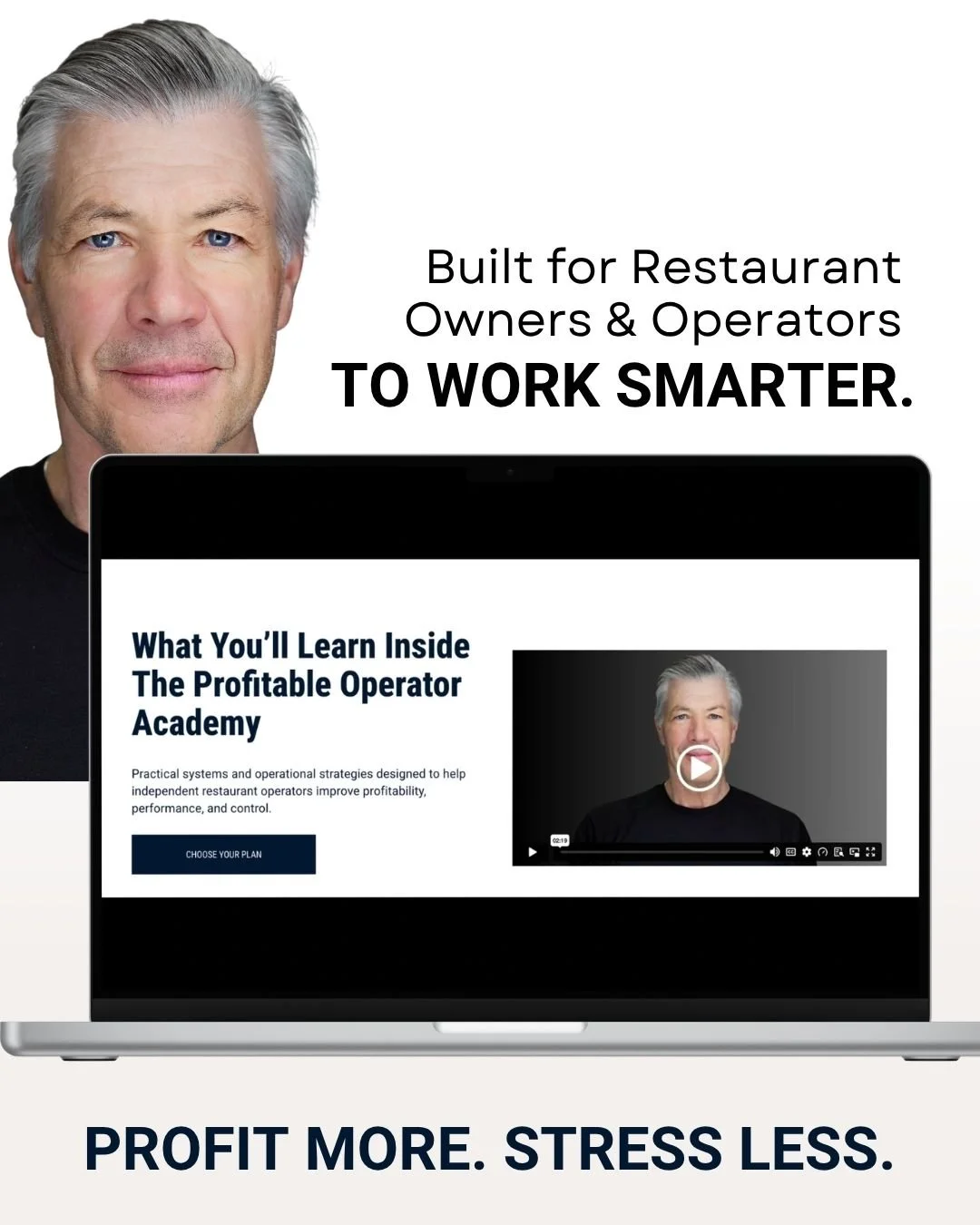
Run a Smarter, More Profitable Restaurant.
Discover the proven systems & solutions that drive sales, train staff, and maximize your margins.
1:1 Coaching Option Now Available.
Join The Restaurant Academy now: https://restaurantrockstars.com/joinacademy


Smithfield Culinary serves up perfect proteins for every dish, every daypart like Smithfield’s new ready to eat select bacon, new ground chorizo or the broadest portfolio of pork. When you partner with Smithfield, you serve what you love and your guests will love what you serve.
Connect with Restaurant Rockstars:
LinkedIn Roger: https://www.linkedin.com/in/roger-beaudoin-21590016
LinkedIn Restaurant Rockstars: https://www.linkedin.com/company/restaurant-rockstars
LinkedIn Roger Beaudoin: https://www.linkedin.com/in/roger-beaudoin/
Facebook: https://www.facebook.com/restaurantrockstars/
Instagram: https://www.instagram.com/restaurantrockstars
X: https://x.com/RestaurantRock1
Listen to the Restaurant Rockstars Podcast on Your Favorite Podcast Player:
iTunes - https://apple.co/2WaKyqV
Spotify - https://spoti.fi/3xGuOd0
Stitcher - https://bit.ly/3iFGAAb
Soundcloud - https://bit.ly/3lYBhho
-
Labor is still a huge challenge. Restaurants everywhere are hiring, training, and then watching them walk out the door. there are better ways to recruit, and retain a strong team. My guest, Tom Kilby, is a labor expert, and we're talking about finding great people when the traditional help wanted sign just isn't working, building a culture people actually want to be part of, and turning entry-level employees into long-term team members and leaders.
If you're a restaurant owner, operator, or manager who's tired of fighting the labor battle every week, you will want to hear this conversation.
And if you're finding value in our show, please subscribe to our YouTube channel or your favorite podcast player. Now, on with the episode.
Tom, welcome to the show today
Thanks for having me, Roger. I'm excited to be here
Well, you know, labor is continuing to be one of the biggest challenges that restaurants in my audience are having, so you're gonna be a huge benefit to our audience. And right now, again, being one of the biggest challenges today, you see restaurants making mistakes, restaurant owners and GMs when they hire people.
What do you see?
Well, you know, I, I hate to use the word mistakes. Everyone's trying to get it right, and
Okay
make-- they're gonna have challenges. Some things are gonna work, some things don't, and there's no kinda magic bullet. What I would like to see or think we could improve on that success as opposed to doing wrong is, is utilizing easy tools that they didn't know exist. In other words spending time with the team, you know, being present incentivizing the workers, that's big. That's a really big thing. So there's probably a lot of tools that hopefully in our conversation today will be enlightening to others that they didn't know existed
Very good advice for sure. You know, I was all about recognition, rewards, building team spirit and a culture versus a mission. I think that goes a long way, so I'm glad you shared. And that's probably the key. My next question was really what's the key to finding, because restaurants are struggling with finding great people, and unfortunately, we still see the hiring signs in all the windows, and that to me was never the way to get anyone.
so what would you say the key is to finding, but most importantly, retaining great team members?
well, I think think you need to look under every available rock. And obviously our, our business is looking to help the employers in an international view of hiring people that want these-- you know, that want to go to work and, and are motivated a little differently than the average American that's walking in the door answering a, a sign in a window.
I think for me to... and the feedback that I hear on a regular basis is that the, the turnovers are incredibly difficult. There's incredible amounts of time and resources, which is money, right?
Absolutely true. Mm-hmm.
being spent on training for someone who will leave to go next door for an extra nickel or chooses not to work.
So and there's, there's only a few ways that, I guess, they... a f- few levers they can pull. Obviously, make sure they're compensating their workers, you know, competitively. I think in my history of running a business as well as listening to, was not restaurants, but a manufacturing business, but listening to restaurant owners, the, the idea of finding and keeping people motivated to do the job it's a never-ending task.
I mean,
No question.
get them, boy, it sure is great to keep them and move them up, right?
Absolutely true. For sure. You speak a lot about a stable workforce and maintaining a stable workforce, and that obviously gives peace of mind to the owners and the managers. You know we bought a restaurant just before the pandemic. I can't see around corners, and all of a sudden two years happens of pain and went through all that.
And my wife turned out to be the general manager of that place, and she constantly had people coming and going and, and looking to find new people, and them not showing up for interviews, and all those hassles and challenges. And those times were turbulent, but a lot of operators are still struggling with a stable workforce.
So what is your answer to that? How do we find and maintain that stable workforce so that we have peace of mind and we don't have that headache every single week?
Yeah, I think trying to get employees to the door you have to differentiate yourself as a, as a restaurant owner.
Mm-hmm.
You have to
Thank you
potentially be a little more, I guess, cognizant of the, the fact that life is messy. Maybe a little more forgiving with some flexibility in the hiring, which might make the operator be a little longer and, you know, have more in the bench to back up when someone has an issue. you know, as far as, as far as keeping them engaged, it seems to me that today's world, we don't have a lot of young people starting out, you know, as a teenager washing dishes or flipping burgers. It's-- you know what I'm saying? It's just
Oh yeah. Yeah
don't wanna date myself or sound like a crotchety old man, you know?
Well, that was me. I was a dishwasher my first job in high school. It wasn't very glamorous, but I did the gig and I had a work ethic, and that's where it started. So go ahead
think that's, I think that's key to it. They, they miss that work. I think, I,
Mm-hmm.
you know, and I'm guilty as anybody else. Everybody wants their children to have a better life than they did, but, a good honest day's work is very rewarding in life, period. So, you know, challenging them earlier in life to do that is, in what, in my opinion, a obvious need for a first step.
And because it's not happening there are other areas to take the blinders off and say, I've been running the ads on Indeed. I've been putting the sign in the window. I'm doing everything that everyone else is doing," and you're still f- not getting what you need. there are other areas, and I think we're the real... I see some very successful restaurant owners, and they are looking at me because we're different. If finding a different way keep staff and hire staff is, you know, probably the next greatest thing for them. I mean, 'cause what's that old saying? You you know, you continue to do the same
we lost you for a sec.
and you're gonna get the same
Oh,
result, right?
So you know, I think keeping the workforce engaged making them feel part of the team, making them feel appreciated getting your el- as an owner the ones I've seen that are incredibly or, or active in the business to an extent and are present
I think that's important. The key word being present, for sure, and being a stable force for your stable force, and creating that culture, and being more of a leader than a boss, and setting an example. And all those things I think are important. You know, we're gonna talk all about the EB3 program, which is tremendous, and I totally support it, and I can't wait to hear all the details.
But you brought up a point about thinking creatively. I'm doing what everyone else is doing. I'm putting a sign in the window. So I share this whenever I have an opportunity to 'cause I thought it was just brilliant. So after the pandemic maybe my audience has heard this before, but if you're listening for the first time, pay attention 'cause it might work for you.
There's a restaurant chain in Southern California. They have 28 locations, and they're open breakfast, lunch, and dinner, and they had a massive challenge filling these restaurants with team members. And somebody there came up with the idea of giving gift cards to their customers that referred an employee that stayed 60 days.
And the gift cards were 250 bucks to a customer, which was a win for the customer, but it didn't cost them $250. It was literally their food cost. It was pennies on the dollar, but it drove a lot of new people. "Oh, my nephew needs a job. Oh, I'll..." You know? And, and peop- that was a s- that was a sense of recruiting versus hiring, and I just thought that idea was great, and I think it's got merit and it can still work today.
So I thought I'd share
I think that's a fantastic idea. What a great plan
Yeah. Thank you so much. Let's talk about the onboarding process. You alluded to it a little bit, but okay, you get somebody in the door that's new now, but you wanna make them feel comfortable and you want them to be productive quickly. It's like there's a key to that too, and hopefully there's a framework in place.
Maybe it's mentoring and shadowing, but what's your best thought on that?
Yeah, I think the, it's-- I hate to make everything sound so simple, but if I think sometimes we overthink. life is pretty simple. You know, you have a clear set of expectations as the owner and you communicate those clearly, and you get them buying in, saying, "Hey, that makes good sense, I can do that," then from that point on, it should be pretty simple.
And then you're just dealing with shortcomings or, or im- you know, over-the-top great results, which is incredible.
Mm-hmm.
So onboarding, I think, needs to have it's a huge step. I think there, it really, I've seen where, the mentor on, on boots on the ground or, you know, in the trenches with a mentor, someone on the team who is in that role and can really bring this person along, who takes the time to get to know them, you know, understand where they wanna go. know, you might have a dishwasher that says, "Man, I'm, I've always wanted to be a chef." Well, about every restaurant that we've ever talked to has a path for that success to happen, right? But you have to ask, you have to find out what makes them move or excited. not, not every employee is going to be outwardly sharing.
You almost have to work to get out, out of some of them. You know what I'm saying?
I do. Hmm
every person's different, so there is no magic right way. But trying, trying to is, is, will get you way farther down the road than not
You know, you mentioned there's generational differences in work ethic perhaps and in employee types and that sort of thing, and you and I grew up during a similar time, and we definitely applied our best foot forward, and we really cared to, you know, show initiative and be a standout. And I still think that's important today, but, you know, things have shifted a little bit.
But let's start with what maybe a new employee, someone maybe in their first job, like what are they really looking for in that first job from maybe what people generations ago were looking for? Has that changed much?
I think yes. I think it seems to me that a lot-- about a large percentage of them potentially come in with a, this is a springboard mentality. I have no idea what I'm doing or what I wanna do, and but this looks to me like a good starting place. You know, it's a simple job, I can handle it without being too challenged, and I can move along pretty easily, right?
So I think I, I see probably a little more of that than I do back historically, where, you know, jobs were great to have. I mean, if you were gonna have a date on the weekend, you needed to work during the week to pay for it, right? And know, that kind of made a difference, I think. And I, I don't think that everybody sees it that way anymore.
They, they see coming to work as just almost and sometimes unfortunately an inconvenience as opposed to a huge
Mm-hmm.
And I don't wanna disparage the workforce completely. Obviously, there's winners at every corner, right? You
Yes. Yes
but in general, we have a long way to go to get people excited about work
It's more challenging also, I guess, to get their attention, keep their attention. This is a digital generation. When we grew up, there were no cell phones, there were no distractions in the workplace, you know, and these people are constantly glued to their phones, and that's not a good thing. You don't want your guests to see, even during downtime, a person on a phone.
But mostly today, younger people work in restaurants
It's perhaps more challenging to meet them where they are and get the best performance from them. I mean, do you hear that?
Do you see that? Do you have, do you have any thoughts on getting, you know, getting them to respect the, the rules and the regulations and the way things are, and to follow that pathway and to do their best? I mean, that's, that's a challenge.
Smithfield Culinary knows that to meat lovers, a great serving of their favorite cut is so much more than just food, it's an experience. That's why Smithfield is committed to offering you the perfect protein for every dish and every day part, like their new ready-to-eat Smithfield Select bacon, where chefs won't leave a mess and patrons won't leave a trace.
Or new ground chorizo, letting you serve up tasty, smoky heat. And turn to Smithfield for the most comprehensive portfolio of pork products, such as bacon, ham, sausage, and more. When you partner with Smithfield, you'll serve what you love, and your hungry, carnivorous patrons will love what you serve. For more information or to order products, visit smithfieldculinary.com/smithfield.
I think it, for me, I, it would probably be very good for them to have a good example that they can see themselves. So the interviewer
Hmm.
there talking to them in the interview and says,
Yes
you know, I'm pulling out my phone and, you know, texting my friends while I'm doing this interview." And at the end of the interview, you could say, "How did that make you feel?" Probably not seen, probably not welcomed, probably not what you were looking for. Well, this is exactly how, you know, we don't want our, we don't want our customers to ever feel this way. You know, there's plenty of time in the day to be on the phone. the rules here are there are no cell phones visible. We're here to create a wonderful experience, and we need you to participate in that. That's I guess how I've heard it presented and seen it work in the past. It's all about the employee buying in. Even so much so that you say, "Hey, you know, what is it that you-- what's your charitable cause?
Is it the Humane Society, the local Humane Society?"
Mm-hmm.
you know, if the company says, "Well, guess what? We're gonna, every month we're gonna have a, a charitable, gonna have a pot of tip money, or we're gonna do something, and we're gonna make a donation to your charity." So you're not-- I think that generation is looking to have a connection, too, between the business itself and what the business does to give back.
And if they can connect with that or you can build it, that can be, that could fluctuate. You can build around that in whatever they are
I can see the buy-in coming from that for sure, supporting what's important to them. Okay.
I think
S-
big
yeah. Now, you were in the manufacturing business yourself. Is that right, Tom?
I was for t- about 20 years, I ran a manufacturing plant in the food grade packaging world. So we did like think pizza deli bakery packaging, cake boxes
Mm-hmm.
And windowed pie boxes for the big grocery chains. And, I did that for literally 20, about 20 years
Did you have a cross section of employees, different ages and sort of demographic backgrounds and all that? Was it a diverse workforce?
Yes absolutely. When I started, we started the, the company down here, we had six employees. We bought a, a company and,
Huh?
had six people, and of those six, three of them stayed the entire time that I was there. We ended up having to shutter the plant and move it to s- the home office and
Mm-hmm.
over a long period of time.
But Our, our equipment was we had antiquated equipment we had state-of-the-art Swiss equipment, you know, like, and so everybody pretty much started the bottom and worked their way up, right? So this is why I was really-- I love the world of starting at, in, in a food prep role. I love-- The, my biggest and best performers and most success stories were the folks that came in, had a desire to learn. We trained, we gave opportunities, they flourished, they were happy, we were happy. You know, every one of my upper management literally had started on the floor, and so they knew it all. You
That says a lot. Mm-hmm
to do it, they respect the role, and they, they, they know that they can lend a help to the individual too, 'cause they've experienced it before
They mentored other people, and that's a support system. That's, that's wonderful. Every step of the process. That's great. That sort of leads to the next question because unforeseen challenges and sometimes setbacks happen in companies that you can't anticipate, but it happens, and it affects the consistency of operation and the team in general.
So what's, what's the answer to that? It's like, how do you show people... Well, you know that expression, never let them see you sweat. So you as the leader sort of can't show the team that you're in a stressful situation, but somehow you can rely upon them to either help with the solution, be part of the solution.
What have you seen in, in certain cases like that?
Well, there's that all hands on deck mentality that I
Yeah.
that if you share
Yep, I like that
that says, "Hey, there will be ti-" Again, it kind of goes back to the very beginning. Hey,
Hmm
this is crazy. This business is incredible, and I've learned this about the restaurant business and quick serve just by being involved in the last six, five, six years. You know, there are days where nothing goes right it, that everyone's having to do extra or there's, hopefully not literally, but there's some sort of a fire that goes on and, you know, something's up in the air you want to have a group of people that are willing to run into that fire with you and, and realize that, "Hey, guess what?
If we do this great, and then tomorrow
like that
it, it gets a lot easier for us to do it if it ever happens again." But also it's probably pretty obvious to our guests that we're working harder with less people and we're still delivering delicious food, a great experience, whatever it is. And that to me it is sharing that, hey, there'll be days, always. If you just, if you don't, if you're not, you're not being realistic if they don't know that there might be pretty rotten days. doesnt matter what business you're in. There, there are bad days
But, you know, so much satisfaction and pride comes from overcoming those challenges side by side with team members and feeling like you contributed to the better good of the company, and you helped solve that challenge. And now we can look back on it and laugh at it maybe, or just say, "Wow, we got through it, and there'll be more coming, and we're just gonna..."
That's team spirit. You just defined team spirit to me, and that's, that's, that's something that you strive for, for sure, because you don't want constantly, you know, turning... This business, I don't need to tell anyone listening or yourself that it's a high-turnover business. You know, the biggest challenge that we have is what?
Retention versus turnover? Because you said so yourself. You know, turnover costs a lot of money. So anything we can do to make people feel like they're part of something, they're part of the greater good, they're contributing, and then they're incentivized to contribute in a certain way when they take initiative, I think that helps a long way towards retention.
So that's a perfect segue. Let's, let's talk about a new way, or, and perhaps it's not even a new way, because there is an opportunity to bring foreign national workers here to the country, and I know I did this myself in my restaurants. We had people from Peru, and they had such a strong work ethic, and they never called out, and they were always on time, and they always showed up like, "This is important to us."
And I can't say enough good things but there's a whole formal program now that you're a part of. Y- let's talk about EB3. Why don't you tell us you know, what is it, and why is this a solution to a lot of challenges that operators are having right now?
Costs are rising and profits are shrinking. I can show you how to make more money. I built the online Profitable Restaurant Academy just for you. You'll learn how to attract and retain a dream team, train your staff to sell and increase check averages, drive new and repeat business, control food and labor costs, and the biggest needle mover of all is my menu profit accelerator.
With this tool, I find hundreds of thousands of dollars in lost profit per restaurant location. Stop guessing and start building a restaurant that runs smoother, earns more, and gives you back your freedom. Visit restaurantrockstars.com to build a more profitable business from the inside out. Want to work with me personally one-on-one?
Email roger@restaurantrockstars.com
Yeah, happy to. So EB stands for employment-based and three is a category. It's employment-based visa.
Mm-hmm.
And in the visa world I'm sure a lot of your listeners are familiar with an H2B, whereas a, a worker would come to the United States for a contract period of time, do a job, and then go home. Very much, very common in some high, high seasonal type work. EB3 is a, a immigrant visa. This is a visa that is going to ultimately result in the f- foreign national getting a permanent residence green card, and therefore, five years later or so, f- applying and becoming a, a naturalized citizen. So these are individuals want ultimately to become an American. So that in of itself
Yes
incredibly, incredibly different motivator, right?
It's just... And for me, motivated people are few and far between sometimes, and sometimes you're lucky and blessed to have a lot of them.
You're right. Mm-hmm
motivated people make the difference. You can take five C-level s-students that are motivated and conquer the world, right? If it's all about that. And so if you're looking at, at, you know, bringing a workforce and getting some stability there, where you've got a combination of international workers who are filling the gaps that you can't find either enough American workers to do or experience a lot of turnover in that entry-level role, then this program is a pretty good fit. It's kind of a group scenario, like we need to be looking at a few people in, in the program. but these individuals literally are in a long process. They invest a tremendous amount of money and are willing to take an entry-level job and, and start. Their... It's their foot in their door. It is the American opportunity. So that is a different motivator than the average person answering a help wanted sign
Totally get the motivation piece. There's a couple of... I'm not sure if challenges is the right word, and I'm sure you have the answer to this, but someone suddenly has an opportunity. Say I've got one or two or three restaurants, and I need to bring in a number of people here. Now, whose onus is it for them to find housing, and what kind of resources do they have to pay for housing?
Or if I'm an employer, do I need to subsidize housing or give them housing? Like, does that fit into the equation? What are you seeing?
Great question. Actually technically in the H-2B seasonal world, you don't have to fi- provide housing, but the real winners use it because it's a great tool. In the EB3 side, you can't. You don't, you don't need to worry about housing. You don't need to worry as an employer about transportation. You treat these individuals the exact same way you would treat an American who has taken the job. Which means
I see
your not out there trying to find housing for people coming in off the street. That's their responsibility. So they report to you and you're-- they're your W2 employee, just like someone that walked in off the street
Boy, that takes a whole burden off the employer if all they have to do is hire someone and train them, get them up to speed in the job, and, and then just obviously set the expectations and get the accountability.
The problem is, is because it's a government-issued Visa
Uh-huh.
is that it's it... The really, I would say the one con is that it takes a little bit of time. It is not a, it's not a today fix to a problem. But if you're I guess what I would consider a long-term restaurateur with a, you know, a 5 year plan
Mm-hmm.
so to speak
Yes.
And
Proactive. Mm-hmm
this is an incredible program for you to consider. The cost of entry is very nominal, and Ultimately, if you have the patience and then have a scenario when they do start coming to work that it supplements your team, you will see incredible results
Let's dive a little deeper there. What is the timeline? Like, I'm a restaurant operator, I'm interested, I've got five or 10 jobs that I would like to fill in the near future. I need to apply for this. What's the process of, one, applying, two, getting approved, and three, getting people walking in my door, and how long does that take?
Well, the, again, the bad part is, is the timeline. It-- and
Okay
it, it wasn't this bad. It's-- So I w- I'm telling everybody today, you need to be considering that this is at least a three-year plan before the first worker shows up.
Mm-hmm.
is a long-term play. You're gonna have to keep doing what you're doing, but if you plant this tree or this seed,
Yeah, it bears fruit down the road.
does bear fruit down the road.
Mm-hmm
three years is kinda what we're shooting for to say that by the time... and what's different about this visa category is that the workers don't all show up at one time. So the program is that visa category is actually designed to supplement your workforce, which is perfect in one sense, but it doesn't a- you, you say, "Well, I s- I got five spots I need to fill." Well, the foreign nationals in this program have committed to stay in the role for at least a year. They're staying currently about eighteen months at minimum. the employer, the best... One of the real nuggets that's so great about this is you can move them up in your company or your restaurant in a f- and as long as in a form of natural progression. Started a food prep, move up, move up, move up. the quick serve restaurant, start as a crew member, move up to a team leader, shift leader, management. So the ability to have a path for the foreign national client is very exciting and intriguing for them, we see that in people that pick these jobs.
They, you know, they choose the opportunity with the employer and say, "Yeah, I'd really like to go to work in that city, in that-- for that restaurant group." They-- Trust me, in this day and age, they've done a tremendous amount of research on what they're signing up for. so, you know, the- they pay most of the money and all that, and we can get into those devil details later.
But it is a scenario as an employer It is like planting the tree and waiting for the fruit to bear, and there's not a whole lot you have to do once you've planted the t- the tree. You just have to be patient
Do you see or get involved in at all the short-term foreign nationals that come here for a couple of months and then they go back to their home country?
We do. We actually have an arm of our country excuse me, company that it's in that H-2B area that focuses solely on that. They're two different business models. They're, They really answer, in my opinion, two problems. So there's certain obvious areas that a seasonal, and that's what it's considered, H-2B is like a seasonal workforce, scenario.
And
Yes
have and do our own recruiting. We, we do everything in-house for all these different visa categories that we do work in. so we we do have that arm. And there's a lot of opportunities for an employer who says, "Hey, I have a hard time filling just my regular needs. But there are or five months in the summer where we are wide open.
I need to get some H-2B workers in here too, 'cause there's... I can prove that my, you know, my tickets and s- you know, tabletop served or, you know, however many my drive-through traffic is you know, is a, is a seasonal need or a peak need," that can be answered as well
Okay, very good. Now let's talk about requirements to comply with a program. Let's just say you go through this process, you've paid your dues, you waited the time, you, you filled out the applications, you've got people. Do you need to document what they've done and, and follow any procedures? Do you have to fill out forms?
Do you have to prove that these people worked for you for a certain amount? Tell us about some of that just to maintain the compliance. Is it much to do?
Nothing, really nothing more beyond that what you would do for an American employee. Like someone might call saying, "Hey I need a job reference, did this person work for you then?"
Mm-hmm.
a potential and we probably could say that lately in the state of the world, that there will be a little more scrutinizing of, of asking questions.
But basically there is no annual paperwork to file. Again, when our... on, on the EB3 side, when the workers report to you, the, the employer them o- on his W2. There's no a- additional government reporting towards
Mm-hmm.
doesn't...
Oh.
no- nothing that they've really... The government wants to make sure the business is sound, so that when the foreign national does get here, there's a business to support them,
Mm-hmm
And then once they're here and they've started that journey, they pretty much back away, right? Because ultimately they're getting a green card and ultimately they're gonna be... And all the vetting and the governmental vetting, I would say, and, and questions of both the employer and the client are done way in the beginning. It's making sure they've kept their nose clean
Makes sense for sure. So I'm hearing that it's a long-term commitment for an employer. Like, what does that commitment look like exactly? And how long must you maintain these people on your payroll?
It's all at will, candidly.
Oh, it is?
it is. And, and so there is no contractual commitment. And say, for example, let's say someone didn't work out,
Mm-hmm.
after a couple months, then, you know, we, we've sourced the, the, the clients and helped find the opport- for the worker, so we would commit to try and find them either another employment.
But if they just left and tried to game the system, which doesn't happen because the program's expensive for them and the commitment is long, as you can imagine, you wouldn't wanna mess up your apple cart just something like, like that. You just wouldn't wanna abandon the opportunity,
Mm-hmm. Of course not
And so if it-- but if so they did, the employer can say, "I need to have my name removed from this equation completely," and we take care of that for
All right, perfect. So that's pretty seamless as well. Let's talk about cultural differences and needs of these foreign workers, because they might be out of their country for the very first time, not sure what to expect. We talked about making them comfortable in the place, but what can employers do to more adapt to any special needs?
And are there language barriers? Do they need further English training? And like, what, what else is going on here?
So we, we have addressed the, I think really well, the English side of this equation. So the, there's-- the three years span that the, the client signs up for it and the em- the em-employer, the restaurant owner
Mm-hmm.
w- quick-serve restaurant owner signs up, that three-year period of time, we offer them English as a second language online for free.
Oh, great.
they have to have a strong working knowledge of English. Our team is talking to them individually through this whole entire process, and they know that they can't show up to work in a, a, a job that has told them that they need to have a strong working knowledge of it, because they-- you, you don't have to hire them.
You're not legally obligated to hire them. So the just-- You know, we prepare them. They know the expectation. Again, I'm, I'm a clear expectations fan, right?
So am I.
that up front.
Mm-hmm
We list to them the hours. We tell them, if you're a quick serve, you could be working Monday, you could be working any day of the week, first or second or third shift, and that decision isn't made until you report.
You have to be willing to be flexible, cetera, et cetera, et cetera. And they know all that going in. And then it's, you know... Again, I tell people all the time, 'cause a lot of folks that I'm friends with are like, "Tell me about your business." Very fascinating. And,
It is
it's like, I think for me and, and why I love what I'm doing so much is I'm a-- we're a great matchmaker and marriage counselor under a roof, you know, one roof. So we're taking someone who wants to become an American, which I'm-- my grandfather immigrated here, so I'm very big fan of,
Mine did as well. Mm-hmm
want to provide them an opportunity or connect them, because most businesses don't know how to go out and do all this. So we just-- They're-- The business model was created by saying, okay we can do everything we can legally for the employer to make this happen.
There are a couple of steps they have to do on their own, but we can guide them through that and be a sounding board. And so you, you put all those together and the entire process, we're shepherding the employer through, we're shepherding the client through, our client services team will reach out to the employer and say, "Hey, we've got this, three of these workers are work authorized. They, they'll be ready and moved to your market, moved to wherever you are and settled and have their Social Security card. They'll have their EAD card. They'll be E-verifiable. When do you want to report? They'll be available after July 5th. do you want them?" The employer says, "Have them show up." We onboard them, and then the magic happens.
So it's really kind of fun. And so it's a real win-win-win kind of scenario. If they're, if you know, to sound corny
Well, no, you're absolutely right about that. It is a win-win-win, and that is so vital. Everything you shared with us today is so vital to the challenges that operators are having, because I hear it constantly week after week, you know, speaking at shows and talking to restaurateurs, and it's like, yes, they need solutions, and this definitely sounds like one.
Whether it's a short-term seasonal thing or if it's a long-term thing that you plan ahead for, this could be your future. And you know, because people had different conversations, and my guests were curious, and they'd ask about their home countries, and they built friendships that way.
So
Absolutely
It was really gratifying, you know, to have foreign nationals in my place. I can certainly speak to it on many, many levels. And once again, I, I reinforce the fact that their work ethic was super strong, and they were motivated and inspired to do the job.
But they also set an example for other people that might've been new hires you know? They followed that example, and it kinda lifted the, you know, the whole spirit of everything. So I'm really glad that you shared everything about the program with us today, Tom, and your expertise with labor.
My pleasure. I tell you, it's really-- I, I've been to my share of restaurants and eaten obviously out many times in my life, and I'm a big believer in the wise person that said that y- you know, they re- people remember how you made 'em feel. And I think that's
No question
as a rest- in a restaurant. I've, you know, yes, the steak was great, but boy, the service was incredible. And so to have restaurant owners, either quick-serve or full-serve, where they've got a full staff, where they can focus on the right things and manage the right things and help others be better they're fully staffed, and you get, you said, that motivated and the, the, the, the relationships that those individuals we hear it all the time, the relationships that those individuals foster in that work environment is good for everyone
You just defined hospitality, its very basic foundational core of this business, you know? On the guest side, on the team member side, how they all combine, and let's face it, it's like breaking bread with people from different cultures and coming together is something we share around the world. So that's what hospitality's all about.
Tom, thanks for being a great guest on the show
Roger, it's been my pleasure, and thank you for having me
That was the Restaurant Rockstars podcast. Thanks so much, audience, for tuning in. I so appreciate you being here. Thanks sponsors this week. Stay well, stay tuned, and I'll see you in the next one.