Restaurant Leadership: Build Stronger Teams and Consistent Performance
Why do great employees quit, average employees stay, and high performers suddenly stop performing?
In this episode of the Restaurant Rockstars Podcast, Roger speaks with leadership and performance expert Dre Baldwin about building stronger restaurant teams, creating accountability, and inspiring consistent performance.
Dre explains why discipline is more dependable than motivation and why structure is essential for keeping employees aligned with your restaurant’s standards. He also shares how leaders can “trust but verify” without micromanaging, motivate Gen Z employees, and create an environment where people feel valued.
You’ll learn the important difference between delegation and empowerment, why talented employees sometimes reach performance plateaus, and how meaningful recognition can strengthen performance and retention.
Roger and Dre also discuss why your restaurant’s systems should work harder than its people. When a business depends too heavily on one employee or manager, that person can become an operational bottleneck. Strong systems give employees the clarity and authority to solve problems while protecting the guest experience.
In This Episode, You’ll Learn:
How to create accountability without micromanaging
Why discipline and structure drive consistent performance
How to motivate and retain Gen Z restaurant employees
Why leaders must understand what motivates each team member
How clear standards help attract the right employees
The difference between delegation and empowerment
Why high-performing employees sometimes plateau
How recognition can improve performance and retention
Why your systems should not depend on one key person
How the Work On Your Game® philosophy applies to restaurant leadership
About Dre Baldwin
Dre Baldwin is the founder of Work On Your Game®, a system used by executives and organizations to install discipline, decision-making structure, and execution reliability. A 4x TEDx speaker and 43-time author, he helps leaders operate with clarity, authority, and measurable results.
http://X.com/DreAllDay
http://LinkedIn.com/in/DreAllDay
http://Instagram.com/DreBaldwin
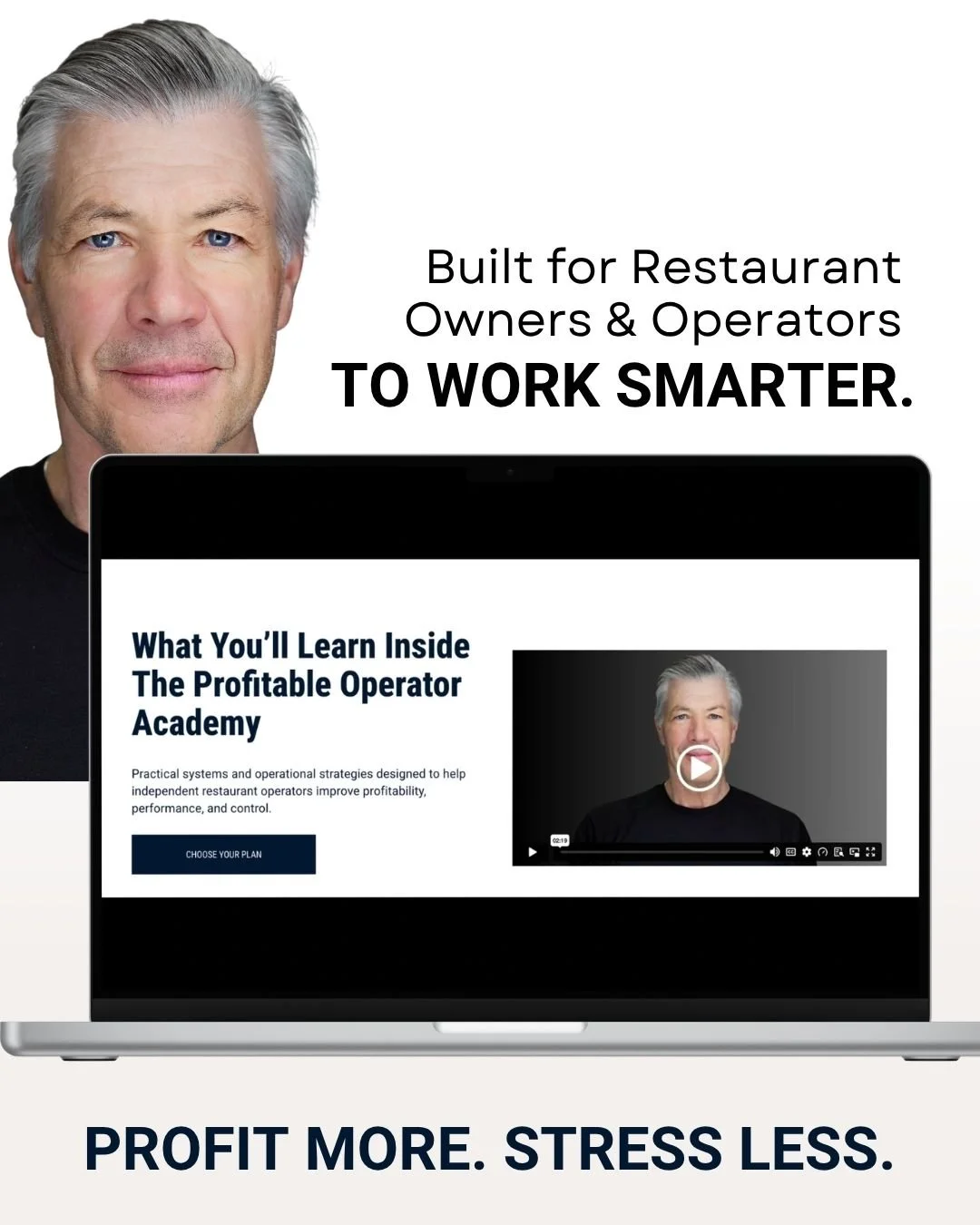
Run a Smarter, More Profitable Restaurant.
Discover the proven systems & solutions that drive sales, train staff, and maximize your margins.
Join The Restaurant Academy now: https://restaurantrockstars.com/joinacademy


Smithfield Culinary serves up perfect proteins for every dish, every daypart like Smithfield’s new ready to eat select bacon, new ground chorizo or the broadest portfolio of pork. When you partner with Smithfield, you serve what you love and your guests will love what you serve.

In a busy restaurant missed calls mean missed sales opportunities. Yelp Host is an AI phone answering service that handles reservations, waitlists, and takeout orders 24/7. Yelp Host Speaks 17 languages, handles multiple simultaneous calls, answers questions, books tables and sends everything right to your kitchen.

Restaurants always need Capital when THEY need it! Problem is you don’t have time to wait, you need the cash now! Forward Financing has funded more than $5.4 billion to over 100,000 small businesses, and 10,000 restaurants just like yours. Forward funds anywhere from $5,000 to $500,000, often with same-day FUNDING.
Connect with Restaurant Rockstars:
LinkedIn Restaurant Rockstars: https://www.linkedin.com/company/restaurant-rockstars
LinkedIn Roger Beaudoin: https://www.linkedin.com/in/roger-beaudoin/
Facebook: https://www.facebook.com/restaurantrockstars/
Instagram: https://www.instagram.com/restaurantrockstars
X: https://x.com/RestaurantRock1
Listen to the Restaurant Rockstars Podcast on Your Favorite Podcast Player:
iTunes - https://apple.co/2WaKyqV
Spotify - https://spoti.fi/3xGuOd0
Stitcher - https://bit.ly/3iFGAAb
Soundcloud - https://bit.ly/3lYBhho
-
Why do great employees quit, average employees stay, and high performers suddenly stop performing? In today's episode, my guest is a former pro basketball player, leadership expert, author, and TEDx speaker, Dre Baldwin, who reveals the proven principles behind building accountable teams, inspiring peak performance, and creating a culture where people actually wanna stay.
we'll talk practical leadership strategies that can transform your restaurant, your team, and your results. If managing people is your biggest challenge, this episode is packed with answers.
Stay tuned.
When your restaurant is slammed, the last thing you need is the phone ringing nonstop, but every missed call can mean a missed reservation, a missed takeout order, and a missed sale. Yelp Host is an AI phone answering service built for busy restaurants. It can answer calls 24/7, handle reservations and wait lists, answer customer questions, and now take takeout orders using AI and send those orders straight into your restaurant's POS with no commission fees.
Yelp Host speaks 17 languages, handles multiple calls at once, and integrates with OpenTable, Yelp Guest Manager, and major POS systems. The results are real. Buttermilk Ranch saved about 80 hours of labor every week, and The Metropolitan booked more than 500 tables in just three months. So while your team is busy running the restaurant, let Yelp Host handle the phone.
Learn more at business.yelp.com/rockstars.
Hey everybody, welcome back. This is the Restaurant Rockstars podcast. Dre, welcome to the show. I'm so excited to have you here
Hey Roger, I'm excited to be here. How you doing?
I'm fantastic. Now, you are a leadership and a discipline and a results expert, so you've got so much to offer our audience. You know, restaurants are really struggling with labor right now, both finding great people, retaining great people, accountability, all these things, getting consistent performance.
What would you say to anyone that's really trying to get the best out of their people, but not only, you know, get the performance, but also the accountability?
Well, the most important thing is assuming that the people have-- you've hired quality people it may not be great, but at least good, they're adequate people trust them to follow your process, but confirm that they followed the process by making sure there's a layer of enforcement on top of the process following to make sure they're doing what they're supposed to be doing. And also, as a leader, you have to make sure you're investing in your team. If you want them to grow, get better, and develop, then that time, there's no skipping that time that needs to be invested either by you or one of your lieutenants, let's say, making sure the people on the team are being invested in and being helped to grow to the level at which they want to actually get to
You know, it's also about, I believe... S- thank you for answering. Setting clear expectations is really important in sort of mentoring people. I've seen great bosses, I've seen bad bosses, I've seen managers, I've seen true leaders, and sometimes people set other people up for failure, and it's not really their fault.
Is there a solution to that so that people feel like they're supported, they're given clear direction, and then they're free to do their job, or there's a certain, you know leniency so that we trust them to do what they're supposed to do without constantly micromanaging?
Well, we trust but verify. I mean, that's an old management saying, you know that you tell people what's supposed to be done, you trust that they're gonna do it, but you still have to verify it. So for two reasons. Number one, so you as the leader knows that the job actually got done the way it was supposed to. number two, so that they know that anything that they are trusted to do, it's still gonna be checked so that you don't get call execution drift, which is a normal human nature r-response to the fact that humans tend to drift off of the path when there is no constant reinforcement of the path. That's actually hearkened to a scientific law known as entropy, that you get chaos and disorder when you don't have standards and parameters consistently enforced. And what was the other half of your question?
Setting people up for failure if you're not giving them clear enough direction. I've seen it happen over and over again. I've, I've hired hundreds of people over the course of 30 years in, in my restaurant career, and we always tried to be true leaders versus managers, and I always believed there to be a difference.
I always thought that just because someone held a title doesn't mean that they're competent and experienced to lead and that they really motivate and inspire people to best performance. So y- I guess the, the piece was how do we, how do we not set people up for failure? How do we give them the support that they need?
I totally understand the validate and verify. That's super important, but there's a certain amount of mentoring until people prove themselves to take initiative and to do a great job, I think
Yeah. So as a leader, the thing that separates being a leader from being a boss/manager is that you're able to move people to take action on your behalf because they believe it's also on their behalf, that they get something from it. They're not just
Hmm.
because
Mm-hmm.
check writer or the person with authority told them that they have to, and they'll get fired if they don't.
That's a manager or a boss. Leader, you're inspiring people to action, not just telling people that they have to take action. that's based on the people on your team believing that you care about why they are there, not everybody on the team is there for the same reasons. Some people are there for the paycheck. Some people are there for the camaraderie with the team. Some people are there because they want to move up and advance. They want to become a-- They want to get to a higher position than wherever they came in. They want to become a manager or a leader. Maybe they want to start their own company. Maybe they're using it as a stepping stone.
They want to learn some things here, but they're going to take this to a whole different industry and a different space from where they are. you, as the leader, needs to know that about the members of your team. Now, how do you find that out? Well, that's the time that you invest with them to find out why they're there, what they want to get out of it, and once they tell you that, then you knowing the business as well as you do as the leader, you can tell them, "Okay.
Well, given that you want to get A, B, and C, here's the best way that this position can help you get towards those things. We may not be able to get you the entire way, but we can set you in that direction. Now that I know that as a leader, now I can put you, team member, in positions to do these things that will help you get better so that you're not only helping the team, you're also helping yourself towards what you want." as when a team member understands that the leader knows these things, but just they cared in the first place to even find out, now they'll be more willing to go above and beyond and do what you need them to do when you ask them to do it. So that time invested matters a whole lot for a team member to, again, to feel like they're not just a number or a fungible piece of the team that's gonna be easily replaced in six months, even if they are replaced in six months. But knowing that the person on the team, the leader, cares about them as a human matters a lot in getting to mo- being able to move them to action
Absolutely. Getting everybody on the same page is a challenge when, like you say, people are there for different reasons. And I guess our goal as leaders in restaurants and hospitality operations is retention, giving people a reason to want to stay, to want to get new responsibility, maybe to move up. But I also say over and over again, if you've got a rock-solid line cook, and that's all they wanna do, and they, you know, they perform to the highest level in that position, so be it.
That's great. We encourage that. But a lot of people do wanna move on to the next thing if they're not feeling like, "Okay, I'm part of something bigger than myself. I'm contributing," and that there's opportunity to go somewhere else if that's what I want. So thanks for answering that. Dre, you know, I think generation to generation sort of work ethic shifts, and people have different approaches to work and mot- what motivates them.
So Gen Z predominantly works in restaurants, younger people today, and they don't necessarily have the same approach to a job. Is there a key to inspiring and motivating those people?
Well, I think they're still human. Regardless of their age bracket, Roger, they're still human beings. Human beings as we've already discussed, they wanna know that the people who they're working with or working for, especially who they're reporting to, cares about why they are there, and they're n- not just using them as a number.
So to relate to them, talk to them the same way you'd talk to someone who's twice their age, is "What are you here for? What do you really wanna get out of this?" It's probably more than just the paycheck for some people. It may just be the paycheck. But when you know, and know that you know, and they know that you cared to know, now you get a little bit more buy-in, and maybe a lot more buy-in on a human level, on a personal level, and that's when you become-- that can become a relationship, a human relationship, not just a boss-employee relationship or somebody telling me what to do relationship. 'Cause in my experience, I work with a lot of entrepreneurs and a lot of people coming out of employment and wanting to be entrepreneurs, and one of the main things I hear from them all the time is, "I don't like somebody telling me what to do." And when they say that, they're not talking about a specific human being.
What they're talking about is being treated as a number. Somebody's telling them what to do. "Okay, you do this, then now do this, now do this." They're being treated as a number, and they feel like they're easily replaceable, like they're just in the machine. And when human beings feel like their work doesn't matter, that's when they leave jobs.
They don't leave because they're not making enough money. That's what a lot of employers think. They leave 'cause the work's not challenging, the work is not mattering, and that they don't matter. And all of those can be resolved by a leader investing in the people. And the thing about Gen Z... What age bracket is Gen Z?
Just so I'm clear.
Gosh, I'm believing it's like 17 to 25
Okay. So people in that 17 to 25 range, they've all grown up. So if they're 17 now, they were born in what? Maybe late 2000s,
Mm-hmm.
of this century. So they've grown up through social media. They've had social media, and they've had phones their entire lives. And what happens on social
For sure
They can easily swipe through. As soon as they're not interested in something, they swipe to the next thing. So their mindset around getting a job, leaving a job, getting another one, trying something different, they... Same thing that older generations did, that their parents did, but a lot faster, and they have a lot more access now. So they will easily leave something with no emotional residue, as opposed to maybe what their parents had done, simply because that's the world that they've been conditioned for since they were born. So that buy-in matters even more with this group because of how quickly they will move from one thing to another and how normalized it is for them.
Because again, you were born in 2006. You became a teenager in what? 2020? 2018? So the internet was already a thing. You can easily swipe right, slight, swipe left. Doesn't matter if you stick around at anything. School, not even school these days. So a job is nothing, especially a, a part-time job or a job where there's a ton of turnover already, is already baked into the system. That buy-in matters a ton
You know, you're making an excellent point about, you know, the attachment to devices and the attention span and constantly moving to the next thing. You know, there are certain downtimes in restaurants. Not every minute is busy, and it's so easy to just pick up your phone while you're g- but it's such a bad impression on a guest when the team are all on their phones versus, you know, attentive and doing what they're supposed to be doing.
Some restaurants, you know, have a policy where you can't have a phone. Y- it's gotta be in your backpack. It can't be on the floor or anything. And some restaurants, you know, don't f- they feel like they're gonna lose employees if they have too many restrictive rules, and that balance sometimes can be really hard to, you know, to, to meet, I think.
Possibly. It depends on what type of business you wanna run. You know this probably very well, Roger, from your experience. You can run a business where you say, on one hand, "Hey, if I have these standards," 'cause that's what we're talking about here.
For sure
standards that say, I'll allow everybody..."
Actually, let's look at it from another direction. You have the standards that say there are no phones. You cannot have your phone while you're on the floor. If you have your uniform on and you are in sight of other team members who are working, or especially customers, can't even have your phone on your person.
Don't have it in your pocket, don't have your watch vibrating, nothing. You gotta put it away,
Mm-hmm.
access to the phone. If you wanna have that type of standard, then the business owner is accepting some people are going to bristle at that standard, then you need to be clear about that up front before they even get the job.
This is the
Absolutely
are gonna bristle at it, and they may not wanna take the job. But
Mm-hmm.
who do take the job, you know you're gonna have a certain type of team, and you're gonna set... You're gonna have a certain type of atmosphere within the, the backside of your business, not even facing the customers. The backside of your business because you have set that standard a- 'cause you're only taking on, you're filtering for people who can live within those parameters. on the other hand, you're a business owner who says, the first example you gave, "Well, if I set these standards like this and I have these very high filters, well, it's gonna be hard for me to get anybody to take the job." People are gonna be mad about this. They're gonna say, "Well, what about this exception? Or what about when nothing's happening? What about when it's not busy?" And people are gonna bristle at it. Same thing the other person's gonna say, but they're looking at it as a scarcity type of thing, where other person's looking at it as abundance.
This is gonna make my business better because I have these filters. The other person's saying, "This is gonna cost me people because I have these filters." And it's just a matter of what type of business you wanna have. And if you're okay with having the type of people who you have to make compromises for on your own principles or the things that you wanna have as standards, well, that's okay.
Just accept that this is the type of business you're asking for, and when the downstream effects of that business start to show, you have no one to blame. You can look at yourself and say, "This is what I wanted. This is what I thought I needed to adjust to." My mindset is coming from the athletic world, is that it's top-down. The person in charge is the person in charge, and if you don't wanna follow the rules, then go work somewhere else. So the business owner, if I'm talking to a room of business owners, which technically I am right now, I will let them
Mm-hmm. Yeah
this is the way that you decide how you wanna run your business, you set the filters.
And anybody who doesn't wanna meet those filters or meet the bar that you're setting, somebody else." And yes, it can be harder. It can take longer. You have to work harder to find the right people. But, I mean, that's the whole point of building the business. You want to get the right people on the bus and the wrong people off the bus.
That's exactly what my philosophy used to be. We used to call it weeding the garden because we made it very clear to our people that if they weren't up to a certain standard, there was always gonna be someone that was, that really wanted to be there for the right reasons. And sure, we might've lost some people, and that's a challenge today because with this labor shortage, you know, you've heard that term, the warm body syndrome.
There's too many restaurants that just hire someone just to put them out there because they need them, and without necessarily hiring the right people, like you say, the training that is so important, the expectations, the accountability. Like, all those things is a framework, and that's, I think, the mark of a true leader.
That makes us move on to the next question. Would you say there's a balance between discipline and motivation and, and gaining and sustaining respect? Because people approach this, this task, this challenge of being a leader from different ways. Some people think they've got to be everybody's best friend, which is not the case.
Some people think, oh, they got to be strict disciplinarians to get things. There's a balance in there somewhere. What's your take on that?
Smithfield knows that to meat lovers, a great serving of their favorite cut is so much more than just food. It's an experience. That's why Smithfield is committed to offering you the perfect protein for every dish and every daypart. Like their new ready-to-eat Smithfield select bacon, where chefs won't leave a mess and patrons won't leave a trace.
Or new ground chorizo, letting you serve up tasty, smoky heat. And turn to Smithfield for the most comprehensive portfolio of pork products such as bacon, ham, sausage, and more. When you partner with Smithfield, you'll serve what you love, and your hungry, carnivorous patrons will love what you serve. For more information or to order products, visit smithfieldculinary.com/smithfield.
Restaurants always need capital when they need it to renovate or expand, buy equipment, grow your brand. Problem is, you don't have time to wait a couple weeks for a traditional bank to make a decision. You need the cash now. So thanks to our new sponsor, Forward Financing. Since 2012, Forward Financing has funded more than $5.4 billion to over 100,000 small businesses and 10,000 restaurants just like yours.
Forward Financing has earned 4.6 stars on Trustpilot, so you can make the decisions and play your best game. Whether you need to cover payroll, replace that kitchen freezer, or add a new addition, Forward funds anywhere from $5,000 to $500,000, often with same-day funding. How much do you need to improve your business?
Head to go.forwardfinancing.com/restaurants and see how much capital you may qualify for today
Well, discipline and motivation definitely are-- there's no balance there 'cause those are not equal things. The
Mm-hmm.
comes and goes, and motivation is fickle. You never know when it's gonna show up or how much of it you're gonna get. Whereas discipline, on the other hand, you can build an entire career on because it's based on structure. Structures don't change. They don't have bad days. As long as you follow the structure, that discipline can be there all the time. And discipline is a byproduct of structure, which is a descriptive, descriptive of behavior, not descriptive of the person. So discipline absolutely doesn't need to be balanced out by anything.
All right? Discipline is the foundation of what makes a professional a professional and a business a business because a professional is someone who shows up and gets the job done consistently, regardless of how they feel, regardless of the circumstances, and that can extend not only from a person, but to an entire entity and entire organization.
As far as the other parts, where it comes to different ways of leading, yes, there are different ways of leading, and there are different... Every leader has their own personality, and their different styles of how they go about things. And leaders tend to hire people, their lieutenants, their managers, who are maybe similar to them in some ways.
And there can be different types of leaders who all lead successful, thriving organizations. principles, though, the foundation needs to be something that is duplicatable and repeatable, and everybody needs to know what the process is. Everyone needs to know what the end goal is. They want, need to know how their work is gonna be measured, and they also need to know what is gonna be the correction or consequence or enforcement layer if there is deviation from the process. And if people on the team don't see that there is any enforcement for process deviation, then people will default to the lowest common denominator, which is whatever is the easiest thing to do. is when people are slipping on a process, not following structure or process at all, and this is how businesses end up failing in the long run, even if they still succeed in the short term. 'Cause if you have a really great product, you're in a great position, great marketing, timing, pricing, whatever, your business can still be doing well even if your team's not following a process properly, and it's not till months later or till some crisis hits, such as the virus several years ago, that you find out that there were always underlying problems, and then the crisis just speeds up the inevitable.
So for business leaders, it's not that you need to have a certain type of personality to be successful, but you do need to operate by first principles, which is you cannot depend on motivation. There must be a clear structure. They must be enforced. There must be consequences. There must be immediate correction for deviation. Because if people on your team don't see that, then they will deviate, and they're going to deviate to whatever requires the least amount of effort, which eventually is gonna cost you and your business.
You know, that might go both ways. The same amount of effort and the consistency is important in a leader as well as a team member. You know, you've gotta be... Well, you've got a system called Work On Your Game, and we're gonna get to that, but a leader really needs to be on their game all the time and not let anything slide for one person when they're disciplining another, because the team notice.
You know? So that consistency of performance, you can't be you know, you can't have partiality with any person if they're a superstar versus working on other people. It's gotta be this, this totally consistent approach to being a leader. So I'm glad you shared that, too. In your own experience, Dray, what about making impactful, quick decisions without what I call paralysis by analysis and spending too much time thinking about how I'm gonna solve a problem?
It's a great question, Roger, and I think a lot of that is solved by what I call doing your homework. And doing the homework is about considering what are the, what are the possible things that could happen here? What are some of the things that could go wrong, some of the challenges that we could deal with?
What are challenges that other people in this industry have dealt with in the past? And considering, okay, if and when something like this does happen, how we address it, here's why we address it in this way, so that when those things do come up, you've already, a-again, thought about it. You pre-considered this situation, you can handle it, and you can handle it quickly, and you can handle it consistently.
Mm-hmm.
if the leader is not around to handle it, it can be handled the way the leader would want it handled because the leader has already considered that possible pitfall. The good thing about the restaurant industry is that anyone who starts a restaurant today, you're not the first one. All right?
There've been millions of restaurants before you. So whatever challenges have come up in the industry in the past, you can go and get... look at those resources, consult those resources, find out what are the things that come up. What happens when a customer says they keep sending food back, or they say the drink wasn't made the right way, or someone's 30 minutes late for their reservation, but they're demanding a table and now you're full. All the things that could possibly come up, how do you handle it when it comes up? And everyone on the team should know how to handle, or at least your leaders, your lieutenants should know how to handle it. So even if you personally are not the one handling it, someone on the team is handling it today, and if it happens again next Thursday, they handle it in a similar way.
And if it happens a month from now, it's handled in a similar way because what you don't want is variance in how the same challenge gets handled because that's when customers get a little bit annoyed. They're like, "Wait a minute. The
Mm-hmm.
I had this problem, this happened," or, "My friend had the problem and y'all did this, but now I have it and you're telling me something different."
That's when you really start to get problems in a business when you don't have those SOPs, those standard operating procedures in place, or whole team is not on the same page as to what we do when A, B or C happens.
Thank you for sharing that. That was really vital information. Let me ask you what we're talking about here, when you're in charge, what is your sort of definition of delegation versus empowerment? What, what are the differences between those two things, and what's the better approach?
Well, delegation is tell you to do something, I show you exactly how it's done, and then I check on you while you're doing it, or as soon as you're done, you show it to me, and I make sure you did it right.
Mm-hmm.
delegation. So I tell you to do it, you do it, I check on it. Empowerment is when I hand the job off to you and I'm not checking on it anymore. That's when I'm completely empowering you to do something. Delegation can be empowering because now you are doing a task. Instead of me just giving you one, two, three, four, I'm giving you one to ten, and then I'm only checking it after you finish ten. So in a way, it can be empowering, but empowerment is when you own the task.
Empowerment is ownership of a task. All I want to know is what was the result of that task being done. You don't have to tell me about what you did, how you did it, how you fixed the problem. Just tell me that the task is done. All right. How much, how much did we do in sales last night? How many reservations showed up on time?
How many people filled out the, the birthday card so we have their confirmation of... Did we have their birthday information, we can follow up with them with a free, free dessert on their birthday, whatever. Whatever the KPIs are, you own it. You just tell me what are the KPIs so I know that it's working or it's not working.
But you can do it however you want to do it. And delegation is more I'm still kind of watching over you. So there are levels to delegation up to and including empowerment. Full passing off and ownership of the task is, like, the highest level of delegation. So they're not actually different. They're just different levels of the same task
Thank you for sharing. I was always a big believer in empowering people. Once I recognized talent, I gave people additional responsibility if they chose to accept it, and then there was always an incentive for them meeting the challenge or exceeding the challenge. So it was all about trust in your people's good judgment, knowing that they didn't wanna let you down, knowing that they had your back, and that to me was empowering.
You know? We empowered our people, and it was empowering for me because that was sort of an exit strategy in my business. I didn't have to be there all the time because I had people that literally ran the place like they owned the place, and they were incentivized to do so. So yes, when you bring in a new person, sometimes you have to delegate until you figure out, is this person, you know, moving in the right direction?
Is this person gonna work out? Does this person want additional responsibility? If so, then the empowerment starts to kick in. So thanks for your take on that. That was, that was great. Why do high performers underperform relative to their potential? What do you think about that?
You know, one main reason is because there's nothing holding them to consequence if they underperform. 'Cause you gotta remember the baseline state of a human being is generally to conserve energy, mental energy and physical energy. We are by design lazy human beings, and this goes back to the, quote-unquote, "caveman days" when we would conserve energy until we had to fight off a r- a rival caveman, or we had to go chase after the saber-tooth tiger or chase
Yeah, right. Yeah
saber-tooth tiger. Yeah, so fight, flight,
Mm-hmm.
So we still have that wired in us, so human beings, when left to our own devices, do whatever we wanna do. We tend to do less, not more. So a high performer, a person who has a lot of potential and a lot of skill, and maybe has shown it at times, they may not perform at that level if they're, they're not being held to a certain standard of performance. This goes back to the question you asked me earlier about
Yeah
what type of team do you wanna build? Because if you build a team or an organization rather, where the ethos is high performance is the expectation, that is the bar, and everyone has to perform at this bar, and if you don't, you're not gonna work here, well, you're going to lose the losers, and you're going to gain a whole bunch of high performers because high performers to be in environments where their high performance is highlighted and expected, and the environment is set up for someone like them to thrive. So that's why they show up. Whereas if you have a low expectations environment, you already have high performers there and you lower the bar, those high performers will eventually find their way out of there, or they'll just stop being high performers because there is no high performance expectation. And what you'll get is a bunch of low-level performers because that's where the bar is for that organization. So the saying that I've always used, Roger, is that when you raise the bar, you lose the losers, and when you lower the bar, you lose the winners. That's the way it works. human beings, as a general principle, tend to conform to expectations. When you put human beings in an environment where high performance is expected, they will either perform at a higher level or they will exit on their own. You won't have to fire them.
Hmm.
quit. And if
Yes
human beings in an environment where the expectations are low, you will get a bunch of people who want to perform at a low level.
They will stick around and hang around, and then the high performers will leave because that environment is not, is not matched to the type of person that they are. So it's really just asking yourself, "What type of organization do I wanna have? What type of business do I wanna run?" And this applies not only with your team, this applies with your customers as well.
What kind of customers do I want in my business? Who do I want-- What do I wanna sell? Who do I want buying from me? Who do I want coming back? Who do I want talking positively about me? all decisions that you get to make, and there's no right or wrong answer. All right? You could be McDonald's or you could be Ruth's Chris. All right? It's up to you. Who do you want coming into your business and how do you wanna run it?
That leads to the next question. Let's talk about performance plateaus, and there are talented people that'll perform, perform, perform, and all of a sudden they're gonna reach a certain level, and you know that they've got more potential, and then they just stop. It's like, what's your answer to that? And why does it happen
Yeah, so it depends. It depends on why they stopped performing, right? Where were they performing before?
Yeah
were the expectations for that performance? What was the... Were they getting rewarded, recognized for their performance? Was the bar being consistently raised? And if they stopped performing, then there has to be a reason why they stopped.
If they stopped elevating, there has to be a reason. Maybe they've hit their capacity, and you have to find out. Maybe they have something going on outside of work that has caused them to not strive at the same level. Again, at communication, you can find this out. Maybe the bar has not been raised enough, and therefore they haven't raised their performance because the expectation has not been raised. Again, this is something that can be looked at. is going on also inside the organization outside of that person? Are, are you lowering standards? Are you raising standards? Has-- have things stagnated? Was this person, is this person motivated by reward? Are they motivated by recognition? Are they motivated by opportunities to ascend? And have they reached the top of that totem pole? Have they reached the top of the ladder and there's nowhere else to go?
Mm-hmm.
why they
Mm-hmm
So there's a lot of things you would, as a leader, assess to find out. Because if someone is continually doing something and then they just stop doing it that's an aberration because human beings usually continue doing what they've always done.
We're creatures of habit. So if a person stops performing at a level that you've come to expect them to perform at, something is causing it, and the job of the leader is to find out what that something is and render a remedy if necessary
Okay. We've talked about everyone being different with different motivations, but you did allude to the people that really thrive with sort of recognition or being highlighted. How important are recognition and rewards, and how often should they happen, and how unique should they be? And I only say this because there's so many restaurants or businesses of any kind that still have employee of the month, which I find really kind of boring and old, overdone.
Like, there are definitely more creative ways of inspiring more people to greater performance, where the whole team sort of bonds, and that's called culture and chemistry. And, and there's, there's something there that I know you can share about recognition and rewarding people for great performance and how everybody sort of wants to meet the standard when they see other people being recognized.
I think we all work for a paycheck, Dre, but people do work for praise as well, and they wanna know that they're doing well, I think. What do you think about that?
That recognition matters more than most people think, and people will
Huh?
people will go to great lengths to be recognized, and it's a, it's an interesting
love it
not even, not only at jobs, but people do it in just in individual business owners will do things to be recognized by some organization or get their name on a list or be employee of the month, or it's just to get a, a bonus or something where they know that everybody else knows that they hit a certain milestone, and they got some type of reward, recognition.
It could just be their name being called out. It could be mentioned in the, the weekly roundup meeting or the morning meeting for hitting a certain amount, a certain sales numbers. People like to be recognized positively in front of other people, that we are just socially wired for that. So it matters a
Mm-hmm.
and like you said, it can be boring to be employee of the month, but it's not that employee of the month is bad. Employee of month is good. also that you can do a bunch of other things, and anyone listening who's not very creative, well, go on Google or go on AI, I'm sure it'll give you a thousand ideas of things you can do to recognize people on your team to where maybe you're not limiting it, limiting yourself to just one employee.
Maybe you have 20 people on your staff. Well, how can I recognize 10 people for something that happened over the past month? So you, you're spreading out that recognition in more than one way, but not in a way that you're diluting it. The best person can still get that, but now you can come up with nine other ways that people can be recognized.
That spreads the wealth around. It gives everybody something to strive for, some motivation to go after, and if you can make those things measurable and tangible and something that everybody can count and look at, even better because all those metrics hopefully are directly related to some key performance indicators in your business. So now you have people on the team striving to do things that will get them recognized, but at the same time as they're striving, it's helping the business. that's the creative work, if you wanna call it that, for the leaders to figure out how can we come up with some recognitions that will also help the business, and now people are going after recognitions while helping the business at the same time.
So they're helping themselves and helping us. it is very important in, in any space from the kindergarten all the way up to the retirement communities, people love to be recognized. So you always wanna find a way to recognize people because people will do more for recognition than they will do for money, believe it or not
Well, you know, thank you for answering that. It just brought up a memory when I owned restaurants. We did-- I came up with this idea one time, and this was decades ago, and it really proved to be a benefit for us. I brought in a bunch of flip charts and Sharpie markers, and we had coffee and donuts, and I had the whole team in there for about 20 minutes, and it was kind of a brainstorming session because I recognized that the people working the jobs in the trenches had opportunities to see things that unless they were asked that, that, you know, would improve the business, they would just keep doing their job.
It's like, "I'm not paid enough to care," whatever it is. And I said, "Listen, if you see any idea that would improve our business efficiency, you know, put money to the bottom line, cost savings, anything at all, just throw it out there. There's no crazy idea." And I encouraged people to just get up and write down ideas.
And all of a sudden we had all these ideas, and I said, "Okay, I'm gonna look at these things, and I'm gonna put a shortlist together. And if I, I think I can track some bottom-line performance with this idea, I'm gonna give you a piece of the action of either the cost savings or the profit increase or whatever it is, as long as it continues to work and as long as I can track it and as long as you work for me."
And that led to retention, Dre. I, I sold my flagship restaurant in 2014, and I still go back there as a customer. And people I hired 28 years ago still work there, and some of them are still collecting extra money in their paycheck because they came up with this great idea that just keeps putting money to the bottom line somehow.
So that was, that was sort of a unique recognition. And then we also had a program called Difference Dollars, where any member of the team could n-nominate or recognize anyone else for going above and beyond, helping a guest, solving a teammate problem, whatever it was. And then I would just gather the team together once a week, and we would just all s- you know, sit around for 10 minutes, and I would say, "And this week's winner is..."
And I'd go into glowing detail about what that person did that made a difference. I'd give that person a $20 bill and a can of Red Bull. Thank them very much. And the team loved it, you know? So those were some creative, different, out-of-the-box kind of things versus the employee of the month. And I just encourage people to think, what can you do that's a little more creative, that captures e-everyone's sort of attention, and they all wanna just perform because that's some recognition that really works for everybody.
So just some ideas.
Right. So, and the more ideas you can come up with, the better because it gets the team engaged. Like you said, you asked everybody on the team for ideas, so now you're getting them to buy in and getting involved, and it's more than just a job now. Now when they see the idea that they suggested actually being implemented, now they have some ownership,
Right
Likely to keep them at the job longer than they would've been because now the job is partially them.
It's not just a job, it's not just a paycheck
You have a term called getting bulletproof, and that has something to do with a mental toughness mindset. Now, that's something that's important to develop but also to sustain. Can you speak in greater detail about what all that means?
Yeah, it's called Bulletproof Mindset, and it's one of the first
I love it.
created
I love it.
ago, around the
Yeah
sold your business, maybe a little bit before then,
Okay
it actually is rooted in-- I that from my background as a professional athlete, and it was about discipline, confidence, mental toughness, initiative, leadership, communication skills, all the internal non-measurable, intangible traits that make a person show up in a certain way.
These days, we... That's morphed into what we call power presence, but it's the same thing. It's all about leadership and the way that you communicate non-verbally and pre-verbally with other people that causes them to respond to you in a certain way, even once you do begin to speak. So we know that eighty-five percent of communication, or somewhere around that number, maybe more, is non-verbal.
It's not what you say, it's how you carry yourself. It's the energy behind
Mm-hmm. Agreed
everything that people read coming off of you outside of the actual words. us intellectually smart people, we tend to focus on the language. I gotta say the right things. I gotta make sure I ace the interview.
And it's not that what you say doesn't matter, but everything else is what people are really picking up on, and that's what they're really responding to.
I love that
that makes it tricky in-- with human beings is that most human beings cannot explain what I'm describing here. They couldn't even verbalize it, even though everything they do is based on it.
So most humans, the way they respond to another person, if you ask them, "Why did you respond to that person this way? Why did you say things the way you said it?" They will give you a logical, verbal answer when the answer is really based on non-verbal things that they can't quite verbalize. then we come up with this logical explanation that sounds correct, but that's not really the real reason why we did it, and that's what makes it interesting.
That's what makes it a, a little bit more scarce, 'cause most people can't explain this stuff, but it's also the basis of how human beings communicate. And when it comes to leadership, everything. Because people decide to follow you or not follow you, not based on the actual words that you say, based on everything around the words, and the words just become a verification layer of the decision that they already made
Thank you for sharing. The goal of any restaurant really is to have systems really dialed that literally make the place work on all cylinders all the time versus putting out the daily fires. Now, you, you've said that systems should work harder than the people. Can you explain what that means?
Yeah, it means that you don't want your business or the running of your business to be based on any, the presence or talent of any individual person
Hmm. Mm-hmm.
of any individual person because then
Okay
person becomes the bottleneck of the business. you an example. I was at a restaurant here in Miami Beach about a month ago.
I go there often, they have a, like a chicken wrap that I wanted, but it had avocado in it, and I hate avocado. I said, "Put the avocado..." I said, "Just put the avocado on the side." I would feed some of it to my son who I had with me. the woman was saying-- the woman at the counter said, "Hold on one second.
Let me go ask the manager h- if I can do that." And I'm like, "If you can do it?" Now, I didn't say anything. She goes over to the manager,
Yeah.
girl comes back and she
Yeah
"We, we can't put the avocado on the side, but we can just take it off the sandwich." And I said, "What do you mean you can't put it on the side?
It's part of the sandwich. I'm paying for it."
Exactly
then she says, I protested. So then she goes back and says, "Okay, let me ask again." She was very nice. She said, "I'm gonna go ask again." She comes back and says, "No, we can't do that." And I said "No, I'm
Wow
that." I wouldn't accept it. So then she goes over to the manager again.
The manager's like 10 feet away. The woman comes over she starts to explain to me the same thing, like, "We can't put the avocado on the side." And I said, "Well, it's part of the sandwich, I'm paying for it, so unless you're gonna take something off the price, I want the avocado on the side." And the woman is saying, "Well, we have policies."
And this place has a lot of locations in South Florida, so, "We
Yeah.
and
Yeah.
to ensure a, a consistent customer experience," is what she said. And I interrupted her and said, "Well, a consistent customer experience is you giving the customer what they ask for." I said, "I want the avocado on the
I love it. Yeah, right.
she's... They're trying to figure things
Oh my gosh
to put avocado on the side?" And this is a successful place. They're exploding down here. They have locations everywhere.
Yeah, that, that makes sense
She finally did it and put the avocado on the side, but I just didn't understand.
And she was saying, "We have process." She was trying to tell me about policy, and that's one thing that I know you probably run into in your experience, Roger, is I, as a customer, I've never run a restaurant. I've worked in some, never run one. I hate when a customer service agent is telling me what they can't do, and then protest and they bring in a higher-up person, and then that higher-up person comes in and just tells me the same thing I was already told, then they defer to their policy as if that's supposed to...
Is that supposed to make me stop wanting what I want 'cause you have a
Exactly. Yeah, totally agree
you have a, your reason you have a business 'cause you have customers. And the-- I'm not asking for something that is above and beyond. I just said, "Put the stuff that's on the sandwich on the side. What is difficult about this?" and they make their stuff fresh, so it really didn't make any sense to me. But anyway, whole
Wow
is your systems are janky and not in place, then you get these
Mm-hmm.
And it's not that this situation became some big deal. It only took literally like two minutes for them to fix this.
But what if the next person says that, and then the next person, and the next person, and that person at the register doesn't know how to put the avocado on the side? They gotta go to the manager and ask for this. need to fix that in their system so that this problem doesn't happen again, and again, and again, 'cause that two minutes adds up when you're dealing with 1,000 customers a day.
No question.
depending on the type of
Huh
depending on their energy, some customers may get irate, some customers may decide, "You know what? I'm never coming back here." Now, the
Correct.
value of that customer, how much money
Exactly
over the course of 10 years, you're losing that and you don't even realize it,
Aha
system is the thing that's costing you.
So a lot of people who run businesses, I think leaders, owners, understand this. I think most of them do. But the managers, the in-between people, and the people at the front counters, they may not even consider this stuff and it's costing them and they don't even know it
Such a valuable point, the lifetime value of a customer. You know, that is so vitally important. One indecision or one problem is a breakdown in hospit- You just described a breakdown in hospitality, which is the foundation of this business, and that puts such a negative impression on you, and I, I guess I'd be surprised.
Do you go back to that place despite that episode? Did you give them a second chance? Is there other reasons why you like that place? You said it's growing rapidly, and they're trying to put systems in place, but the systems are failing the guest. Then obviously you're failed. You shouldn't have to explain something over and over again to get what you pay for and what you want.
Totally agreed. So, you know, that was a really great story. Thank you so much for sharing. Let's talk about let's talk about work on your game
Sure. So Work on Your Game came from alluded to a couple times, my background's in sports. Played professional
Mm-hmm.
basketball for nearly a decade overseas after walking on Division III college. And the Work on Your Game came from actually being on YouTube. Back before YouTube was YouTube. So I was putting
Yeah
videos on YouTube back starting in 2005, and I built an audience of basketball players who were just watching the drills. I would just show people how to practice, and eventually they started asking me questions about the mindset. Like, "Hey, Dre, I don't always feel like coming to the gym to work out." Same way that a leader
Mm-hmm.
may not always feel like coming to the restaurant. It-- Everybody has days you don't feel like going to work. I don't care what you do for a living, there's always those days. And so how do you get yourself to come to the gym when you don't feel like it? That's how I started talking about discipline, which eventually led to my, one of my most popular frameworks called The Third Day, which is about that day when you don't really feel like doing the job, but you have to do it. How do you show up and give your best effort when you we feel like it? Then a lot of players would often ask about confidence because sports is a performance-based business. Everybody's watching you while your at
question.
work,
Mm-hmm
people get performance anxiety. It's one thing to practice in the gym by yourself.
It's another thing to do it in front of 500 people at the game, and most people want confidence. They need discipline, but they want confidence. So how that
Mm-hmm.
creates confidence. it was the mental toughness. "Hey, I got cut from my..." Some player would comment me on YouTube, "I got cut from my high school team.
I'm a sophomore. I feel like quitting basketball. Like, can you tell me something that could help me keep going?" 'Cause I got cut from my team when I was a sophomore and a junior, I would talk about how do you keep going when you face setbacks in life. And then the last one was personal initiative.
This is the foundational pieces how I started, the personal initiative is about just how do you get started doing something when you're not quite sure what to do or how to do it. For example, how to get started practicing basketball if you don't know what to do. to figure it out. I grew up in the, this is the mid to late '90s.
I didn't have the internet to go to. players can go to the internet. Then I was trying to play professional basketball with nobody calling me to play. I had to go and create the opportunities to play. So it's kinda like trying to get a job, but nobody's offering you a job, so how do you
Mm-hmm.
knock on some doors and get, create a job offer? I had to do that. How do you get known on the internet when there's no clear path to getting known on the internet? I had done all these things. So people were asking me, "How do you get started?" And that's when I started talking about personal initiative. It's also one of the main reasons why I'm an entrepreneur, 'cause entrepreneurs have to be self-starters. So discipline and confidence, mental toughness, personal initiative, those were the foundational pieces that started Work on Your Game. The actual phrase came from a video I was making in 2009, Roger. I was in a 24 Hour Fitness In Miami, and I just finished doing a workout. It was about 4:00 in the morning, so for whatever reason, I wasn't sleeping. I had my little camera with me that I always carried with me at that time, and I just made a quick little two-minute video, and I said to the basketball players who were watching me on YouTube at the time, I said, "The reason why many of you have problems in the game and you're not making your high school teams, or you go play and nobody passes you the ball, is not because there's something inherently wrong with you as a person.
It's because at me, I'm in the gym, I just finished doing a workout. Look at you, you're on a computer watching YouTube. So what you need to do is stop watching YouTube videos, even mine, and
Yeah. Right. Okay
that, people loved the phrase 'work on your game.' They started repeating it back to me. about a year later, I said, "You know what? I need to kinda trademark this and brand this and name everything after that," because it's a perfect phrase 'cause it, it encapsulates what I'm doing and, this can work even off the court. I can use this outside of basketball, so I kept it ever since
I think that applies to everything in life. Work on your game.
That's
A new goal something you've been doing for a long, long time, we should always continue to work on our game. Thanks so much for sharing. Dre, you've been a wealth of experience and expertise in leadership and motivation and discipline.
Thanks so much for being on the show
Absolutely, Roger. I appreciate you sharing your platform. Thanks for having me on
That was the Restaurant Rockstars podcast. Thanks so much to our audience for tuning in. Thanks sponsors this week. Can't wait to see you in the next episode. Stay well, stay tuned in. I will see you
Costs are rising and profits are shrinking. I built the online Profitable Restaurant Academy just for you. You'll learn how to attract and retain a dream team, train your staff to sell and increase check averages, drive new and repeat business, control food and labor costs, and the biggest needle mover of all is my menu profit accelerator.
With this tool, I find hundreds of thousands of dollars in lost profit per restaurant location. Stop guessing and start building a restaurant that runs smoother, earns more, and gives you back your freedom. Visit restaurantrockstars.com to build a more profitable business from the inside out. Want to work with me personally one-on-one?