Restaurant Leadership Secrets That Build Better Teams & Bigger Profits
What separates restaurants that consistently perform from those constantly fighting turnover, staffing problems, and shrinking margins?
According to Firebirds Wood Fired Grill CEO Steve Kislow, it starts with leadership.
In this episode of Restaurant Rockstars, Steve shares the leadership principles, accountability systems, and operating disciplines that helped grow Firebirds from just three restaurants to 70 locations across 23 states.
Whether you own one independent restaurant or manage multiple locations, you'll walk away with practical strategies you can use immediately to build stronger teams, improve guest experiences, increase employee retention, and protect your profits.
In this episode you'll learn:
✔ Why hiring leaders deserves as much attention as choosing restaurant locations
✔ The leadership traits every successful restaurant manager should develop
✔ How meaningful feedback creates accountability without hurting morale
✔ Why employee retention may be the most important KPI in your restaurant
✔ The financial metrics every restaurant operator should monitor beyond food and labor costs
✔ How to evaluate restaurant technology before wasting money on expensive subscriptions
✔ The systems Firebirds uses to deliver consistent guest experiences every shift
✔ How to build guest loyalty through value instead of discounts
✔ Ways AI is improving restaurant operations without replacing hospitality
✔ How successful restaurant brands stay relevant year after year through continuous evolution
Steve also explains why culture isn't built through motivational speeches—it's created through daily habits, clear expectations, and leaders who genuinely care about developing their people.
If you're looking for practical restaurant leadership advice that improves employee retention, guest satisfaction, and restaurant profitability, this episode delivers actionable ideas you can implement right away.
About Steve Kislow
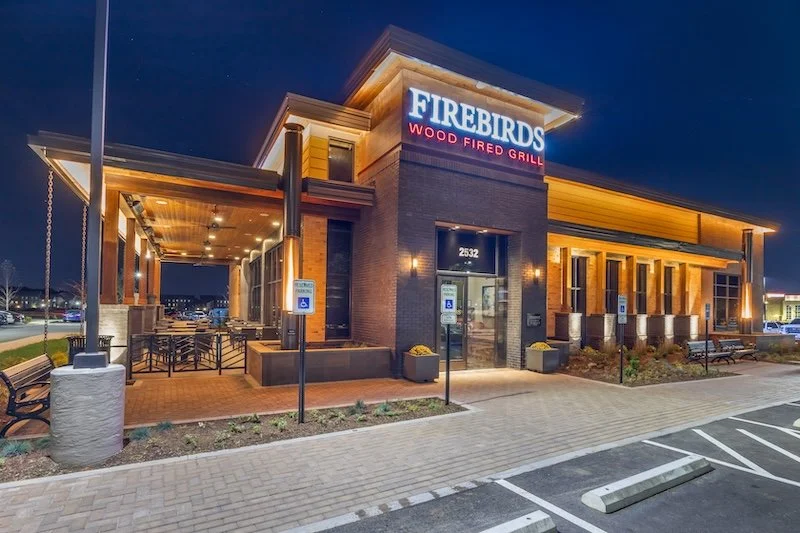
Steve Kislow is CEO of Firebirds Wood Fired Grill, where he has helped grow the polished casual restaurant brand from three locations to 70 restaurants operating across 23 states. Throughout his career, Steve has focused on leadership development, operational excellence, guest experience, and building restaurant cultures that consistently deliver strong financial performance.
Connect With Our Guest:
The Restaurant Academy: Run a Smarter, More Profitable Restaurant.
Discover the proven systems & solutions that drive sales, train staff, and maximize your margins.
1:1 Coaching Option Now Available.
Join The Restaurant Academy now: https://restaurantrockstars.com/joinacademy
Connect with Restaurant Rockstars on Social Media:
LinkedIn Roger: https://www.linkedin.com/in/roger-beaudoin-21590016
LinkedIn Restaurant Rockstars: https://www.linkedin.com/company/restaurant-rockstars
LinkedIn Roger Beaudoin: https://www.linkedin.com/in/roger-beaudoin/
Facebook: https://www.facebook.com/restaurantrockstars/
Instagram: https://www.instagram.com/restaurantrockstars
X: https://x.com/RestaurantRock1
Listen to the Restaurant Rockstars Podcast on Your Favorite Podcast Player:
iTunes - https://apple.co/2WaKyqV
Spotify - https://spoti.fi/3xGuOd0
Stitcher - https://bit.ly/3iFGAAb
Soundcloud - https://bit.ly/3lYBhho
-
Firebirds Wood Fired Grill CEO Steve Kislow explains how he helped grow the brand from just three locations to 70 restaurants across 23 states.
We dive into why hiring leaders deserves as much attention as site selection, how meaningful feedback builds high-performing teams, and the KPI he considers the ultimate predictor of long-term success. You'll also learn the importance of tracking critical financial metrics beyond food and labor costs, avoiding profit-draining tech investments, and creating systems that protect margins while delivering exceptional guest experiences.steve shares the leadership principles, accountability systems, and people-first culture that drive consistent success at scale.
Steve explains how great restaurant brands stay relevant year after year through continuous evolution, listening to guests, building loyalty that keeps them ahead of the competition. If you want stronger leadership, healthier profits, and a brand built to thrive for decades, this episode is packed with insights you can put to work immediately.
Listen on
Hey, everybody. Welcome back to the show. Steve. How are you?
I'm excellent, Roger. Thanks for having me
I would consider you to be an operator's operator 'cause you have extensive experience, but we're talking about Firebirds Wood Fire Grill today. Labor remains one of the biggest challenges with restaurants everywhere. So I wanted to ask you what is Firebirds doing differently to attract and retain really great quality team members?
And then what can a single unit operator copy, or what can they learn from you?
I think the magic of this business is that it is in fact a people business. And I think as long as that you continue to focus on having a great environment for people, you provide them safe, high energy, obviously making some money doesn't hurt either. But I think in order to attract the best people, you've gotta make sure you provide the best environment.
I think that's first and foremost in anything. It's-- You can talk all day long about, about just compensation, but it's more than that. It's making sure that when they come to work, they're actually enjoying what they're doing, that they see a purpose there. I think that's, that's where the real magic is
Sounds like engagement is happening at Firebirds, right? People are engaged. They feel like their opinions matter and that, they're making contributions that they think really impact the organization as a whole. That's what I'm hearing
Yeah, for sure. And I think it's more than just obviously in our business, it's, it's restaurant business, it's food, it's extraordinary experiences. But you've gotta have a purpose there, too. There's-- they've gotta feel like they're that they're not only being heard, but their work matters. Part of the way that we do that is through, a partnership with Alex's Lemonade Stand Foundation, where we've been raising money for the last 12 years for, finding a cure for childhood cancer one cup at a time. And it's really and truly part of our culture, and people feel like the work that they're doing, not only putting smiles on people's faces and and feeding folks and providing, extraordinary experiences, but also making a difference and literally finding a cure for cancer
That's wonderful. So that's a give back to the community and causes that matter. Thanks for sharing. So you've grown Firebirds now from its third location to more than 60 restaurants, so that's quite a track record of history. So looking back on your tenure, what would you say the biggest people management mistakes might be that restaurant operators are making today?
We talked about the good things that you're doing. Are there any mistakes that you would advise people to avoid in terms of managing their people?
Yeah, I had a conversation with a- about this very topic earlier today with somebody else. But, when y- so much time and effort goes into site selection, right? Like you said, we're we just opened our 70th restaurant,
Oh, wow, you're up to 70 now.
Week. 23 states, 70 restaurants, and, that over the course of the last 25 years. And site selection's important. It's some of the most expensive real estate the most expensive mistakes that you could make are in real estate. and I say that to say this. I think the amount of time and effort that's put into site selection sh- should and needs to also be put into people selection. You said it a
minute ago
Great point
people is everything, and you've got analytics, and you've got boots on the ground, and you've got all these, software programs to make sure that you're selecting the right location. If you don't select the right management team, the right leadership in that location, it doesn't matter how good the leader, the how good the real estate is.
If you don't have the right leadership, you're not gonna be successful. So I think putting as much time into effort into people selection as you do everything else, frankly. It needs to be, it needs to be priority number one
I'm really glad that you're using the word leaders and leadership. I was in the restaurants that I founded for 23 years and operated them, and I trained my people to be leaders and not the boss or just a manager, and I didn't like, I still don't like the word delegation. It's all about empowerment and recognizing talent in others and encouraging them to use those talents to take on additional responsibilities if they want it, and then incentivizing them so let's talk about accountability, Steve, 'cause that's a huge thing. I speak at major restaurant shows across the country, and people are constantly asking me, "Why don't my people show up on time? Why is their performance inconsistent? Sometimes it's spot on, and other times it's like I can't count on them."
And I ask them two questions: "Have you set clear expectations?" And, "How do you get accountability?" And they're like how do I do that?" How does Firebirds do that?
We, this organization has been built on feedback for the last 25 years, and, feedback truly is, and I-- by the way, I didn't make any of this stuff up you
Okay.
Truly a gift. There's not positive, there's not negative feedback. We're gonna do our best to make you better. and I think as long as you set... you talk about did you set expectations with people ahead of time. I think of the most important parts is setting expectations that you're going to get feedback here. It doesn't mean that we don't like you. It doesn't mean that we don't respect you. It means that, we wanna help you get better, and if you get better, we get better, and everybody's happier together. But I think just so that they can expect that. And then I like to talk a lot about, think-- picture every one of your employees, whether they be managers or hourly employees, boots on the ground with a, a little a little bag on their waistband, and consider that bag sort of the place where you're making those emotional deposits. And you need to tell people every time they do something great, and those are the emotional deposits that are going into that,
bank account or into that bag that they're wearing on their waistband. And if you fill that bag up with all of the things that they do great, and it could seem like really small things like, "Wow, those mashed potatoes are piping hot.
I can see the steam coming off them. Great job. Hey, great..." Whatever it is, let 'em know because if you fill that bag up, when you have to tell them what they need to do better or differently and redirect them, they've got a f- they have a full bank account that you can pull from, and you've earned the credibility with them to be able to do this.
I think it's really important that it's not just... Feedback isn't just about telling people when they're doing things wrong. It's building credibility with them so that they know that you care about them as a person, and you're also telling them all the things that they're doing right.
So that's receptivity to a message, knowing that you're building them up when they're doing things great, but you're not criticizing. I'm hearing critique is the word, and you're helping them improve their performance, and it's well-received based on that leadership approach. That's spot on right there
sure. It's making, it's making small adjustments over and over again to get, to strive towards perfection. You're never gonna get there, but you strive towards it
It's such a balance, and it's a skill, and it's almost an art to become a great leader where you're getting both respect and you're getting performance, but you also have empathy when people have issues and problems. What leadership traits are you looking for when in each of your stores, when they, when someone gets promoted to be a leader, it's like, what are the primary things you look for to make sure they've got the right stuff to up-level the whole team?
One of 'em that you just said the word empathy is a huge one. We have what we call our I TEACH values and it's just an acronym, but they're, they are the values that I think is really where people become great leaders. I is integrity, right? T is trust. E is the one that you've already said, it's empathy. You've got A, which you've already talked about too is accountability. C is caring, right? There needs to be a certain amount of kindness that people
it.
feel. And then H I think is one that a lot of us are missing and it's humility, right? There's a lot of egos out there.
I think to become a great leader, there's a certain amount of ego that's just naturally maybe there, but if it's unhealthy, then you're missing that humility piece. If you don't think that you have anything else to learn, it becomes very difficult to teach. And I think that's a really important one that, not everybody has that club in their bag
Question about it. And this can be a high-pressure, high-stress business, especially when the tickets are on the floor, and it's Saturday night, and the place is packed, and there's an hour wait out the door, and things sometimes go sideways that you can't anticipate. But you gotta maintain your sense of cool as well.
Never let the guests see you sweat or the team members, but just keep it all together and just rally them to continue to get their best, continue to provide the best performance while things are going. And then when it's all over, I think it's so satisfying for people, and that's part of the rush of this business, it's, like you said, it's a people business, it's a relationship business, but there's that team spirit and culture in a place where you just, you enjoy the people you work with, you enjoy your guests, and even when things are going crazy sideways, you just look forward to the end of the night, and then you can just take a breather and say, "Wow, but that was fun."
There's still an element of fun to this business, and I think that's important.
Oh man, the adre- the adrenaline rush and the
Yeah,
and just
There's nothing quite like it
Let's shift gears and let's talk about restaurant margins because, those are just shrinking all the time with much of our audience. There's inflation they can't control, highest labor costs ever, and I don't need to tell anyone listening, there's a laundry list of expenses in any restaurant. So let's talk about margins.
Where do you think operators are losing the most profit today and they're not even recognizing it?
To reach new customers, build loyalty, and keep regulars coming back, you need great marketing that works. Unfortunately, most restaurant owners don't have the time or the budget for effective marketing. But wait! PosterMyWall is an AI-powered marketing platform built for independent restaurants.
PosterMyWall gives you social media scheduling, email marketing, event promotion with automatic reminders and event calendars, plus menus, digital signage, and stunning designs. Millions of free templates and built-in AI do the heavy lifting. What used to take hours gets done in minutes. No technical skills, no agency needed, just pro-level marketing that actually grows your business.
Use promo code RESTAURANT30 for 30% off a premium subscription. That's postermywall.com
I think that there's a ton of technology out there and, and subscription-based fees. And I think it's really... A- and it's interesting because you want to embrace those, right? And you wanna make sure that you're embracing the right technology to improve the experience for the team member and the consumer. All of us know where the shrinkage is on, in both labor and commodities, but I think sometimes there's a lot of shiny new objects out there, and you have to really be careful that you're not that it's not technology for technology's sake. But everything that you're looking at costs money and you have to make sure that you're solving for an actual problem that exists today. Are you making the business more efficient? Are you improving the experience for the team member? Are you improving the experience for the guest? And if that's true, then it's worth continuing to look at. But it, there, there's just so many opportunities out there to spend money where you think it may help the business, and all, then all of a sudden you're what I like to call third-partied to death by everybody else that thinks they can do it better than you.
I think it's, trust your gut, trust your instinct. You know your business better than anybody else does. And if you have a problem to solve for, I think technology is there for that. But we just have to make sure that we don't all wind up with our heads buried in an iPad because this is still the hospitality business. This is still a people-focused business. And I think we all need to, stay grounded that way
Talk about systems. Whether you have one location, 10 locations, or 70 like you do, it's systems that really hold the ship together and, get you past those challenges, but also give you the KPIs that are important and the marketing. And what are the important... What are... If, let's think of this as a three-legged stool, Steve.
What are the three most important systems at Firebirds?
Now, I think it's the systems that ensure a great shift. And I know that may sound like the most simple way to look at this, but, I li- I like to say that we are we throw 14 parties a week, right? Seven lunches and seven dinners, and you are a party planner. Party planners don't
I like that
Yeah, party planners just don't show up and throw a great party. They have, they have a checklist. They have things that they need to go through to make sure that there's a certain amount of preparation for each one of those shifts. And if you can make sure that you have those disciplines, and the very simple front of house checklist.
Are the lights on? Are they on correctly? Are all the doors unlocked? Is the floor clean? What do the bathrooms look like? It's all of those touch points that both your guest and your team members are are using and dealing with every single, every one of those shifts that make that shift great. If you don't do a line check and you don't know that all the food is exactly right and you have all backups for the food, there's gonna be red lights versus green lights, and there's gonna be opportunities during the course of that shift that you're gonna have to stop service and not be as efficient as you possibly can be.
So I think it's the very simple disciplines that make sure of those 14 great shifts a week
Excellent. I love that you have s- 14 parties a week and everyone is a party planner. And there's overlap there. People stay in their lanes, but they also see something that might be missed, and there's a lot of eyes on those parties, right?
For sure
That's fantastic. Let's talk about KPIs. You probably have a chief revenue officer based on the size of your company, but how involved do, the team leaders or the general leaders in each store get involved in the financials, and who oversees all that, and what do you look for and look at?
We look at just about everything, but we like to say, if you really wanna manage something well, you've gotta measure it just as well. It's all of the normal things that you would expect. It's food cost, it's bar cost, it's labor cost and those are, those are the obvious ones, and they're obviously the big two, so they're the, they're the most significant.
But it's not just making sure that you run low enough labor, it's making sure that you have the right amount of people on. It's, just because you have just because you're under a labor benchmark doesn't mean it's right. You gotta make sure that you're staffed appropriately. So labor, food costs are important.
And then, obviously in today's day and age, it's really continues to be about the guest experience, and we have more ways to measure that today than we ever did 20-plus years ago. 20-plus years ago, there was, it was shoppers and secret shoppers and things like that. Now everybody's a secret shopper, so of course you're measuring all the things that impact our our guests today on decisions that they make.
So it could be social media scores it could be organic feedback. We have opportunities for for third parties to come in and look at, cleaning and sanitation scores. So those are some of the other KPIs that we look at on a ve- very regular basis. And then the one that I call the, I don't know if you've ever seen the movie Moneyball, but the one that I call the Moneyball stat that's retention, right?
Both from an hourly perspective as well as from a management perspective. It, it is all about keeping the same great people to continue to make your business better. And so I think of all of those stats I just said, retention is the single most important
Really glad you mentioned that because there used to be a statistic, and I'm hoping it's still accurate, but they basically said right after the pandemic that the typical tenure of a new restaurant employee was somewhere between three and four months. But every time you hired one of those people, got them up to speed in the job, lost that person, and then hired a new person and retrained that person, we're talking like 3 to $4,000 in lost wages and time and productivity, which no restaurant can afford.
So looking at that retention as a KPI makes perfect sense. I'm really glad that you mentioned that 'cause that is so important to our audience to track. And then that goes back to the leadership piece, because if you built a great culture, if you got great leaders, if you recognize the talents and the contributions of the people, as you mentioned, then your retention is only gonna go up and your turnover is gonna go down.
So excellent points for sure.
I would encourage people too on the retention side, to, to measure yourself versus the top quartile because you don't wanna be... it's very easy to get lost in the, whatever the average in the restaurant industry is 100% turnover, and my turnover is, 97%, so I'm, I'm better than the average.
I think you should look in the mirror and ask the question average what you wanna be? So instead of measuring yourself just versus the overall restaurant industry benchmark, measure yourself on a, what is the top quartile, and do you wanna be, do you wanna be the best or do you wanna be average? And that and that
Absolutely.
for
Yes.
any KPI for that matter.
It absolutely does, for sure. We're looking for excellence in everything we do every day, and then consistency of performance. But obviously, if you've got retention, longevity of staff, then they continue to rise to new challenges. So that's tremendous. You mentioned the guest experience a moment ago.
I I wanna touch on maintaining, if not growing margins with rising costs. Not every restaurant listening to the podcast has the leverage that you have, but how are you maintaining, if not growing your margins, while continuing to provide value to the guest for the money they're spending?
It's a good question. And I think the, You get a couple of things, first of all. I think the key word out there today that we continue to hear is value. You just used it in the question. And value is not... I think sometimes it gets lost that it's about, price and winning, winning based on price.
I I think value is a more complicated equation. Call it food and beverage plus service plus ambiance divided by price, and that gives you some sort of a formula of, quote-unquote, is it worth it? And it, and you could be on the lower side of price or the higher side of price, and that equation is still is still the same question is it worth it? And I think it's important. This is one of the strategies that we have taken on in that polished casual space is that you don't wanna live by the LTO and, just having some sort of a, a lower price point feature that's a limited time only. I think you've-- the consumer has to find, the f- consumer has to find value on your evergreen menu.
It's gotta be part of your every day. It doesn't mean that LTOs don't work and you still can't use some, promotional value. But I think the consumer has to see the value on the everyday menu as well. We have, in the last couple of years, added a couple of categories one being our three-course dinner category, which is, a great value with some really good options that provides an opportunity to get something from our, starter soup and salad type menu. A handful of great entrée choices that are all coming off that wood-fired grill, which is really part of our point of differentiation. We load hardwoods into that into that wood fire all day long. It adds that, that smoky, charred flavor that people love. And then you can get a dessert as well.
So I think having that and all at a price point below forty dollars in the polished casual space. It's plenty of food. It's great options. And then at lunch, we have our perfect pair, which, similarly you have opportunity to get a little something from two different categories.
So I think again, it's about value and then it's about delivering on that experience when the consumer's in the restaurant. So I think those are important. And then I think being unique and ensuring that you have, truly have a point of differentiation that adds cravability the experience. They gotta be able to... Th- the consumer when they're making those choices with their money today, they've gotta be able to say, "I can't just get this anywhere. I'm making this choice because this is unique to Firebirds or to wherever."
Wow. That's a lot to unpack, but that makes so much sense. So again value is so important. That leads to repeat business and loyalty, doesn't it? Everyone, I think everyone is familiar with that term, the lifetime value of a customer, and that's a KPI that you wanna make sure that you're working on all the time.
What are you doing to ensure repeat business? 'Cause it's less expensive to obviously have influencers and raving fans for your business than constantly seeking new customers. Although you want that, it's so much more cost-effective to continue to get people in multiple times a month at your restaurants.
What are you doing for loyalty or to encourage repeat business?
I'll start on the loyalty side. We have a database of two and a half million people with some really good engagement. It's called our Inner Circle. It's not a points-based loyalty, at least not today. It is, really more our super users that we've connected with over the last 20-plus years. Of that two and a half million, you've got about 1.2, 1.3 million of those people that are highly, engaged, opening communication from us on a regular basis. Again, sometimes there's a, something promotional that they may receive. Other times it's just, reminding them of what we do and how we do it.
It's celebrating birthdays with them. It's things like that. And then on top of that, I think the world today is so data-driven. And I think being able to aggregate, collect data. We have recently, in the last year and a half, two years added a data department, i-in our home office support team that has, that is aggregating this data, and it's data about consumers, how they spend money, what they spend money on, what their propensity is, as far as categories go.
For example, if, Roger, if you're a guest of ours and you never drink wine, we-- it's our job at this point, with the ability to collect data, to know that, so when we are marketing to you we should be using the things that you... you're a bourbon guy, so we're gonna market to you with, a bourbon bar-focused item. Or you typically eat steak and we know that based on your spending history, so we're gonna market to you regarding our new filet mignon special. So I think it's being smart around, how we're messaging and how we're communiti-communicating to the guest versus just everybody seeing the same thing
That's amazing. That's tremendous, actually. Let's switch to technology. There's so much tech out there, and there's new tech all the time, hospitality-related tech. And a lot of it, most of it, is centered around AI. Some restaurant operators are still really skeptical, and they're, they're afraid to dip their toe in the AI water.
What technology is really a game-changer for Firebirds, and how are you using AI today?
It's a great question. And it's scary 'cause it is progressing by the minute. In, in the 30 minutes that we've been on this call, AI has progressed and there's new things out there
Oh my God
there. So I think it's staying, ... It's keeping yourself educated. It's understanding how you can use it. Again, back to some of my earlier comments how are you improving or removing friction from both the team member's experience and the consumer's experience? One of the ways that we are using AI today, and I think probably the most significant way, is, through when our consumer makes reservations by the phone, which still there's many that do and prefer to call the restaurant. When those calls are coming in during the busiest times of the night, we do have an AI bot that is answering the calls, and it's pretty slick.
It really feels like a human being that's answering
And this
That's cool. Yeah
and it's integrated with our OpenTable system to, if you ask for 7:00, it's not available, they're gonna tell you all the times that are available. And we're able to capture reservations. Whereas before,
if
the highest volume of calls are coming in at 6:15 or 6:30 on a Saturday night, it's possible we miss a call from a guest because of the volume of calls coming in.
We no longer miss any of those calls. So A, we are capturing a reservation that we may or may not have missed before, and maybe more importantly, the consumer is not left frustrated because they weren't able to get in touch for the restaurant. So it's a win-win on both sides there. And again, that's like what I talk about with removing some of that friction. So that, that's a significant way that we're using it today. Obviously, we're using it, within our home office support team, too, just for, executive summaries and, digging through some of the KPIs to help us be more efficient in the way that we read.
Yeah, there's so much tech out there that is removing the human interaction, and that sort of eliminates that word hospitality, which is the foundation of our business. So I'm sure you're avoiding those things. And of course, there's quick-serve convenience features and all that, and we're not talking quick-serve restaurants here in your concepts.
But that is something that I've always believed in. Hospitality should only be enhanced by technology, but not detracted from it. So sounds like you believe that too.
Yeah, said. I think that's, I think that's the important part is can you make hospitality better by using technology? If the answer is yes, then it's technology that's worthwhile pursuing. A- and if the answer is I'm not sure, then you better dig deeper
Every restaurant, whether they're a large organization like yours or a single independent place, should always keep an eye on the competition. What do you do about your competition, and do you secret shop them, and how do you stay ahead of them and play your best game, but literally keep ahead?
Of course. Constantly shopping and, looking to see what everyone else is doing out there and how they're doing it well. I think a mistake that many leaders or managers make earlier on in their career is they go into their competition and they look for all the things that they do wrong, and they go, "Ah, we're not...
i'm sure that's not happening in my restaurant right now." I like to look at all the things that they're doing well. And those are the things that you can really learn from. Just because somebody, missed a greet in one of our other restaurants, it can happen anywhere. I'm paying attention to what things they may be doing better than we are or what great, new menu or bar innovations are out there that we can... L- let's face it, most of the things that are in the restaurant business today are years and years of of copycats, maybe done a little bit better here and there. But there... it... Very few people have really great, unique ideas out there, so when you find one,
Y- you can ab- we like to say we like to Firebirdize it. So fire, find one and make it part of our brand
That sounds like that's part of the culture also, right?
For sure
So you've been in this career for a long time, and I'm sure you've seen restaurants that have come and gone even after decades of guest service. So staying relevant is super, super important. I can give a specific example. In the state of Massachusetts, I think at one point it was the highest grossing restaurant in the country.
I think they had over 1,000 seats. It was a place called The Hilltop Steakhouse. It was around for 50 years, and then suddenly they didn't keep up with an aging population. They didn't market to younger people coming through, and now that business is a shopping mall. And there's the sign is still there.
It was a giant cactus, and now obviously the cactus no longer promotes that restaurant. So tell me about staying relevant. That's all part of keeping an eye on the competition, but you also have to evolve and keep shifting with consumer demand and expectations. And, we could talk about this all day, but what does that mean to you, staying relevant, and how are you addressing it?
It it's one of my favorite topics and probably the thing that we're most proud of is the is the way in which over the last 25 years that we have evolved. And I think evolution versus revolution is truly the key to what you just described. It's small changes all year long for an extended period of time, in order to stay relevant.
Because you're con- if you're doing that, when your consumer comes in, they just always feel like there's a freshness. If you've gotta get 15 or 20 years down the road and wake up one day and say, "Oh, we are tired," and you haven't... then all of a sudden it's a revolution and the consumer doesn't recognize your brand anymore. So if you look at what Firebirds is today, and we're fortunate here in Charlotte, North Carolina, where our home base is we have Firebirds number one, we also have, Firebirds number, I can't remember what it is, 66 or 67 that's that's 10 miles or so down the road. So they are o- opposite ends of the spectrum as it relates to the continuum, in development. And you can still walk into each one of them say, "This is a Firebirds, and this is a Firebirds." but the evolution from one to the other, whether it be color palette, menu the... and it's the consumer that's taken us there.
You listen to the consumer, you pay attention, and you continue to make small changes to every part of your business over the course of a long period of time. And they won't necessarily notice it i- in a negative way, but every time they'll come in, it just feels fresh to them. And let's face it, there's a lot of great concepts that continue to come out that out every year that are, real sexy and they have great food, and you've got to stay relevant if you want to be part of that part of that conversation
I'm hearing that there's certain nuances among the stores, but then there's rock-solid things that won't change where it's gonna feel like a Firebirds in terms of, and maybe like you said, the colors are a little bit different. But again, the consistency is there. So you know that you're gonna get a great experience, the quality of the food and the drink is gonna be great, the service is gonna be great because those are non-negotiables, right?
Absolutely
So you've had, oh gosh, 30 years plus in this business. Wanna take us on a memory lane journey of where it all began for you, and why hospitality, and what are some of the things you've done before you landed at CEO of Firebirds?
Wow. So like many in this business I was 14 years old and the only place I could ride my bike to at the time to, to work, and I wanted to work, I wanted to make money was McDonald's. And I
had
a a great experience. And from 14 to 18, s- worked at McDonald's as a part-time job and got an education in every part of it.
And I think it was a-- that experience is definitely what first whet my appetite into this business and where I've I fell in love with it. And I think I fell in love with not only the hospitality side of it but that energy that we talked about earlier, those high fives that like, what record can you beat?
And the, com- being competitive with each other a- and putting smiles on people's faces and feeding people. All of that was great. And I, then I went to went to college and, while I was in school, I was waiting tables and, candidly, I would skip class to wait tables, and not because I needed the money, but because I-- there was this just passion and love for being in that environment.
And, graduated, got my degree and frankly, I was supposed to be an eye, I was supposed to be an eye doctor. I went to school pre-med. I
No kidding. Oh my gosh. There's a flip, huh?
the-- a total flip. I would go to the li- I think in my head, I was a pretty good student. I thought that's what I was supposed to do.
And I would go to the library, and I'd be taking out books on, becoming a wine sommelier and learning, learning about food and learning about wine. And I wouldn't take out a book on the human eye. That just wasn't where the interest and the passion was. So I think at some point, I just recognized I've gotta do-- if I'm gonna be really successful, I've gotta do something that I love and am passionate about. so from there, I worked at M- Morton's of Chicago Steakhouse for nine years. Got, again, a great education there and then been with Firebirds for the last almost 24 years. And, had an opportunity to open our very, our third restaurant as a general manager and have done just about everything since then.
A- and I think that gives me some, call it street cred, where I've
Oh yeah
I've done just about anything I could ask someone to do. and I'm proud to be able to say that. I'm, I'm proud of this brand. I'm proud of all the the work that we've put in over the years.
And fortunately for me, I've been blessed to be surrounded by really talented leaders. And we've all put our thumbprint on this thing and it's been a heck of a, it's been a heck of a ride for sure.
You still have an expansion plan beyond the 70 units? What does that look like?
It looks like about 10% a year. Anywhere from this, we'll open seven this year. Like I said, we just opened one a couple weeks ago. We got six more to do between now and the end of the year. We'll open another seven to nine next year. So you can expect somewhere around 10% growth per year. As far as the strategy goes, we like, like I said, we're in 23 states, so there's really an opportunity to really fill out that footprint in those 23 sta- states. I like to say grow where you know. We have a lot of really good successes across those 23 states. I don't think there's a lot more reasons, at least in the near future, in the next, two to four years, to blaze any new, trails and go to the Pacific Northwest or California or New England 'cause we already have a footprint where we get to leverage some of those efficiencies, whether it be brand awareness being the most important one, distribution leadership.
So I think we, we continue to stay where we already have those things and continue to leverage them.
When I first started in this business, obviously I had a lease situation, and it wasn't the most positive thing, but it was a stepping stone. But I always believed since then in owning the real estate and controlling your destiny. Do your stores own any of the real estate, or are they mostly leaseholds?
Like, how does that work?
It's a pretty g- good combination of a few. We do some ownership. We are private equity sponsored at this point. So sometimes a purchase, maybe a sale lease back once we purchase the property. But putting that money to work to be able to open more restaurants, is typically what we like to do.
Yes
y- we were more-- we had more of the real estate that we owned. But as far as, types of... We do some end cap stuff. We do ground leases and we do some conversions as well. Not a ton, but we do some. I think that's part of the beauty of the brand is that it's pretty versatile to be able to go into some different boxes
Fantastic. Steve, you've been a fantastic guest, and you shared so many, so much wisdom and operating knowledge that our audience will definitely benefit from, so I appreciate you being on the show
My pleasure. It was a good time
Thank you that was the Restaurant Rock Stars podcast. Thanks for tuning in. Can't wait to see you in the next episode. Thank you to our sponsors this week. So everyone stay well, stay tuned, and I will see you in the next one.
Costs are rising and profits are shrinking. I can show you how to make more money. I built the online Profitable Restaurant Academy just for you. You'll learn how to attract and retain a dream team, train your staff to sell and increase check averages, drive new and repeat business, control food and labor costs, and the biggest needle mover of all is my menu profit accelerator.
With this tool, I find hundreds of thousands of dollars in lost profit per restaurant location. Stop guessing and start building a restaurant that runs smoother, earns more, and gives you back your freedom. Visit restaurantrockstars.com to build a more profitable business from the inside out. Want to work with me personally one-on-one?

AI-powered marketing app that brings Social media, email campaigns, event promotion with automatic reminders and event calendars all into one place
Millions of free templates and built-in AI do the heavy lifting. What used to take hours gets done in minutes. No technical skills, no agency needed.
Use promo code RESTAURANT30 for 30% off a premium subscription