Restaurant Systems That Build Profitable Teams…Without Constant Turnover
Every restaurant owner wants higher profits.
Most think they need more sales.
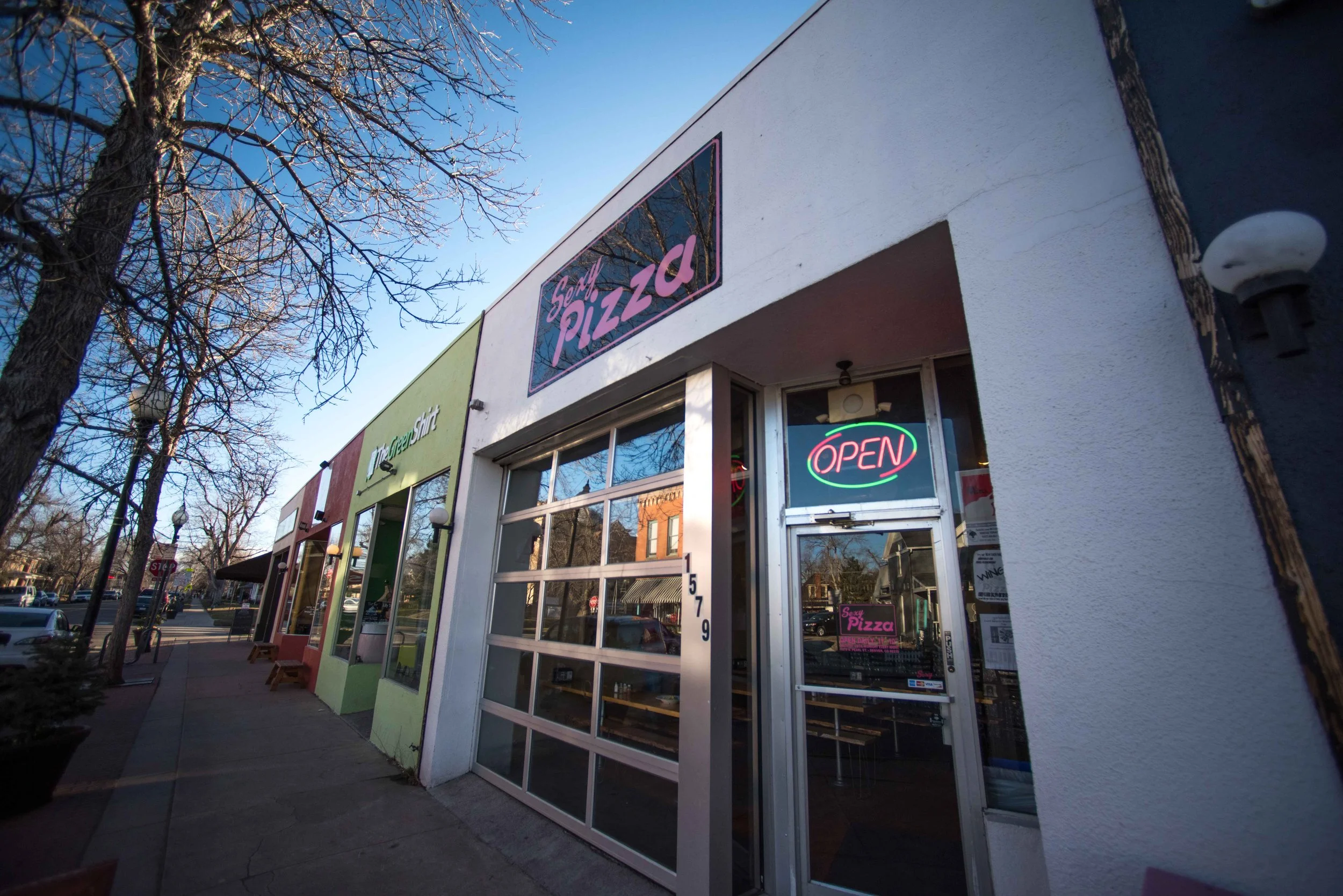
Kyle Peters believes they need better systems.
As co-owner of Sexy Pizza, Kyle has helped build an operation where systems drive nearly every part of the business, from hiring and onboarding to inventory, labor, accountability and marketing. Instead of constantly fighting turnover, his team focuses on creating an environment where employees want to stay.
In this episode of Restaurant Rockstars, we dive into the practical systems independent restaurant operators can implement immediately to improve profitability while creating a stronger team culture.
In this episode of The Restaurant Rockstars Podcast you'll learn:
Why employee retention is a better investment than constant hiring
The benefits that actually reduce turnover
How checklists create accountability without micromanaging
Leadership practices that build future managers
Why every restaurant should review KPIs every week
The financial numbers Kyle tracks daily, weekly and every accounting period
How labor leakage quietly costs thousands every year
Inventory systems that reduce food cost variance
Why recipes are really operational systems
Suggestive selling techniques that increase average check size
Community marketing strategies that create loyal guests
Creative loyalty programs that generate repeat business
Ways to use technology without overcomplicating operations
How strong vendor relationships improve long-term profitability
One of my favorite takeaways from this conversation is Kyle's belief that every dollar found through better systems is one less dollar you need to recover through higher menu prices.
That's a lesson every restaurant owner/operator can benefit from.
If you're looking for practical ideas you can implement this week to improve operations, reduce turnover and strengthen profitability, you'll want to listen to this entire conversation.
Run a Smarter, More Profitable Restaurant.
Discover the proven systems & solutions that drive sales, train staff, and maximize your margins.
1:1 Coaching Option Now Available.
Join The Restaurant Academy now: https://restaurantrockstars.com/joinacademy
Connect with Restaurant Rockstars:
LinkedIn Roger: https://www.linkedin.com/in/roger-beaudoin-21590016
LinkedIn Restaurant Rockstars: https://www.linkedin.com/company/restaurant-rockstars
LinkedIn Roger Beaudoin: https://www.linkedin.com/in/roger-beaudoin/
Facebook: https://www.facebook.com/restaurantrockstars/
Instagram: https://www.instagram.com/restaurantrockstars
X: https://x.com/RestaurantRock1
Listen to the Restaurant Rockstars Podcast on Your Favorite Podcast Player:
iTunes - https://apple.co/2WaKyqV
Spotify - https://spoti.fi/3xGuOd0
Stitcher - https://bit.ly/3iFGAAb
Soundcloud - https://bit.ly/3lYBhho
-
Today I'm speaking with a real operator's operator. He's a co-owner, but he's in the trenches, and he's a true leader. He leads by example. But mostly, Kyle Peters of Sexy Pizza talks all about the systems that make his four locations super successful, everything from onboarding and training his team, the checklists.
We talk about the critical financial numbers, the KPIs that are non-negotiable. So many ways to look at things every single week. He has a feel for his business, every penny in, every penny out. He operates much like I did when I owned restaurants. Very impressive. We talk about the hooks and all the marketing strategies and the loyalty and giving back to the community.
But mostly, it's all about running an organization that cares for its people, because they are the foundation of the business. So many nuggets of information from start to finish. You're not gonna wanna miss this episode. Stay tuned.
Kyle, I'm stoked to have you on the show. How are you today?
I'm great, Roger. Thanks for having me
Fantastic. Restaurants everywhere are still struggling with labor. They're struggling with shrinking margins and rising costs and all kinds of issues value to guests.
We're gonna cover all these things today. So let's start with a funny restaurant story. I don't know if you have one, but is there anything you can think of where you think back, "I can't believe that happened, but I can laugh about it now"?
Yes. This full service restaurant that I was working at, years ago. I was a line cook. and you take for granted what people know in the kitchen because you've just been doing it and it's just, normal to you. So we asked our dishwasher if he could wash our potatoes before we put them in the oven for baked potatoes, and he puts them on a dish rack and he slides them through the dish machine.
Oh, no. Unbelievable. Seriously. Oh my gosh. Oh, that's a riot. Oh, that's good. Great way to start things off. Thanks for sharing. That's funny. So let's talk about labor. Restaurants are struggling with labor. Finding and retaining great people seems to be a big challenge for everyone. How's Sexy Pizza doing with labor?
Any issues? Any challenges?
I mean, always Roger, but we stopped treating, treating it as a hiring problem and started treating it as a retention problem because turnover is where the money actually goes.
Totally. Yeah
you know we say it's sexy to take care of your team, but
that slogan for us, it's a P&L decision. Full-time is thirty hours at Sexy Pizza, not forty, and at thirty hours you get health, dental, vision. Part-timers get Teladoc, pharmacy, and dental discounts. Everyone accrues PTO and paid sick leave, and we match in the 401. We've got people who have been with us for years at every level. And so when you're not constantly rehiring and retraining, you're not constantly bleeding.
That is fantastic. Not a lot of restaurants can compete with that. Obviously, the costs involved and obviously you need volume in your business, you need multiple locations, but what a testament to how you take care of your team members. That's fantastic. So aside from that, let's just say I have a restaurant and I'm seasonal.
I'm only open a couple of months a year. I've only got one location. It's like, how can I retain people? What is it about culture, about training or onboarding? What have you done that's successful besides the perks and the benefits that really lead to greater retention?
I mean, I think benefits is the big key, and I can't speak for, seasonal restaurants, although I spent some time doing that in the past on the other side of things. But I think pe- operators chase-- you know, people chase the hourly rate because it's the number on the job post.
Right
fifty cents an hour gonna-- it doesn't necessarily keep anybody. I think what keeps
Knowing they can go to the dentist. They've got that stability, right? Turnover, again, is enormously expensive. The hiring, the training, the mistakes, the slower tickets while you, while somebody learns, that station or you know how to toss dough. And most operators never actually put that cost on paper. I think if you did, you'd spend the money on the benefits instead because it's cheaper. So I think I just come back to the benefits because, that stability I think is what people are looking for. Even in the restaurant industry, when people... you've got, higher, a higher turnover rate anyway, so benefits!
How about recognition and rewards? What do you do in your stores that really recognize people taking initiative, going above and beyond? Is there anything formal or anything fun or creative that happens in the stores on a regular basis?
Yes. First and foremost, communication is the backbone of all
Agree.
any business, really.
But one fun thing that we do we actually created our own currency. We call them Sexy Bucks. So if you go above and beyond, you come in early, you stay late, you cover somebody's shift you just pick up a cleaning task that isn't on the weekly or daily cleaning list, and you just do it because you're filling your time by keeping busy and helping the team out,
Sexy Bucks. You can use Sexy Bucks for, dollar for menu items, maybe a beer after your shift. Or, you can turn them in and we'll buy a gift card to the grocery store or an Amazon gift card are pretty popular 'cause you can get about anything on Amazon these days.
Yes, it's true
And that's really fun. Or and so beyond our Sexy Bucks we do weekly store meetings, bi-weekly with the management team. I think the loudest form of recognition, though, is the latter. Every single one of my managers started as an hourly team member and worked their way up. Our area manager, Chris Eberlein, started as a delivery driver.
He now helps oversee all four Sexy Pizza locations. And so when your team can look at the person running the company's operations and remember when he was running deliveries, you don't have to convince anybody the path is real
I love that. Now, that definitely speaks not only to leadership, which we'll get into a little bit more, but it speaks to creating what I call intrapreneurs, people that act as though they own your business, and they take ownership of their particular area, and they take initiative, and they know that there's future opportunity, but it's a point of pride.
They've got solid judgment, and they do great things for your company, and all you do is get out of the way and give them a new objective and they're not gonna wanna let you down. So it sounds like a lot of that's happening with Sexy Pizza. That's awesome. Terrific. So that helps in retention also.
Like you said, it's like you see somebody that started out as a delivery guy or in the dish pit, and now they're, like, leading others, and they're... It's like, wow, I could do that. This is one business where you don't need a formal education, and you can rise to the top. You can start your own restaurant, and you don't need a formal education.
You just need that fire, that passion, that, that belief that if I apply myself, it can be recognized, and set yourself apart. So wonderful. Wonderful. So you're a co-owner of the business, okay? You're not just an operator, but you're also an owner. Let's talk about leadership and how, how would you describe your leadership style?
Leadership style. I mean, I like to think that showing people that not above doing everything is important.
Exactly. Leading by example
to d- yeah, I don't have time to do everything, but I'm not above washing dishes, and I learned that a long time ago. Be the
Me too
pick up a broom. Be the first person to push dishes through the dishwasher. Get on your hands and knees and scrub, but also explain the why behind it, and I think the why is the most critical where I'm at now. When I took over daily operations, we had one store in Capitol Hill, and I was making all the pizza, and I spent the years in the, on l- I spent years in the line perfecting recipes and building the systems. As we grew, I moved further behind the scenes. But the real evolution is that I went from doing all of the work to designing the systems that do the work. So now we've got area managers, GMs, and AGMs running the locations. And so my job now isn't necessarily to do all of that stuff and wash all the dishes, but to make sure the systems that my managers are running and everyone's running are worth running
Awesome. How many locations?
We've got four locations
And a plan to grow, of course, I'm sure
Yes, so to, I mean, with systems, that's,
Yeah, that's what it is.
Like we gotta put our systems
That's the key
in place before we, we can scale. Otherwise, we're just trying to play catch up the entire time
About what do you look for in new team members when you're bringing them in? Is it experience, or would you rather take a personality and know that you can shape them into sort of the culture of Sexy Pizza? What's the whole, what do you look for? And then let's talk about the onboarding process
What do we look for? pizza I think is one of those, people think about it as that, quintessential college job, right? Whether you're a delivery driver or, y- it doesn't have to be pizza necessarily, but, or, restaurant. So it-- you don't have to have all the experience in the world.
In fact, sometimes it's nice when you bring somebody in, they're driven, they're motivated, they don't have any experience. You can teach them our ways. We've got systems. We've got training packets for every position. Through the onboarding process even during orientation, explaining everything through the handbook, front to back.
So looking for somebody that wants to be a part of the team because the team is the most important thing. We win and lose as a team. I know that sounds
Definitely.
very cliche
no, it's absolutely true. They're the foundation of your business.
Exactly right. And without... The, the team generally tells you who's a rock star and who's not, right? And so listen to the team and allow them to help each other by using the systems we put in place.
Restaurants are also struggling with accountability. I think that's important. Not everyone has the same work ethic, maybe the same approach to a position. Sometimes they're on their phone, all that kind of stuff, and we all need to be pulling in the same direction, like you say. Is there a key to accountability, setting expectations, and then holding people accountable to that?
What happens in your stores?
I think the word that we probably use the most all day, every day are checklists.
There's a checklist for everything, not
Excellent
just a daily cleaning checklist, not a weekly cleaning checklist, but a checklist for... I mean, your your prep list is a checklist for the prep people.
They fill out their checklist in the morning based on what you had left over from yesterday, and they build their checklist, and then they start and they complete their checklist. Then before they leave, they've got to do their end of shift checklist to s- to set the next team up for success. So the next team the mid shift, the night shift, whatever it may be, the following morning shift, they're not having to finish somebody else's checklist before they start theirs, right?
So I think accountability starts in the checklist because if everybody can come back to literally it's black ink on white paper or, on a screen if you wanna go digitally, but they can then all come back to that and hold each other accountable and hold themselves accountable
Okay, that's wonderful. That speaks to culture also. People, when they stay a long time, and you don't have high turnover, and people love working together, and they're friends after work and all that sort of thing, that is called, team spirit and camaraderie, and it's reflected in the guest experience.
A guest walks in the door, they can tell if people enjoy what they're doing or they're just there earning a paycheck. How would you describe the culture of Sexy Pizza? What's it like? If I was a new person walking in the door, and I'm just starting for the first time, what am I gonna feel as a person after I've been there for a week or two or three?
I'm gonna be absorbed in a culture. How would you describe that?
I would say that, y- I mean, you're spot on. It's a team culture. Everybody wants to help each other out and ideally that's what you're feeling from day one. Through the training, the systems that we put in place that everyone's trying to follow. I mean, everyone makes mistakes and that's okay,
Sure.
That feeling of your team member coming to support you and not telling you that you did something wrong, but say, "Hey, here's the better way of doing it.
Here's why we want to do it this way." And I think that's, that's again, the most important thing is understanding the reasons behind why we do it 'cause it's so much easier to retain the information if you know why you're doing it in the first place. So having a team around you that envelops you into, it's work. We're going to work so we can earn money and do the f- fun things we want to outside of work, but let's also have a good time while we're at work and enjoy the people that we work with. And if we can do that, then it makes coming to work, a lot easier, right? And again, you wanna do it for those around you, not necessarily just for the paycheck.
Definitely. Definitely. Okay, that totally speaks to team spirit and bonding. Do you do anything outside of work with the whole team at all?
Let me ask you, does marketing your restaurant feel like a second full-time job? There's always a special to promote, an event to fill, a menu to update, and before you know it, you're juggling multiple apps just to keep up. Listen, PosterMyWall is the AI-powered marketing app that brings social media, email campaigns, event promotion with automatic reminders, and event calendars all into one place, plus menus and great designs.
Everything works together, and you won't believe how easy it is to use. Millions of free templates and built-in AI do the heavy lifting. What used to take hours gets done in minutes. No technical skills, no agency needed. Less time marketing, more time running a great restaurant. That's PosterMyWall. Use promo code RESTAURANT30 for 30% off a premium subscription at postermywall.com.
Yes. Annually, of course, we do a holiday, we do a holiday party. And so just, several months ago-- we don't do it until end of January, beginning of February, so we can get through the holiday season. And restaurants are typically busy around that holiday season. But we just did a big, huge holiday party back in February.
I know that was a while back. We'll probably do something this this summer, this fall before football season and Denver Broncos season s- kicks off. But in our holiday party, we do... So those sexy bucks that I was talking
Yeah, I love that
keep, you can also keep and hold those and then purchase kinda like a internal raffle, like a, a raffle item.
And so you can pur-purchase more raffle tickets that you can then, have a lot of them, then we get prizes, and we buy a bunch of prizes for everybody, including all the way up to, we did a 70-inch TV last 70-inch TV last year.
Fantastic
you can use those sexy bucks, buy more raffle tickets.
You can do fun things before the raffle starts at the holiday party to earn more raffle tickets. And so things like that, right? And of course, eat and drink and have a good time and bring all four locations together, so that way the people that have worked at different locations can see each other again and, maybe commiserate a little bit over, those fun customer interactions that we've had.
So that's
This, that's great. I was gonna ask, are the stores fairly close together? If you've got a shortage in one store, can people swing over and do shifts in another store? Are they close enough to do that?
Absolutely, and encouraged too. It makes-- on the payroll side of things, it's not necessarily encouraged, but that's,
On the back end, we'll
Show must go on. Yeah, exactly
yeah, we wanna make sure that our team has an opportunity to get as many hours as possible, and if that means that you're gonna go work another store and you're gonna get overtime, but they need it, let's do it.
That's more money for you in your pocket, and otherwise, we're not gonna have that team member there, that set of hands to work that shift. So that team at that location is gonna be down a person, and our customers are gonna suffer because of it. So if we've got
Why not? Not just the people, but also the product too.
Excellent. Excellent. That's great. Let's shift gears. We talked about systems, obviously with leadership and initiative and Sexy Bucks and the checklists and everything that hold people accountable, and also the benefits. All of that is a system. Financials is the next big thing. Shrinking margins, profits.
It's like owners are tied to their stores. They're missing their kids' soccer games and the kids growing up and all that because, again, they're either short-staffed or margins are tight, and it's like they've gotta pitch in all the time. What are the financial systems that work at Sexy Pizza, and what are the key performance indicators that you really look at regularly?
We track all sorts of different KPIs. Daily sales, of course, sales by day of week as well, labor percentage, sales per labor hour, check averages, 'cause we're always working on upselling.
Oh, good. I'm...
side
Excellent.
Absolutely. It's a,
We've got a whole phone script for it because we do so much, over the phone still. On the weekly side, we count full inventory every week, every product
Excellent
run our COGS, look at our ideal versus actual. We take those variances, we put them up on whiteboards for our entire teams to see so they know what products we're, we're looking at and we want to hone in
Budgeted labor versus actual in dollars as a percentage. And then I think one that people underrate a lot and where the money actually is scheduled hours versus actual hours and finding that difference on a weekly basis, right? Then every period, we go through the P&L line by line with store managers. They also have real-time access to their P&Ls at all times, not just when I show up with a report.
So daily, weekly, every period, talking about these things, giving real data, those are the KPIs that we're constantly tracking top to bottom, every line item on the P&L
So fantastic. So what I'm hearing, not only is this a system, and we're using that word a lot, but it's true, but you are running a business. You're not running a restaurant, and that's where a lot of owners or managers go awry. They're trying to run restaurants, they're trying to put out great food, but they're not watching the critical numbers every single week, every single day like you are.
And I totally agree with that. It's like that's how I ran my business. And you get a feel for it. It's like you've got such a feel. You watch every penny come in, you watch every penny go out, and everything is dialed in. Your costs are in line, right? And you're really maximizing your money. And you're training your-- What I heard was you're also training people in the basics of P&L management too.
And then they take ownership for things, and they're more careful, and plates aren't breaking, and silverware is not ending up in the trash at the dish pit. Like, all this happened to me 30 years ago. And it's like we had to dial all this stuff in, and it sounds like you've got that dialed. That's great.
And I'm sure there's a checklist for that too, right?
Absolutely. Checklist for everything
That's great. Awesome. So you've had some hardships also, and the restaurant business is a hard business. Did something happen to you that almost took you out at one point?
I wouldn't say anything nearly broke us. I mean, we've closed a restaurant in the past, and that's
But I think the speed of cost increases has been brutal in a way,
Let's talk about that
I've never seen. Has anybody seen it this way? I mean, if you
Yes
especially Denver Front Range and count the closings against the openings it's not close.
And the hard part is it isn't one line item, it's every line item all at once.
So let's talk about that because restaurants get to a point where they can't keep raising prices and still offer value to the guest for dollars spent, and especially if certain restaurants are, like, short-staffed and the service experience isn't quite there, and then, the people walk in and it's like you look at the menu prices and it's just ouch.
It's like, how do you maintain margins when costs keep rising? You gotta maximize your profits. What are you doing about that? Have you had to raise prices, and are you at that threshold, or c- is there still room to go there?
I mean, yes, and anybody who says they haven't raised their prices isn't reading their own P&Ls. Goal is to raise prices as little and as rarely as possible, and you do that by finding the money everywhere except the menu. The labor leakage, the vendor relationships, the waste. Every dollar I find in a system is a dollar I don't have to take from a customer. we protect the value plays on purpose. Three dollar slices every Wednesday at lunch. And when people are being careful with their money, and they are right
And especially in Denver, you don't want the message to be, "We got more expensive." You want it to be, "We're still yours." So I, I think you just-- you gotta look at... It comes back to systems, right? And find those dollars in your systems and where you can tweak it a little bit, right? It's not, I mean, it's not the big stuff. S- it-- For example, someone clocks in five minutes early, clocks out a few minutes late. Say they go on break and they smoke two cigarettes instead of one cigarette and take an 18-minute version of a 10-minute paid break.
Oh, yes
let's call it an average of 12 minutes a shift. We run seven shifts a day, $20 an hour. That's over $10,000 a year at one store.
Awesome. You're tracking.
so thats 40k a year.
Yep
so-- And nobody's stealing anything. There's just no system catching it. We moved POS systems to Toast last August, but the answer still remains the same as it always is.
You can't manage what you don't measure, and you can't measure what you haven't systematized.
Super great answer. That brings me back, because a long time ago, I had 65 employees in my biggest restaurant at one time, and obviously they didn't all work the same shifts. But I did, I prepared the payroll for the payroll processor, meaning I would, look at the POS payroll report, and all of a sudden I started comparing the scheduled time versus the time that people were actually clocking in.
And I noticed that 28 or 30 out of those 65 people were clocking in anywhere from 5 to 13 to 15 minutes early, so I decided to watch. And the very first thing people do is, is they punch in on the point-of-sale system. And then they go to the bar and they get the soda and they chitchat with their friends, and the ladies go in the bathroom, they're putting on their makeup, they're hanging up their coat, and it's this is all lost productivity like you're talking about.
And we were really good to our people, as you are with yours, but we couldn't afford that unproductive time. And every now and again, someone would forget to clock out, and they don't know and they don't care, but the, the point-of-sale system pays them six or seven or eight additional hours until it does its midnight daily grind thing.
You get that. And if you don't catch this stuff, like you said, if you don't measure it, this is lost time, lost productivity, and it costs a whole lot of money. So we put a system in place and we stopped that, and you have to, and there's so many things. I call this a business for a thousand details.
What about portion controls? You've got different people making the same pizzas and, u- unless you've got that system in place, that's a huge loss, too, right? Do you have those controls in place?
Absolutely. Recipes for everything.
That people can use on a real basis, not just to prep this. This is how much ingredients go in our red sauce. It is, this is the process of which you do it and how you do it. I come back to the whys behind everything.
Yeah
the recipe is just yet another checklist on how to do things the same way consistently, so the customer receives the same consistent product, but also to make it easier for our team to help, keep every- keep each other and themselves accountable.
"Hey, this is how we do it, and the product comes out the same way every time." And dough pizza dough that we make in-house every single day across all four locations,
Awesome. We did as well
Yeah, temperature. I mean, we're,
We are temping our ice, water-ice mixture before we dump it in. We use wet active yeast we're a cold fermentation process.
So we've got to be very dialed in with our temperatures and the time of which it takes and lower that and get it in the bowl, out of the bowl, and in the walk-in
Wow.
So
are the details... Oh my God, yeah. These are the details that so many operators are missing. The minute details that make a big difference in the quality of the product, the guest experience, and how you're training your people. And they see. If you're cutting corners, it's like they're gonna cut corners.
If they know that everything about what you're doing is dialed, they're gonna hold themselves accountable to meet that standard. I love that. That's fantastic. You mentioned suggestive selling, Kyle, earlier. Let's talk about that. Do you train people to recognize these opportunities and to actively suggest things that guests enjoy and appreciate?
How does that work?
Yes. Yes, we I think I mentioned it earlier, we have a, a phone script, but,
From the phone script, a specific upselling script. So me and my managers, and I've gone to the International Pizza Expo in Las Vegas more than a handful of times, great time, but they have got so many educational seminars that are wonderful.
So if you are a new operator, especially a new pizza operator, go check it out. I still do. I've been there maybe eight, nine, ten times, something like that, and my area manager, Chris, who I mentioned, he's been there more than a handful of times. We just pulled something out about upselling just this past March when we went, and he put a whole updated upselling script together. You're not asking people if they want something else with an open-ended question. You're saying, "You want extra cheese. cheese on that?" So things like that where it's suggestive selling,
You're doing it over the phone. And one thing that we do over the phone especially is smile, because people can hear you smile, and I think that's a huge key, 'cause if you're doing it over the phone, you're absolutely gonna do it in person, and there's nothing more inviting than seeing somebody smile when you're talking to them and hearing somebody smile over the phone too
Oh, absolutely. That's fantastic. And guests are getting a better experience, of course. I've always thought that was superior service when your people are so knowledgeable, they have the product knowledge, they know about your restaurant and your concept, and they can have conversations with people that obviously increase sales.
All those things are attention to detail that move the needle. That's fantastic. Let's talk about marketing strategy. What really works for you? Are you still spending money on marketing, and do you track it? Or what's your strategy for that?
Roger, this is I think where we're genuinely different, and it goes back to why the company exists.
Sexy Was started in 2008 by some folks organizing to decriminalize cannabis in Denver. The shops were signature gathering spots and meeting places. So this is at the beginning of Colorado, Denver legalization
were like the first state to legalize cannabis, I think? Or at the forefront, I believe.
Yeah, exactly.
California, but I think
All right
as Colorado of doing it in this super organized fasion
I wasn't even, it's one of those things where I didn't even recognize at the time that you're at the forefront of this until it's already gone. But you look back and you think, "Hey, man, not only we were we part of this but we were at the forefront and again, gathering spots and meeting places for this to come."
So the business really came out of advo-advocacy. So we've
Non
really been a traditional advertising company, and we still do some cert-- some, some traditional stuff, but we put money into the community instead. We have philanthro-pies where
Oh, I like that. Catching them.
Yeah, exactly.
That's excellent. That's a hook
Absolutely.
We first called them donation pies, but quickly somebody said philanthro-pie and absolutely, like you said,
It's stuck
Yeah, absolutely. And so we keep them on our menu, and we take a pizza, and we tie it to a, a hyperlocal organization, and then a percentage of that pizza sales goes to that organization.
And we do fundraiser days for our philanthro-pie partners. But beyond that, we do fundraiser days, and we're terming them now, rebranding them as pizzeria takeovers for your local schools and organizations outside of our philanthro-pie partners. And so recently, I've been pouring my time into partnerships with preschools, elementary, middle, and high schools across all of our neighborhoods, and we do it differently than the standard dine out night.
And you know the one where mention the school, they get ten percent between five and 8pm
Sure
We do ours for the entire day. No need to mention the school or organization name, and it's fifteen percent. So that way, teachers and support staff ordering lunch also counts. And so we, we do this in a way where we're just trying to bring the community together. So our customer base learns about these organizations or the local schools and they want to s-- support more, and that also helps with some upselling techniques. But it brings everyone together for these pizzeria takeovers. And just imagine, like your kid's elementary school name takes over Sexy Pizza for a day.
Awesome. Oh that's amazing. That builds loyalty too in the community. You support the community and they're gonna support you, and the more visible you are in the community, not just because you're trying to get the business, because you're doing things that give back, I think people really appreciate that.
Other than that, do you have any formal loyalty programs for, repeat business or anything?
Yes.
Through
Toast, since I switched to Toast, we did beforehand in, in lots of fun ways. Toast makes it very easy to, for their loyalty program.
Can, if you've got a good POS system, you can tie into that, and there's plenty of, tech stacks that you can add on to your POS systems. But one thing that we really like to do, and I think is super fun, and it takes me back to cutting coupons off of cereal boxes, is we do pizza tickets. On our pizza boxes, we've got little tickets that you can cut out and save, and when you save 10 of them, you turn them back in and you get a free pizza.
So if you order a large order, say you're catering for a bunch of people and you order 10 pizzas you've already got 10 pizza tickets. We do a digital version of like that for online ordering customers as well, people who don't wanna, be analog and cut the tickets out. But little things like that I think are huge. and the way that you-- I mean, pizza box is your... A pizza box is larger than your average to-go container, right? So use that real estate and advertise your brand on your pizza boxes. And so that's where the pizza tickets come into place. We do box top flyers. I don't let somebody else come in and just, u- pay me $100 to put, an advertisement on my box because it's my advertising space
Of course. Oh, absolutely. And something coming up
Yeah, so
All of those things are there used to be a term called guerrilla marketing, and it's just getting super creative, and it doesn't cost a lot of money, but it's just you think of something that's catchy, that catches the attention of your guests, and then wow, it's a bonanza. And you're doing a, a lot of those things also.
That's tremendous. Let's talk about technology. You talked about Toast, and you talked about certain add-ons. Are you using AI in any way? In, or is there any other part of your tech stack that you can't live without right now?
Whew. We couldn't live without online ordering. I'll say this as well and it almost pains me to say it a little bit, but third-party ordering is something that we're, we rely on, but not in a way, not in a bad way. I used to, really not like third-party ordering, but but we have to have it.
That convenience there for the customer is never gonna go away. So we looked at third-party ordering as an opportunity to attract and attain new customers, and then it's our job going back to loyalty programs to retain them to make sure they,
Continue to be repeat customers, but through us directly.
So putting those little slips into every pizza box and say, "Hey, order from us and directly from our website, and it'll cost you less," because we mark our prices up on third party. Different things like that. It--
All smart
TOAST POS has been a huge game changer for us because instead of having a separate online ordering system and, integration here and this middleware here, it is a tech stack that's all-in-one.
So I've got Toast POS, and then because we're so delivery-heavy, we use Cartwheel, which is great for our delivery drivers and visibility, not for us and our drivers and where other drivers are at and how soon they're gonna get back, so we can make sure the pizza out of the oven hot and fresh to go on the next delivery. But also we have an opportunity to dispatch to third-party delivery drivers if we get really backed up, so we can keep those pizzas pumping out to our customers as quickly as possible.
Fantastic. Do you own any of the real estate or you have all leased locations?
So we've got four locations. We lease three of them, and we own one of our buildings
Okay
Our Uptown location is the one that we own. We used-- Our original location was in Capitol Hill in Denver. We moved out of that space, and we were in a ghost kitchen for about two, two and a half years while we found, identified and found our current Uptown location, purchased the building, renovated it, and now we're our own landlords in, in that space.
It's also where our corporate offices are. So restaurant in the front and then corporate offices in the back
Yeah, I've always recommended that restaurants, if they can possibly work towards owning their real estate, it controls your destiny. You're not at the mercy of a landlord. I've seen restaurants in a great location build a fantastic business and then get thrown out because the owner decides it's a higher and best use to build condos on the space, and then suddenly, "I built this business for the last five, 10 years, and now I've got to move and rebuild that business somewhere else."
It happens. I've seen it happen. So it's great that you have your corporate location. Excellent.
Thank you
why don't we wrap up with hooks? You talked about lots of things that you do differently that catch the public's imagination that really work for you. Any other hooks that we haven't talked about that make you special, set you apart?
I think one thing I'd like to end with here is just vendor relationships. I think vendor relationships are so very important. I mean, the conventional wisdom is to, beat up your vendors. I'm sure we've all heard this. Somebody's like you gotta be on top of them all the time.
Squeeze the price, threaten to walk, repeat." I do the opposite. I'm completely transparent. know, my vendors know I can go shop the market, and I do. But I bring it back to the relationsh- the people that I've created relationships with and give them a chance. What that buys you isn't a price, it's a relationship, right?
Mozzarella, mozzarella for us is white gold. So we landed on Boccio through a blind taste test, no brand names, because
Customers drive every decision that we make. And Boccio gives us cash back on every pound of cheese we buy, and I don't think anybody else in the business does that. That cash comes back as printing, delivery bags, equipment, and they actually give me deb- like Visa gift cards as well. They bought us two pieces of equipment that greatly increase our efficiency, and that's not a discount, Roger. That's margin. And it exists because of a relationship, not in spite of it. So that's my kinda key takeaway there
That is a... You reframed something in a positive way, and I know that your suppliers obviously appreciate that, they respect that, and they work for your business, and they wanna continue to earn your business. And I think that is a much better approach than constantly beating people up and, being that guy that threatens others.
I mean, that, that was a really wonderful way of shaping the way this is or the way things should be. This is a business of relationships, and when you've got a long-term relationship and they take good care of your business, you wanna reward them with your loyalty. So wonderful. Kyle, you've given us so much to think about, to act on, immediately actionable ideas.
Lots of nuggets in this episode, and I appreciate you being a guest on the show
Roger, thanks for having me. It was wonderful. I really appreciate it
That was the Restaurant Rockstars podcast. Thank you so much, audience, for tuning in. Thanks to our sponsors this week. Can't wait to see you in the next episode. Stay well, stay tuned, and I'll see you then.
Costs are rising and profits are shrinking. I can show you how to make more money. I built the online Profitable Restaurant Academy just for you. You'll learn how to attract and retain a dream team, train your staff to sell and increase check averages, drive new and repeat business, control food and labor costs, and the biggest needle mover of all is my menu profit accelerator.
With this tool, I find hundreds of thousands of dollars in lost profit per restaurant location. Stop guessing and start building a restaurant that runs smoother, earns more, and gives you back your freedom. Visit restaurantrockstars.com to build a more profitable business from the inside out. Want to work with me personally one-on-one?

AI-powered marketing app that brings Social media, email campaigns, event promotion with automatic reminders and event calendars all into one place
Millions of free templates and built-in AI do the heavy lifting. What used to take hours gets done in minutes. No technical skills, no agency needed.
Use promo code RESTAURANT30 for 30% off a premium subscription