The Restaurant Hospitality Formula That Keeps Guests Coming Back
Great Restaurants Don't Just Serve Food...They Create Experiences Guests Never Forget.
If you ask most restaurant owners what's driving repeat business, you'll hear answers like better marketing, menu innovation or social media.
Brian Toll sees it differently.
He believes every guest should leave saying "WOW."
In this episode of the Restaurant Rockstars Podcast, Brian shares how that philosophy helped grow h.wood Group from a single venue into a hospitality company operating restaurants, lounges and entertainment concepts across multiple cities.
But this conversation isn't about celebrity guests.
It's about leadership.
Culture.
Operations.
Building teams that consistently deliver memorable hospitality.
Whether you own one restaurant or a growing restaurant group, you'll walk away with practical ideas you can implement immediately.
In this episode you'll discover:
Why unforgettable hospitality is your biggest competitive advantage
How to create experiences that generate repeat guests
Building a restaurant culture employees want to stay in
Hiring for hospitality instead of simply filling positions
Creating career paths that reduce turnover
Why onboarding is one of the most important systems in your business
Empowering managers to solve guest problems immediately
Recognition ideas that motivate both front and back of house
The KPIs Brian watches to measure restaurant performance
Why guest counts often matter more than average check
Creative ways to turn slow nights into packed dining rooms
Lessons learned from opening a restaurant that was always busy—but still lost money
One takeaway that really stood out
Brian says every guest deserves to be "wowed" every time they visit.
Not just first-time guests.
Not just VIPs.
Everyone.
That mindset changes everything—from hiring and training to leadership and daily operations.
It's a simple philosophy, but one that separates restaurants people visit once from restaurants people recommend for years.
About Today's Guest
Brian Toll is the co-founder of h.wood Group, one of the hospitality industry's fastest-growing restaurant and entertainment companies.
Known for creating unforgettable guest experiences, the company has built its reputation on exceptional hospitality, strong culture, operational excellence and developing leaders from within.
Connect With Our Guest:
https://www.instagram.com/briantoll/
-
Today's guest shares what it takes to find, build, and retain a dream team staff that deliver over-the-top guest service front and back of house, the critical numbers for strong margins, why wowing every guest is their ultimate competitive advantage, and the systems, culture, and leadership strategies that keep multiple venues operating at the highest level.
From luxury restaurants, nightclubs, and celebrity hotspots across major cities while expanding here and abroad, this episode presents h.wood Group co-founder Brian Toll, who shares the philosophy behind their explosive growth. Don't miss this episode
Welcome back. This is The Restaurant Rockstars Podcast. So glad you're with us. Brian, thanks so much for being on the show. How are you today?
Thanks for having me. I'm good
I'm excited to talk to you. You and your partner are really what I would call hospitality impresarios. You've got a variety of venues.
You're growing. Literally, you're going global, and this thing just keeps going and gaining steam. So I can't wait to hear your story. But, you know, there's a secret to every restaurateur or hospitality operator's success. Can you tell us what yours is?
Yeah, I think-- Look, if there was one secret, I, I think everyone would be doing it. I think it's much harder than that. I think we've learned a lot over the years. I think the one thing, one through line that we've stuck to from day one is let's wow every customer. Let's make sure that everybody has a really great time and a great experience when they're in our venues.
And that started with nightclubs and lounges, and then we went into bars, and now we're in hotels and members clubs. But I think we've always set out to make sure that all of our guests and everybody who attends our events is having a great time. We come second. We wanna make sure that we're doing this for the right reasons, and we're walking the room, and we're hosting people, and we're checking in on customers, and we're, we're really making sure that people, you know, are getting great service and great hospitality.
I think that, to me, is the name of the game. and we've really instilled that in our team here that, like, the-- you have to wow every customer every time they come in. You can't sit back and say, "This is one of our regulars," you know, "They're always happy." Like, the-- If they're a regular, make sure they have a great table and a great experience, and let's go extra over the top for those people
You know, that really resonates with me, and I would consider that to be really powerful marketing because you said two words. You said wow, and you said experiences. And I always believe that, you know, this business is one of a thousand details, but it's all about wow factor. Wow is the food, wow is the drinks, wow is the service, and wow is the ambiance.
And when you put all those things together, you're delivering experiences, not just serving food and drinks. So thanks for sharing.
I couldn't agree more
That's awesome. Let's talk about operating systems, because you can run restaurants and bars and clubs, or you can run a business, and those are two different things. What would you say the key operating systems are to essential, smooth, profitable operations?
You know, the world has changed over the last 20 years. And I think there's so many good apps and ways to communicate that have come in. I don't know how we would have done things twenty years ago. Right now it's, it's nice. We have different Teams channels for different restaurants. We have different apps and things we can check in.
So I can log in to an app, and I can see who are VIPs that are dining in LA tonight and in Miami tonight and in Dallas tonight and in Vegas tonight, and I can see it all in one place. So me, everything organized and checking in on guests in those cities, the team and, and our employees in those cities is really name of the game.
Otherwise, there'd be no way to run. I think we have thirteen venues open right now. We're in construction in eight more. We'll have twenty venues by the end of the year. The only way to do that is to just stay on top of it. I-- Literally, I was running late for this because our, our call before this was checking in on Miami, which I do once a week.
I have a call there
Yeah
seeing what's going on in the week. What are the events? It was just Miami Swim Week. how did that go? I think making sure that they don't feel like they're on an island in Miami, right, and they're just one venue versus they're one of-- they're part of the h.wood Group and part of our infrastructure.
I think it's crucial in making them feel heard, and really going over the game plan with them and, and what are we doing for F1 that's coming in a couple of weeks. Or sorry, not F1 World Cup, I mean, that's in a couple of weeks
That's right.
And really just
Right
game planning together, and I, I really like doing that for each of our venues in every city. And, and I even check in on the guests in a lot of cities. If I look and there's someone I know dining in Vegas tonight, I'll text them saying like, "I see you're coming in. Let me know if you need anything." Like, I-- very hands-on as owners.
So that's a challenge because you've got numerous teams in numerous cities and you've got celebrity, a very discerning clientele, and you need to strike a balance between exclusivity, privacy, and discretion, and everyone has to deliver that promise of hospitality. Is that a hugely difficult thing to do, or at this point it's just like everyone's just operating on the same page?
I think we've done a good job of putting the right people in place who understand our ethos and what we're doing. And to your point, great hospitality and, and great service and, you know, wowing every customer. But, it's definitely not easy. I think it's harder with a business like ours. If we were a California Pizza Kitchen where it's just the- they're just taking random customers,
Mm-hmm.
it's a big business, but I think in a way that's easier.
When our customers come in, if they- if something goes wrong, they're texting me or they're calling me the next day saying, "I had to wait 30 minutes for a table," or, "This server did this," or, "My... Just so you know, my steak was overcooked." I mean, we hear from our customers, right? So that, that is an extra layer and an extra challenge, which is why I like to start it early before they complain.
I like to say, you're coming in. Let me know if you, you know, if you need anything." I think it, it puts them in a good mood when they're going into the restaurant and to know I'm watching, I'm there even though I'm not there. I, I feel like there's a comfort factor to it
Yeah
Which I think mentally just helps. But no, it's definitely not easy checking in on this many places, but I think that's what it... That is the special sauce of the h.wood Group is you can text us, you can call us, and it's not just myself or John. We have a really solid team of customer development people and managers who give out, out their cell phones.
I don- I've always said, like, we, we have to just be white glove, hands-on. We want people comfortable in our venues. I, I... Although it's a hard reservation to get, once you're in with us, you're, you're part of the family, and let's make it easy on these people.
I'm almost hearing that your team are empowered to handle things on the fly. They don't need to talk to a manager or leader. If someone doesn't necessarily reach out to you and something goes sideways, I mean, are your team just handling things? They know exactly what to do and how to take care of the guest and make sure that they're satisfied with their experience?
Absolutely. I mean, we have a hospitality director whose job it is, is just to speak to negative reviews or if there was an issue or if, if at the end of the night a manager leaves a note saying, "This happened to table 12," w- our director comes in the next day and actually that person to try and figure out what went wrong.
I, I, we, we take hospitality very seriously here
Fantastic. So let's talk about labor, because so many operators right now are struggling with labor. They hire people, they don't recruit them. The people last a couple of weeks, and then there's high turnover. It's like that costs operations a lot of money. Are you having any labor challenges with so many venues that you know, and you're continuing to expand?
Or are you just recruiting and getting great people that just have such a great experience, they're staying with you long-term? Combination? What's going on?
It's a good question. I think it's a combination. You know, LA is actually a, a tough place to find great people right now.
Mm-hmm.
used to be much easier. The entertainment industry was based here, and so you'd have people who were trying to be writers
Right. Mm-hmm.
directors, actors, models, all, all of that, and in the meantime, "I'm gonna be a server, I'm gonna be a bartender
Side gigs. Yep
Yeah, and that, that has, like, been wiped away. They don't shoot anything here anymore. And I think also the, the person who wanted their side gig as a, as a waiter or a bartender can now drive for Uber or do this or do that. There's so many other options available, I think it's been harder and harder to find great people who are passionate about hospitality.
But I think once we find those people, we've done a really great job over the years as a company of saying, "Okay, you're going from server to floor manager, to manager, to, you know, moving them up to operations." I think it's really important that people see they have a path, they have a trajectory here, that they can move up in the company, and that they can be here a long time.
And I can point to 10 people here at corporate who started in the venues and have moved up, and I think that's really important, and I think the, as people start in the restaurants and the clubs, they can see that there's a path
You know, that brings me back. 35 years ago I lived in LA, and I dined out a bunch, you know? And, and you were talking about all these people that wanna be actors, and they're practicing their craft in restaurants as servers and bartenders. And I've always believed that, you know, hospitality is show business, it's entertainment, and you're there to dazzle the guests, give them lots of reasons to come back again.
And in a way, that's kind of a lost art because hospitality isn't what it used to be in so many venues. But you guys are keeping that alive. So I'm really glad that you know, your approach is, is totally online with that. So are you looking for top talent all the time? And, and how are you retraining people?
It's a combination of onboarding and training and company culture, and all those things combined, you know, lead to low turnover and just retention. What are you doing right?
The number one way to grow your restaurant in 2026 is Google Search. 70% of diners searching for a place to eat start on Google. If your restaurant isn't showing up when customers search for your cuisine, you're invisible. Google uses more than 90 ranking factors, and SEO changes constantly. Big restaurant brands spend millions staying on top of this.
Independent operators simply don't have the time or the budget. Owner.com is the solution. Owner.com helps restaurants get discovered by more customers and increase both direct online orders and repeat business with loyalty, email, SMS, and push marketing. For more visibility, more repeat business, and more direct sales, visit owner.com/rockstars.
Yeah, I think-- Look, it, it, it certainly helps to have busy restaurants where they're making money. I think on the venues that we see a decline and if we're not making money, meaning, like, there isn't revenue coming in, we're not busy, those are the places where turnover is high because people don't wanna stick around if they're not making money.
So I think that naturally just having busy venues helps. And, and then number two, like I said, I think the people that have a passion for hospitality and see starting as a server or a bartender, but they wanna move up, I think showing them there's a path, I think has been really helpful. And I think we just-- we treat our people really well. We invite them places. They, they can dine in our other venues. When we do a pop-up, whether that's a big Super Bowl party or a Coachella party, we make sure to, to invite a lot of our team and make sure that they get to experience the fun side of it to where they don't always feel like they're working, that they're a part of the family, and I think that's been key for us that people love coming to our July 4th party at Nobu Malibu.
I mean, the requests we get from employees is massive on some of these. We've also done a good job of, like, the ability to move from one venue to another. So if someone's been at, let's say, The Nice Guy for five years, we're-- and now we're opening a new restaurant we let them kind of move along so that they get, again, even if it's the same position, but it's a new venue, something new and different and it's exciting for them and for us.
And so I think we've done a good job of transitioning and moving people around. And I think we really take the time to listen and them out and listen to complaints. We have a really amazing human resources department, because I, I think we've always said, you know good ideas could come from anywhere.
And so a server may see something on the floor saying, "We sh-- I think we should be doing this differently with the music or with the lighting." I want people to be able to come up with ideas and, and know that someone is actually listening to that because they're on the floor every night. They're listening to customers.
They, they may see things that I never see
Totally agree with that. You know, I did something similar. We went so far as to encourage ideas, and if we could track that it had some sort of a bottom-line impact, either a cost savings or a sales or a profit increase, if I could track that, I gave people a piece of that action for as long as it continued to work and as long as they worked for me.
So I think you're right. It's like make people believe or, or let them understand that they're a, they're a part of something bigger than themselves, but they can create some amazing ideas that really improve the business, and that helps retention too. I'm really glad you shared that. Let's talk about the onboarding process.
Now, you mentioned you have a hospitality director, but then you also have a full HR department. Where does it start, and what is onboarding, and is there any mentoring and shadowing if somebody's new? Are you looking for experienced people? That's a whole lot to unpack
We take people at all levels. So yes, you can start as a busser or an intern in corporate or we have like 10 interns that are just starting, I think this week or next week for the summer in the marketing department, in the ops department, in the, technology department where they're
Awesome. Yeah
and then in the venues too, I, it, with... Look, some people are great with experience. I've also found that people maybe have a lot of experience, but they've been at a different level of hospitality, and so they don't really
Mm-hmm.
understand what we do. So a lot of experience is not always a good thing. It can be, it just sort of depends on the person. I think our, our HR department really starts the process and makes sure that people are onboarded correctly, and then we have a really good operations team if it's for the venues, and they meet with a director or a manager, and we get them started and, and get them going. And we have a two-week sort of training program where they shadow a couple different positions and really see and feel the room and understand what it is that we do as a company.
That's fantastic. That's... How about recognition and rewards? 'Cause that's certainly important to let people know that their contributions matter and that they're making a difference, and I think it just elevates the whole hospitality thing, 'cause everyone's moving in the same direction. You do anything special?
Every year at our company holiday party we give out awards, and it's probably 10 or 15 people every year who win. We always make sure to recognize front of house, back of house, 'cause it's really back of house who, and bussers and people like that, who never get the, the mention.
Yeah.
we make
Yeah, the accolades. Mm-hmm
to mention all, all of those kinds of positions as well. so I, I think it's mostly done at our once a year at, at the holiday party. We don't really do, like, an employee of the month or anything like that. But, you know, if, if I get a text from someone or an email from a customer saying, "I had a great experience," or, "This server was amazing," I make sure to send that to the manager to pre-shift it saying,
Mm-hmm.
"Roger was amazing last night," and, and give them their kudos in front of everyone.
I think that goes a long way.
Awesome. Fantastic. Thanks for sharing. So Brian, you're the business guy. Let's talk about critical financials and KPIs, and are you tracking that stuff on a regular basis, and what are you tracking? What's most important to your operation?
Yeah, I, I wouldn't say I check it like daily or weekly. I think there are
Mm-hmm.
certain trends that I look at over time, right? Are covers growing in a restaurant or are they slowing down? Is the average check going up or going down? Because really the whole business is based on how many people are you putting through the doors and, and how much are they spending, right?
And so to me are the most important KPIs. And you-- on any restaurant that we've closed, I can tell that like the covers start to go down. And if you have 1,000 people a week that are eating there, and then it to 800 and then to 600 over
Hmm.
time, that's just a killer. It, it's nearly impossible to get those covers back up. the average guest check you can change. You can raise prices, you can do specials, you can do some discounts. There's ways you can get people to spend a little bit more, but it's very hard to get the covers back. And so tho- I think those are the two most important KPIs.
You know, you just mentioned something that makes me think of relevance and how important and maybe how challenging it is to stay relevant year after year, decade after decade, especially in perhaps a place like LA or New York City. Like, you know, there was a time I was a young person in college and Studio 54 was still a thing, but how long is...
You know what I mean? So it's like, is it-- how do you stay relevant? Because you gotta... Sometimes you keep, you reinvent yourself, but sometimes you don't fix what isn't broken at the same time. There's a balance there. Is it hard to stay relevant with some of your venues?
It's really hard, and we, we work really hard it to keep them relevant. And, and at, at different venues there's different levers you can pull. at the nightclubs when I start to feel like, okay, it's been a slow month, we generally will book talent that's either a big DJ or a performance where we spend some money, but over time I think we get a big return on it because those nights are always huge.
It's much bigger when you book... W- look, we don't have the luxury of being a Vegas nightclub that has big talent every night. We have to pick and choose our battles here,
Yes
in LA. And so I think the nights we do it, A, we get a big return that night, but B, people end up coming out. They, they realize, "I haven't been to Keys in a while.
It's actually a great place." they start telling their friends. And so I think we, after one big night, I think it leads to other big nights. that, that methodology has really translated to the restaurants as well. We can't book talent, but at things like Delilah, come up... Or Nice Guy, good example.
Nice guy.
sales were a little bit slower than we had liked at the end of last year. We said, "What can we do?" On Mondays and Tuesdays, I should say. Weekends have always been busy. It's been 11 years. Are we just at a point where Mondays and Tuesdays are just gonna be slower from now or can we do something? And we added Martini Mondays, which is discounted
There you go
We have some food items that are, that are cheaper. And we said, "Let's try this on a Monday. It's not that busy." Every, most of the other nights of the week are slammed. It's a good night to try it and see how it works. And it's been phenomenal. it's now one of our busiest nights of the week and that's been over the last six months or nine months.
And people come in. You can-- We actually have a, a little game. We give you dice at the end. You roll the dice. If you roll snake eyes, your meal is comped. so it's little things like that that we've come up with that have drawn people back. Any time we feel a little bit of Delilah slowing down, We'll start reaching out, trying to figure out what friends have birthdays coming up or people have birthdays coming up saying like, "Do your birthday there.
We'll give you some bottles. Give-- Let's, let's invite a bunch of people." there's different things that we do, but we really stay on top of all of the venues. We... And look, it, it works. The Nice Guy's been 11 years now. Delilah Vegas, we're working on our five-year anniversary this year. Delilah LA, I'm working on our 10-year anniversary right now.
So
love you guys
I think we have real staying power by doing this
You know, thanks for sharing. I think there's definitely a lesson there that you get creative, you get resourceful, you turn over the rocks, and you come up with an idea that just is a hook, you know? And people come in and somehow it becomes a profitable night. That happened to me a long time ago.
I had a wood-fired pizzeria and a bar, and Tuesday was our slowest night. So I came up with this $5 pizza special, wood-fired pizza and all that. And yeah, we made a little bit of money on the pizza, but it became this joke. I mean, it was a huge, huge event that just grew momentum, but people laughed and called it $45 pizza night 'cause yeah, they got a $5 pizza, but they spent 40 bucks on drinks, you know?
And it was just awesome, so thanks for sharing. I think there's a lesson there for everyone. Tell us your hospitality backstory. When did it begin? What motivated or inspired you to start h.wood Group?
Ask any chef what makes a great BLT and watch how fast they start talking about the bacon. Well, that's why there's Smithfield Select. It's premium, ready-to-cook bacon that will elevate your menu and your bottom line. Because there are menu items and then there are menu magnets. That's Smithfield Select Bacon.
It pleases patrons while saving you time, labor, and back-of-house costs. It's thick cut, crispy, and golden brown with a texture and appearance that make it seem freshly cooked from raw. But you can just heat and serve. Funny thing about bacon, guests notice. To order yours, visit smithfieldselect.com
You know, I just think it's like, it's either in your blood or it's not, if that makes sense, for,
It does
people. It, it really- the idea of hosting and throwing a party started at a really young age. I, my grandparents who lived close to me always loved hosting growing up. I can remember being, like, five years old or eight years old, I don't know, very young, I would
Yes
house because they were throwing a dinner party that weekend, and my grandmother would set the table and I remember her doing the name tags and saying, "I'm gonna sit so and so next to so and so," and she had a reason for it because they would talk about-- she knew they would have a good conversation, I should say. And just the way she set up the food was gonna go. For some reason as a little kid, like, that planning was very interesting to me. So I, I would say it started there. In high school and college, I loved inviting people to parties, so I threw house parties, I threw events at, at, at high school, in, well, not in the high school, but you know, at friends' houses. In college, n- I went to USC. That's how I became partners with John. We were friends in college. He was in a frat
Mm-hmm.
I had so many friends in a fraternity. I didn't join one because I grew up in LA. I just didn't feel like I needed to meet more people in LA for some reason, but then I was bored
Yeah.
weekend.
There was nowhere to go. There was always fraternity and sorority parties. So I started going to nightclubs, and I would invite a couple people and then a couple more. Started meeting promoters who said, "How are you bringing 10 people here? This is amazing. Like, keep doing that, we'll give you drink tickets."
And to me a, I think I had a fake ID at the time
There you go.
20-year-old getting free drinks
Yeah,
at a night club
that's music.
nothing better in the world. And
Right. Right
So I just kept doing it and doing it, and then once we graduated, I was working in the entertainment industry, but one night a week with a couple of buddies, we promoted at a nightclub.
It was just our night. We just wanted it to be our friends. It was people from high school, college, LA, entertainment industry. Just we wanted like like-minded kids together to have fun. I didn't want 1,000 people. I wanted like 100 people, and got really successful doing that, and then it became another night, and then I ended up getting hired away at an events company to do like corporate events which I really liked.
And a couple years later, John came to me and said-- he was working for DJ AM at the time, who was the first celebrity DJ. I don't know if you remember him. He was on like-
I do. Oh yeah, I remember DJ AM.
and I am at a
No doubt
Met him at a club in hollywood called LAX, and I actually ran the promotions at that club. So I'd figure out what promoters went in on different nights. and they came to me and said, "We wanna open something new. We're raising money. Do you wanna invest? Do you wanna be a part of it? Do you wanna have any involvement? Like, you have such a great network. We have a lot of the same people. Like, let's do this together. Let's make this the home base for all of our people.
Let's try it." And we were so young. We were twenty-five years old and raised a couple million bucks from friends and family, and we opened our first venue. This was, like, in 2008, or 2009 And it was a big success and was so busy, and it made no money. And I think we were out of business in, like, a year and a half, and I couldn't believe
Yeah
we had lines out the door. We had press everywhere. We were so busy. We couldn't understand it, and then we realized we were so busy focused on getting people in there we never really worried about the operations side and the making money side. Now, that's equally important. And so you can
Running a business, yeah.
celebrities and you're comping your investors
yeah
and you're not really watching the bottom line, these businesses just don't work.
And our rent was expensive and so it ended up being a really good lesson, and I'm glad it happened at our first place and not a later place, so we could see what we were missing and that we needed to get the right operations people, and we really needed to learn the back end of the business and how important it is.
Like, labor was killing us, but we had always said, like, "We'll make money. It's okay. We wanna make sure people have a great time and great service." And so we overstaffed it. I, I just think we did a lot of things wrong looking back. But again, we were young, and we were, we were learning. But I think we've taken that with us, and we've opened thirty places together over the years and just kind of always felt like the next one will be successful and the next one will be successful until they started to be successful.
A huge lesson there. You know, I coach and consult in the industry. I travel and I speak at a lot of restaurant shows. I talk to a lot of restaurateurs and operators and bar operators and whatnot, and I ask them these questions, and a lot of them are still running bars and restaurants, but they're not applying business skills to the business, and they're wondering why they're on the verge of disaster.
And so you said it very, very well, you know? And it's good that you started young, and yeah, you learned a very valuable lesson early on. You lost money, but it's like you figured out how to make money, and then you started running businesses, and there- therein lies, you know, the key nugget of information.
Fantastic. So you and your partner, your relationship you're a dynamic guy. I'm sure, I'm sure John's dynamic as well, but how do you... Do you stay in your lane? Do you overlap sometimes? It's like, do you have any differences of cr- you know, creative differences? Like, how do you resolve things? Like, how does it just work?
I think we've learned-- Look, it's been 20 years, so I think we've learned how to work together. It's kind of like a marriage where at first
Yes
you're a startup and everyone does everything. S- you know, we were the promoters, we were the hosts, we were the, the we were the HR department, we were everything, right?
And then as you get a little bit bigger, sort of realize who's better at what and who has a passion for what. John is a lot more creative than I am. He enjoys designing venues, building the venues the marketing of things. I think I have much more of a business brain, and so I, I love the operations side of things, the accounting side of things.
I love the negotiating the new deals and the, the legal side of things. And so it act- it's funny, now we, we sort of know our lanes and we know where we overlap and where we don't. But it took a while to really figure it out, and I think we were stepping on each other's toes for years there without really realizing it. And we became so big that we couldn't possibly do everything together, it just didn't make
Sure
every meeting to involve both of us. And so y- it sort of just happened naturally to where we each started to do the things that we liked better. And so it, it, it's worked out and I think we have a good rhythm now, and there's certainly still a lot of overlap.
But I think we've learned to work very well together.
So in terms of new venues and collaboration, are you like Lennon and McCartney where you fill in a couple of words here, he throws in a couple of chords there, and it just sort of magically comes together? Like, what's, what's the magic? Like, d- do you both come up with ideas? Do you sorta run ideas by each other and you add a little piece of the puzzle?
Yeah, I think we both are pretty hands-on on it, at, at least at, like, at the beginning stage.
Yep
there's a lot of times where a developer or a landlord or someone will come to us saying, "I have this location. Do you want it?" And we talk and say, "What could we do there? Should, We could do a Japanese restaurant, or we could do an Italian restaurant.
We can do this." And we sort of really throw ideas back and forth and see what could fit. really, especially in the, in the beginning days. Like, with The Nice Guy, we were really on the same page. We had only had nightclubs prior to that. We probably had five or six bars and nightclubs. And we got to a point where we said, "We need a restaurant.
We're getting older. Our crowd is getting older. They don't wanna be in clubs, but they still want a fun night out. They still wanna be able to have drinks." Most restaurants in LA, as you know, close at, like, 10:00 or 10:30. Like, there's nobody in there. all of our friends still wanted a place to go, but not necessarily to a club.
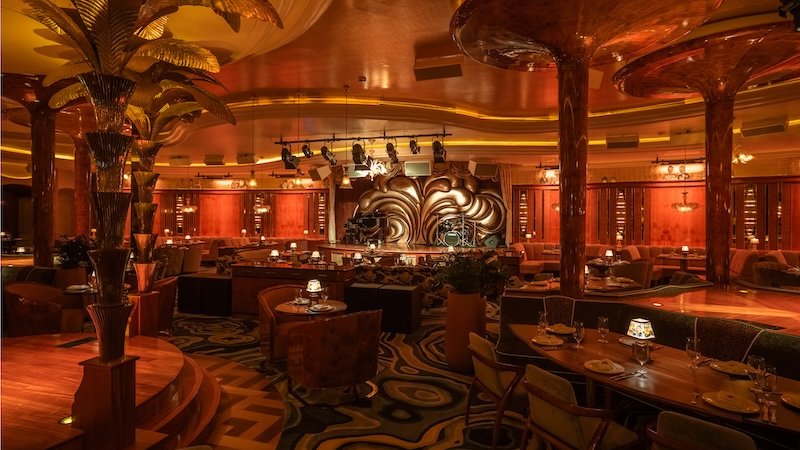
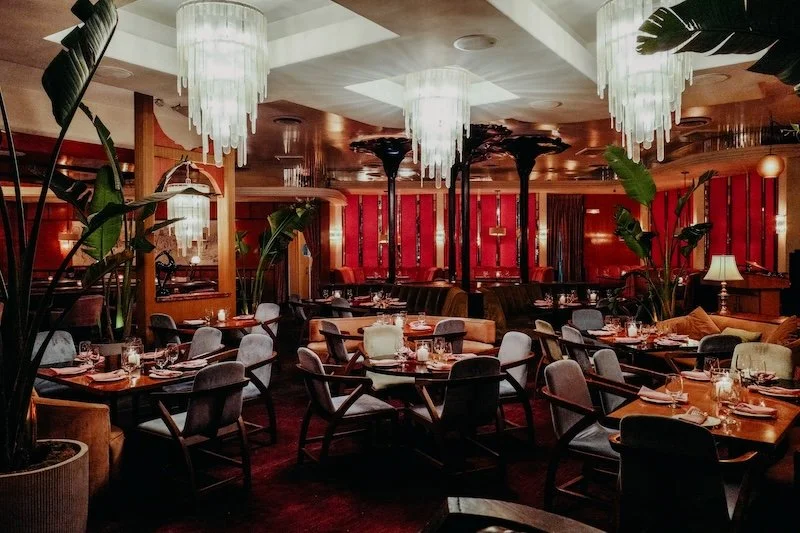
So we said, "Okay, we have the perfect idea. This will be a place that has really good dinner, but you'll also feel comfortable coming at 10:00 or 11:00 at night." We can still have a little bit of the kitchen going but it'll s- it'll be dark enough and have the right vibe to where come. And so the, the tables are a little bit higher, than, than you would naturally see at a nightclub. They're more like restaurant style, but they're a little bit lower than, like, a normal restaurant. But it worked. And it... Darker than a normal restaurant, but it works really well at, at, at night. And it's been just very, very busy, and I would say a staple of LA for 11 years now with no end in sight.
And so I think we did a really good job of bouncing those ideas off. I think for example, we're, we're building something in Brentwood right now. We both felt like Brentwood needed just good American food. some great Italian food in Brentwood, but on that part of town, there just isn't, like, great American food.
There's Hillstone, which is, like, on Fourth and Wilshire, but that's just not a vibe and doesn't feel like a, a place our friends would go. And so we had been looking for something in Brentwood for a while. We found this location. We're building a restaurant there called Montana's right now. It's off of Montana.
And once we sort of
Yep
figure out what it is and what the menu should be, then Jon really takes the forefront and says, "Okay, this is what the design should be. This is what the place should feel like." Then and the operations team step in, helping kind of draw a floor plan and where the tables should go and where the kitchen should go. And so it, it is very collaborative.
Fantastic. Brentwood's making a comeback after the fires and everything?
Oh, yeah. Yeah
That's like, it was so devastating. I mean, to be a resident, to be part of a community and just have it wiped out and just the tragedy of it all, and the resilience though of LA, right? It's like people just dig deep and, you know, it had to come back.
So you're rebuilding, you're building a new restaurant there.
Yeah, we are right now. And yeah, it's, it's, it's
Awesome
So many people lost their homes, so many businesses destroyed.
Yes.
I think
Yes
still so many people there who, were lucky and their, their houses were fine. And so there's a lack of great
Mm-hmm.
places to go and eat
Therein lies opportunity.
That's
So you were describing sort of supper clubs before, and there was sort of this glamorous idea of, you know, you sit down for a nice dinner, you have cocktails, and then there's some entertainment. So you're adding entertainment to some venues as well, right?
Oh yeah, Delilah is a full, full band. We have dancers that, it's like that old school dinner theater, dinner and a show type venue. I
Right.
it, it,
Right
really a throwback to like the '20s
Nice. Sounds great. Let's shift gears and talk a little bit about marketing. Like, what's your marketing strategy? Do you use influencers? Is it reputation? Is it you know, big, big ideas that come every now and again that you try that just draw people? Like, what do you do?
We've really never done influencer marketing. I think part of it is, is just luck. I mean, John and I happened to grow up in LA and be at the right schools and have the right friends and run in the right social circles to where friends with celebrities. We're in-- We're, we're so close to the entertainment industry.
And so I think we've built our marketing more on who's in-- who can we invite, who's in the room, especially at the nightclubs in Delilah, like what talent can we get on stage and performing? And we know the right managers and the right agents. And so lot of that is hard work and really, you know, reaching out and getting the right people in there.
But a lot of it is we, we, we have the right network, which was certainly a leg up. I think if we were in Dallas or Cleveland or, or a city somewhere else, I think we would have a different strategy on how to do this. But we've always felt like word of mouth was the strongest way to go. We don't
Always. Yeah
Nice Guy or Delilah.
Mm-hmm.
so we've sort of been like the anti-influencer marketing place
Okay. Yeah
felt like if we had the right people in the room, we wanted to protect them. So a lot of our competitors call paparazzi or TMZ when they have a celebrity in there because that's, that's big for them, right? And we always felt like, let's do the opposite.
Let's walk those celebrities in through the back door and let's hide them
Mm-hmm.
and then let's not take their photo to where this feels like home to them. They're gonna wanna come back over and over, and they're gonna really wanna support us because we're not trying to just, push them out there. If other people are in the room, they'll see them, they'll talk about them.
We'll gr- we'll grow that marketing organically rather than like shoving it down people's throats. And I think that's led to real exclu- exclusivity with our venues
Definitely
the right word of mouth, and it's, it's known as a hard place to get into. And I think part of the wowing every customer, it's like you never know who you're gonna see in a venue or, or who's gonna be there or what's gonna happen, and that's because we've made it a home for these people.
Fantastic. Do you cross-promote your different establishments?
A little bit. Someone at the restaurants will, kind of ask people, "Are you going out after?" And, and get them to the nightclubs after a bit. But not really. You'll never see, like, marketing for a nightclub in the restaurants. It's more of a word of mouth type thing.
That would take away the exclusivity. So you gotta maintain that cachet. Totally
For the longest time, we didn't even want a company name. If you... We had Bootsy Bellows, and we had a nightclub called Array Henry's, and we had The Nice Guy, but we almost didn't want people to know that The Nice Guy was by the same people as Bootsy
Hmm.
because we felt like we would be pigeonholed as a restaurant by two nightclub guys, and people wouldn't take us seriously for the food and for our culinary side.
And so, we, we wanted it separate. And same with Delilah. W- we didn't necessarily need everyone out there to know that it was the same group. It was only over time, and as we got bigger, it was too hard to hide. And so we said, "Okay, let's start calling ourselves the h.wood Group, and push our company." It, it, it... We started off the other way
So I'm guessing that obviously h. wood comes from the glamour of Hollywood, and Hollywood and LA have changed significantly decade to decade, but it still has an aura around it of glamour, sophistication, excitement, all that. Did you just shorten it and s- call it h. wood? Is that where it came from?
we didn't actually name it. We had a partner at our first venue her name was Amanda Demme, and we were at the site of the Hollywood and Highland Center and we could not decide on a name. We loved some old school names, but we thought we needed to be a little bit more modern. And it was very hard to find something that wasn't trademarked, and she said, "You know what, guys?
We're in the center of Hollywood. it's a little cheesy to be part of Hollywood. I... But why don't we just embrace it and call ourselves h. wood And so our, our first venue was called h. wood. And then as we grew
Okay
became the h. wood Group because we stuck with the name. But we, it was really embracing the history and embracing the past and what Hollywood was. And so that's where the name came from. A- and we were also a little afraid to be pigeonholed as H- as h. wood or Hollywood or anything LA related. I think we always felt like if we open a second venue and it's in a separate city like New York, they're not gonna want someone by an LA group. And but ultimately we said, "You know what?
This is one venue." And, and it just made sense to embrace the past.
Fantastic. What an exciting series of venues, and you got such huge expansion plans. You're doing amazing things for hospitality, and I really enjoyed our conversation, Brian. Thanks for being on the show
Thank you so much for having me
That was the Restaurant Rockstars podcast. Thank you so much to our audience for tuning in. As always, thank you to our sponsors.
Can't wait to see you in the next episode. Stay tuned, stay well, and I will see you then.
Restaurant owners and general managers, Your biggest challenges are labor and shrinking margins. Both kill your profit. I help restaurants find and fix those leaks. Last year, I uncovered over $300,000 in lost profit in two independent restaurants and $885,000 in a five-location pizza chain. I specialize in controlling costs to maximize profit, training managers to become leaders, training front of house staff to sell, and marketing that drives trackable new and repeat business.
If you want more profit, less hours, and a dream team staff in your restaurant, book a free 30-minute profit strategy session with me. Email roger@restaurantrockstars.com. That's R-O-G-E-R @restaurantrockstars.com.

Owner.com runs automated marketing campaigns for your restaurant that send personalized offers, order reminders, promotions, and new menu announcements automatically to your guests. So your marketing works for you every single day. And here’s the real power move: Owner.com gives your restaurant your own branded app.
Smithfield Culinary serves up perfect proteins for every dish and every daypart like Smithfield’s new ready to eat select bacon, Its premium, ready to cook bacon that will elevate your menu and your bottom line. Smithfield Select saves you time, labor and back of house costs all while satisfying your guests. When you partner with Smithfield, you serve what you love and your guests will love what you serve.