How an 8-Unit Pizzeria Chain Wins with Systems, Leadership & Restaurant KPIs
Restaurant KPIs are the difference between running a restaurant and running a profitable restaurant.
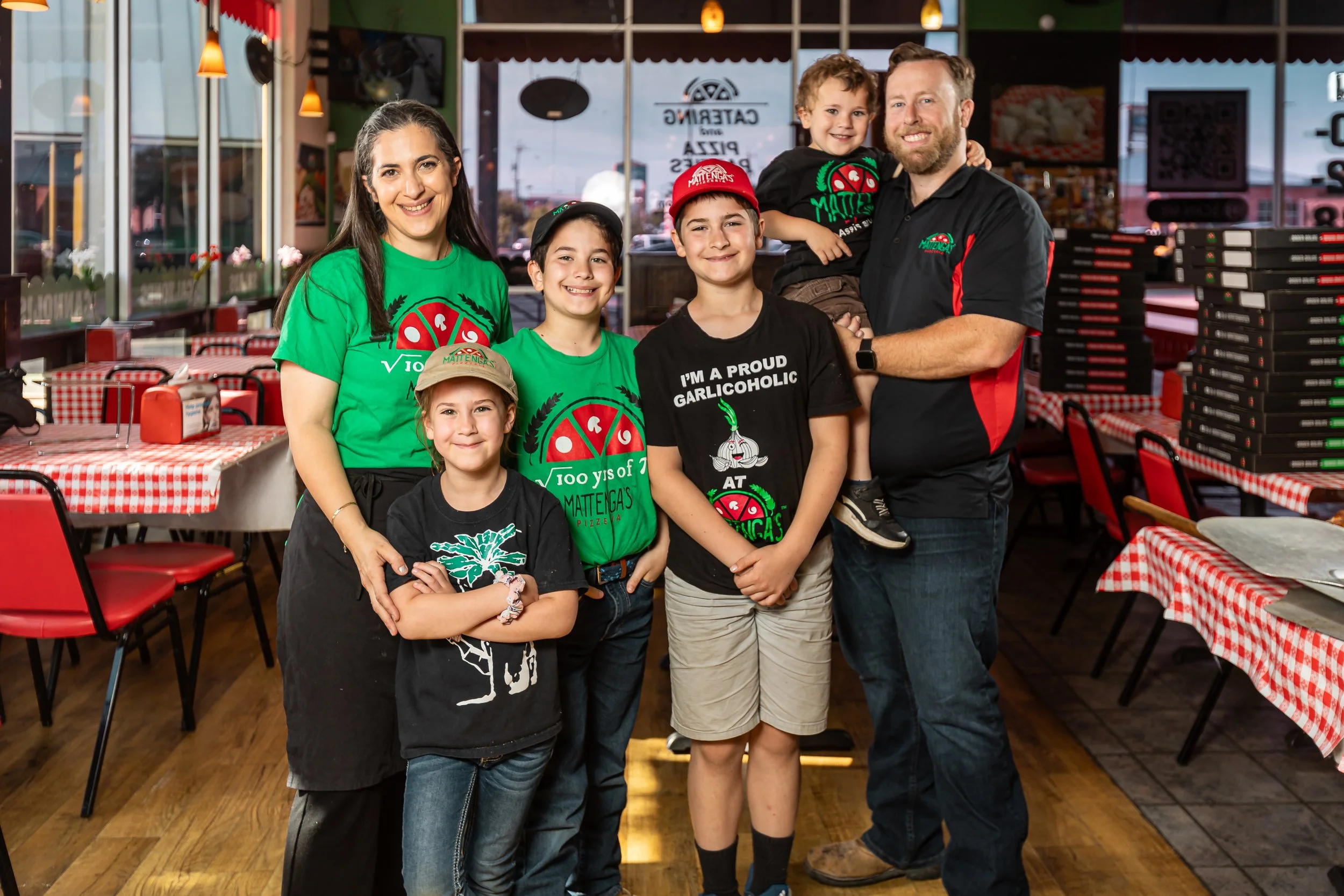
In this episode of the Restaurant Rockstars Podcast, Roger Beaudoin sits down with Enga Stanfield, owner of Mattenga’s Pizzeria, an eight-location restaurant group in San Antonio, Texas. Enga shares the systems, leadership strategies, and restaurant KPIs that have helped her team scale while maintaining strong culture, accountability, and profitability.
You’ll learn how Mattenga’s tracks labor per hour, sales per hour, inventory, prime cost, and other critical restaurant KPIs to make smarter decisions and stay ahead of rising costs. Enga also reveals how daily inventory counts, cross-training, leadership development, and operational systems create consistency across multiple locations.
The conversation dives into restaurant marketing that actually works, including email marketing, SMS campaigns, community involvement, loyalty programs, SEO, online ordering, and customer review strategies that drive repeat business and long-term growth.
If you’re looking to improve profitability, build stronger teams, and use restaurant KPIs to scale your operation, this episode is packed with practical takeaways you can implement immediately.
In This Episode You’ll Learn:
The restaurant KPIs every operator should track consistently
Why labor per hour and sales per hour matter more than ever
How daily inventory counts improve accountability and reduce waste
Strategies for controlling prime cost in a high-inflation environment
Leadership techniques that improve retention and team performance
How to create clear advancement paths for restaurant employees
The benefits of cross-training and operational flexibility
Restaurant recruiting ideas that go beyond traditional hiring
Marketing strategies that drive repeat guests and loyalty
How SEO, online ordering, and customer reviews impact restaurant sales
Technology tools that help restaurants operate more efficiently
Key Takeaway
Successful restaurant operators don’t rely on luck. They build systems, develop leaders, measure the right restaurant KPIs, and make decisions based on data. Enga Stanfield shares a proven framework for scaling a restaurant business while maintaining culture, consistency, and profitability.
Connect With Our Guest:
https://www.instagram.com/mattengaspizza/
Connect with Owner.com
https://www.instagram.com/owner
https://www.tiktok.com/@owner_dot_com
-
Wow, this operator really gets it. We're gonna talk about key financials, what they're doing to run a really tight ship.. We're talking about tracking labor per hour and KPIs, prime costs of course,, all the important things.
We're gonna talk about labor and recruiting and getting great people, but more importantly, leadership and how to retain staff, how to build a relationship with your team, cross-training, all those things. We're gonna talk about marketing that works, all the big challenges restaurants are having. I'm talking with Enga Stanfield
She is the owner of Mattenga's Pizzeria. It's an eight-location chain, pizzerias in San Antonio, Texas. So many nuggets of information, wisdom, hard-won in the trenches. This is an operator that continues to work on her business versus in the business. They put systems in place, and I think you can all benefit from it.
You're not gonna wanna miss this episode, so stay tuned.
Hey everybody, welcome back. This is the Restaurant Rock Stars podcast. Enga, welcome to the show. How are you today?
I'm doing great. It is a busy Friday at our restaurant, so that's that's always good.
Well,
Doing good
has a special place in my heart because two of my restaurants and my very first restaurant was a pizzeria. So I love pizza, you love pizza, the world loves pizza, and you guys are doing a lot of things right. Let me ask you, let's, let's get started right off the bat. What do you believe is the magic formula to any successful restaurant?
Well, you know, that is a million-dollar question, Roger. I think that each restaurant, to make it a success story, you have to find three to five things that is aligned, that works well for you and the community you're placed. . I would say every restaurant owner should be always looking for that formula that is for their location.
Sometimes just even having a rough access into a restaurant could affect your sales. It's your menu offering to match what the community wants. There's a lot of things, and when it comes to branding, ultimately, which is a big marketing word, but it's kind of how you are perceived in the community.
What people think of your brand is very, very important, and we, we spend a long time trying to ultimately engineer that. Think about how do we wanna be known in, in our community? What do people look for when they come to our restaurant? That has been, I would say, very, very important for us.
Excellent. Very good. Now, our audience are struggling with shrinking margins and rising costs and labor and all these challenges right now. So let's dive into your finances really quickly. What do your stores track? How often do you track them? How important is that to your success?
Oh, we track a lot of numbers, and that is I think it's key. Ultimately, we forget, you know, business is math. And if the math doesn't make sense you know, nothing else really matters. Part of that is I think a lot of times we fall in love with our food, we love the energy, and we love our people, we love our customers, and we forget that we're not running a nonprofit.
A lot of restaurants ultimately are nonprofits except we're not 501, and it's just very stressful. So we do track many of our numbers meticulously, including, like, sales per hour, labor per hour. The POS gives you all of that data. It's just a matter of what you do with that data, how are you leveraging it to win?
That is a standard operating procedure for
Mm-hmm.
inventory? How often do your stores take inventory?
We do inventory actually we do counts every single day in our restaurants.
The team does counts, it goes against a par level, and then the food order can be done remotely.
It doesn't need to be a manager at the store. When you scale, you find different kinds of problems. I don't know, Roger, with, if most of our audience here are single unit or multi-unit, but when you have more locations, you won't have some of the location some of the problems of a single unit, and you will find new problems.
So for us, as we scale, we just last week signed papers for our eighth location. So we need urgently someone to be a manager there. We need shift leads. We need team members. We probably need 10 to 15 people hired. We're gonna open in the next three weeks. So how to get a shift lead to become a manager as fast as we can is to extract all the skill sets required for a manager and figure out how we're gonna batch and systematize and streamline those such that if we take a shift lead to a manager, it's a two-week training because everything is really taken out.
We have one person in the company focused on handling all of customer concerns and reviews, calling customers if there was any issues and stuff. Just we can do that we have multiple locations, and it costs money to do that. But it, it has pros and cons, but that's... We do counts every single day, and I think there is benefit to that because then the team gets very good at it.
If you just do it once a week, it's hard to find the mistakes. It's just like going to the gym. If you just go once every week or if you go every single day, you'll see, you, you see it correct. We have one person who just does the, all the counts on, on the tablet.
It takes 45 minutes to do.
It's routine now. That's
terrific
So I heard labor per hour, that's really, really important as well. I used to track my overall payroll and then my kitchen labor only against
food sales, because obviously
kitchen labor now is just crazy, you know? And how much that's risen over the years, and I don't need to tell you that, and our audience clearly knows we're paying the highest wages ever to the kitchen.
So that's vitally important. How about food and beverage costs? Is that tracked regularly also?
So we have been really good about controlling our labor. Food costs, it's been hard because there's a lot of fluctuation, so
Yes
of price as you know it's madness. So the produce goes and fluctuates as well as, like, the cheese, you know, being in the pizzeria environment. Even if cheese is, as you know, if, if 20 cents different,
Oh yeah
it, it, it results in thousands of dollars variance.
And so we try to always focus on what we can control. You have to control the controllable, and so for us, we can be, okay, say it's portion control, our recipes, like team training. Those are... 'Cause we can't control the world and what goes around in the world of politics and all of that, but we can focus on what we can control and be meticulous about it.
Our food cost fluctuates between 30 to 32%.
Mm-hmm.
It is high. Part of that is because we have not aggressively increased our prices. We increased our prices three weeks ago a little bit. So we should increase prices more, but then there's always, like, you know, we don't wanna do that to our customers, but the consumer behavior has really changed.
They're willing to pay $8 for a beverage And like our pizza roll you know an order of pizza rolls for us, you know, we made that dough two days ago. The team made it. We shred our own cheese, like all the things. It's $8, and then a beverage is $8. It's just customers are happy to pay those $8 for beverages.
In the drive-throughs, you know the drill. So we deal with the same challenges. So we control our prime cost currently with labor a little bit. We also have purchased equipment to... And we can talk about technology in terms of software. But also, I think folks should really look into equipment to save on labor.
So if you purchase, for example, a Robot Coupe that slices vegetables for you, if you run the math, how many hours is the team spending, you know, slicing vegetables for us? We go through a lot of onions, and so the team is always back there crying, you know? But,
Mushrooms, onions, of course!
Oh, my... Yep. If you, if you run the math, sometimes it is better to purchase an equipment that would do that in, like, 10 minutes in a day.
Over a month it should pay for itself, and that way if you're short-staffed... And also training, you know? We used to have this problem with training of our team. I used to just always say you don't... We're in Texas. Like, we don't want fajita-style vegetables 'cause the, some bell peppers would be super thick.
One would be super thin. Currently, when we hire folks, they don't have great knife skills. So we can, we can... I'm all passionate about training our people, but once, at some point, when you scale, you have to solve your problems and give customers consistent products. So we invested in Robot Coupe. Like, I think it's $2,000.
There's many different brands of machines that slice vegetables. It still is a fresh prod- Like, it's, we do it in, in-house, so customers not, you know, they receive good product. It's not that. It's just saving on labor 'cause we have problem hiring team members, for them to stick around. We deal with the same issues as everybody
I'm really glad you're sharing. This is what I would call a best practice, and
Mm-hmm.
I love the fact that you're analyzing a return on investment to make a process more efficient versus what the labor would cost. Because again, everyone is struggling with labor, short-staffed,
Mm-hmm.
and when your short-staffed, you can't provide the value to the guests that they expect when you're raising prices
Mm-hmm.
I mean, all these things have a domino effect against each other. So you're giving us great ideas on operating, you know, procedures that definitely work as you scale your business.
Mm-hmm.
and even in a single location,
Mm-hmm.
you might decide, okay, is it better to hand-cut the vegetables, or is it better to get the already cut vegetables?
As long as the quality is there. I mean, these are all choices we make, but it is about efficiency meeting cost and what's the best balance, and it sounds like you're finding that. Thanks for sharing. That's,
No, absolutely. Yeah, absolutely
Let's talk back about when you were starting this business, because you've come a long way since you've started it.
And I know you've, you've shifted from an old, from a different career, and now you're in the restaurant business. And much like me, I had no experience when I started my first restaurant. Can you think back to some of the mistakes maybe that were made and how you overcame those and how they helped you improve your business now?
Let's talk about that. I, I think that's helpful.
Sure. You know, I think, you know, each person has gifts and strengths and weaknesses. And so for us my husband and I, our background is in engineering, so systems, processes, efficiency, all of those things are,
oh yeah
Comes easy to us. What comes difficult, has always come difficult, is the people. And so I, I've still not figured out the, the formula for people 'cause people change.
Some- you know, that's, that's the beauty of humanity. Sometimes their heart is in it. Maybe they wanna go up and grow in the company, and they wanna be an area manager or this or that, and a few months later, circumstances change, and their heart's no longer in it. So it's just really hard to deal with people.
And I think the single one thing that my husband and I, we have focused on learning and mastering, and we continue to do even today, is management. Management and leadership. How to lead our team, how to inspire them, how to coach them, how to correct them how to invest in our team. You know, we read books.
We attend business conferences because business ultimately is ... Culture is a living, breathing thing and, and that's the people in it. The, a business without the people in it, it's just nothing. So we have made a lot of mistakes on the people side. One I would say is a lack of clarity in creating a roadmap.
Team members want to know what's next. Like, if I am a, a shift lead, how long, how can I get a raise, right? If we don't provide the next steps for people, they will come and corner you in a hallway asking you for a raise, you know, which, which happens, or in the walk-in or,
It does.
"Hey, I've been here s- you know, last..."
expect it
And it's very frustrating because as owners, we have not thought that through. We ha- we have not created a roadmap. And so in the last few years, we really shifted focus on we need to create... And it's not the team member's fault, right? Team members wanna know what's next. And if you want a culture of people advancing and growing, it starts with us at the very top creating that environment for them.
Creating that environment for the team that, you know, you can become a shift lead. You can become a master shift lead. You can become a manor, assistant manager or a manager. These are the duties. These are the things, skillsets you need to have. And , that's just very important to create that roadmap. So we have worked very hard and continue to refine what we call our advancement project, if that makes sense.
What's talk- what's working in terms of the things you've learned in leadership, and what, what are the employees, I like to call them team members, what do they
Mm-hmm.
to with your, your method of leadership and accountability? How do you achieve accountability? Let's talk about that. Roll that into one
100%. So I think engagement works. You, as, as a leader, you need to be engaged. If you want engaged team members, you need to be an engaged leader. You need to have a pulse of each team member, and again, we have 120 to 140 team members, so it's much harder now than when we had one location. But really understanding your team, how they react how do they handle pressure?
What do they want out of life? What's next for them? So we may have team members who are looking into joining the military in the future. We live in San Antonio, so it's really common. So I know that about the team member, and so when they complain about different stuff, or if they're complaining about something is stressful, I can simply say, "Hey, I understand this may be stressful.
Don't you wanna go join the military? Don't you wanna do that?" You know, h- how are you gonna handle that for them to put things into perspective, like, "Oh, wait, that's right. So this is simply equipping me for that." But it's really important to be an engaged leader and establish cadences. So this, I would say, works, is every single week we meet with our managers and have good meetings in terms of numbers, what's going well, what's not going well.
It should never be a surprise to a team member in our restaurant to... Like, if they need to get terminated, it's... We've had conversations multi- They had opportunities to understand what they're doing wrong, what coaching is. You know, we provide them to get better, opportunities to get better. So if it still is not working out, that is okay.
It's a free country. They can go work at another establishment. But,
Mm-hmm
feedback and, and feedback is two ways. You know, receiving feedback. How can I support you? Help me understand the gap here, right? When it comes to accountability, it's important as well as a restaurant owner to have clarity, like accountability of a shift lead.
If someone gets a title of a shift lead in our restaurant operations, it needs to be very clear you are to open, you are to close, you are to open a work a minimum of this many hours, you are to handle all of the customer concern issues on that shift. You need to correct team members when it comes to their uniform, difference of...
Everything needs to, like a job description. And nowadays with AI and stuff, it's so easy to create those than, you know, five, you know, years ago had everything had to be with typos and everything. That's not, not a thing anymore as you know. But the more clarity a restaurant owner has on the position and the people we put in those seats in the bus the more clear the team member is going to be, and it's gonna be much easier to hold them accountable in my opinion
What about cross-training? Is that happening in your stores?
Ask any chef what makes a great BLT and watch how fast they start talking about the bacon. Well, that's why there's Smithfield Select. It's premium, ready-to-cook bacon that will elevate your menu and your bottom line. Because there are menu items and then there are menu magnets. That's Smithfield Select Bacon.
It pleases patrons while saving you time, labor, and back-of-house costs. It's thick cut, crispy, and golden brown with a texture and appearance that make it seem freshly cooked from raw. But you can just heat and serve. Funny thing about bacon, guests notice. To order yours, visit smithfieldselect.com
Yes, we cross-train all the time and because we are one team. And so if, if a team member is not for the team, you don't belong to the team. It's, that goes back into the culture. I don't care you're a server, if the dish, dish station is crashing and burning, if you need to go back there 10 minutes and put a load, you're gonna do that.
Otherwise, you're not a good fit culturally because that's how we operate here at Mattingly's. This is one team. So we do cross-train constantly. We, we want, like even as this shift is happening, I was having conversations with folks in the back. I think it gives team members perspective for them to mutually respect one another.
Some stores there is some conflict and friction and passive-aggressive comments between the servers versus the cooks and stuff, and that happens because people lack perspective. They don't mutually respect one another, understanding that I can only be successful in my role if you're successful in your role.
If I help you, you help me. Let's go win together
You know, let's go back to the labor piece and staffing because that's a big challenge with many restaurants. Are you fully staffed? Do you have any gaps? Are you looking for people? What's worked in terms of staffing, and what about longevity versus turnover in your stores?
We deal with the same problem. We're not full staffed. We've not been full staffed for a long time. We have interviews scheduled. We, you know, on Indeed, all that stuff. We do box toppers, many of those things. Folks, you know, half of them don't show up to the interview, . one of the things to realize is we can't change reality. I think we sit in frustrations as restaurant owners. We're constantly frustrated over things we cannot change. , I can't change what the society is, and instead really shifting how we view our job. So I, you know, one of our our vision statement is that we raise up leaders for success in life through excellence and diligence, is our vision statement.
So I view any team member in front of me, it's my job to raise them up to be leaders in, in the society. Whether they're here one week, whether they're here two months, this is what we do. We train people. Every single shift, there's training. If you look at it, it's just every day we're training. I don't care if I have a new team member or someone quit, it doesn't matter.
We train people every single shift. If you view yourself, and I have these conversations with our managers, you're a coach. So every shift, you're coaching. If you view it that way, then you would not get frustrated, because it could be John, then it's Julie, then it's Susan. It doesn't matter. We're training people every single shift on, on whatever the task is at hand that the team member is doing.
But we have the same problems, and so we have tried solving those problems, again, with constant training. And then equipment, we leverage, you know, going back to online ordering. We also use phone AI. Is it perfect? It really isn't, but you've gotta solve the problems you have somehow. So that has been other ways for us kind of being able to do more with less people
You know, the cross-training's vitally important, and I'm glad you said that you're doing that because it's sort of a backup plan. When someone gets sick or there's something that happens or you're short-staffed, if you've got people that could do more than just the position
Mm-hmm.
competently,
Mm-hmm.
a plan B that is.
You know, I went so far
Yeah
in my restaurant, not only do we train all the time, I totally believe in that, daily pre-shifts every day, constantly mentoring and shadowing people, bringing them up, giving them additional responsibilities. But we also had this sort of call-in sort of a, a thing where someone had a day off, if they would agree to come in at a last-minute notice, we'd incentivize them to do that.
Mm-hmm
So all these things really help the show go on when you're in the thick of the challenge. So I'm, I'm really glad that you shared that.
Yeah, I agree
thats tremendous. You know, there's one other thing that I love to share with my audience. They've heard it before, and maybe it'll help you if, if you think about it.
But during, just after the pandemic I was interviewing a restaurant chain in Southern California. They had 28 locations, and they were open breakfast, lunch, and dinner. And boy, if they had a staffing issue. Someone there came up with the idea of giving gift cards to their guests, their customers, that referred a new hire that would last for 60 days, and they would train that person, they'd indoctrinate them in the culture. But the guest got a $250 gift card, which as you know, is just their food cost. It's pennies on the dollar versus 250 in cash, and they fully staffed their restaurants. I'm like, "Okay, that's genius. I want the world to know about that." Maybe it's an idea that'll work for our audience or for you. But let's... I'm glad we talked about labor 'cause
Yeah. That's a, that's a great idea. That's a great idea, actually. I, I mean, we sometimes incentivize our team to get referrals, but incentivizing customers, that's very, very smart
Well, you know, either way, whether it's incentivizing the team or the customers, that's recruiting, it's not hiring. And I'm almost like a broken record because I see those signs in businesses across the country when I travel. It's now hiring. You see it everywhere still. if you get anyone at all that walks in the door, you get those people that don't show up for the interviews.
You know? They're someone else's C player versus a really great potential team member. So recruiting and, and getting someone that's vetted by someone else you trust is really kind of the way to go. So anyway,
From my experience, lots of marketers talk a good game, but they fail to deliver ROI. Zivzo is not just a full-service digital marketing agency, but industry pros that specialize in restaurants and a strategic decision to move your business forward. Zivzo excels in marketing, advertising, video, and animation production that brings your restaurant to life and enhances your brand visibility.
Go to zivzo.com. That's Z-I-V-Z-O.com
I wanna talk about community involvement, and we'll get to that later, and owner.com, which is a huge resource for you.
What's your marketing plan and what has really worked for you?
Marketing plan, what has worked for me is establishing some, again, going back to we talked about establishing habits and cadences with management. It's similarly to with customers. So we have every Friday customers receive an email from us at the same time. It's like 4:00 PM every single Friday.
We have not missed one in like seven years, and we call it our Feed the Family deal. But there is a pizza combo deal in there, but also any picture of, like, any donations we've done, we always take pictures, it goes in there. Any spirit night we hosted. So there are, like, stories in there and pictures pictures of our team that, we have like 40% open rate, and we have a large email list. And that has worked for us because it continues to cultivate a habit. Customers expect to receive that from us, and a text as well. We do texting and email and I'm a huge advocate of that. It's classic, and it works. It just drives so much of our sales is the email marketing and text message marketing.
And then one big campaign a month we create buzz around. So May, for instance, for instance, as we're having this conversation it was Star Wars. Star Wars Day is May 4th, so, like, we create an, you know... March, it gets mad. Yeah, March for Pi Day, it gets insane. Like, hours of line out the door. But our community, we have conditioned them to expect something from Mattenga's on Pi Day, on, say you know, Super Bowl.
Obviously that's well-known. But some of those are well-known, but I think folks add too many promotions, you confuse customers. I try to go one big thing a month, and we go all out. There's box toppers, posters, social, email weeks in advance. We keep kind of sowing that seed so when the time comes, they're expecting it as well.
But we do post on social media as well. Part of that is not for new customers. It is to continue to keep our audience warm. I think that's the confusion sometimes. People think that social media is gonna grow your sales because you're gonna get new customers. It may or may not be, but for me, what works is recurring customers in our dining room, they have seen our videos.
They see our videos, and they want to continue to support. And you saw as we started, our kids were around. Again, we're a family. We've got kids and all that, and we serve a lot of families with young children are our customers. So customers love to see kids working and all of that, so we make sure to include that 'cause we're a family business, so we wanna leverage that to our advantage to communicate, tell stories of what we do.
But I do not spend that much money on marketing in terms of ads.
Is
trackable things only. Yeah
Oh yeah, I've tried everything, and I think it's important to try to see what sticks. 'Cause I have seen some restaurateurs tell me that they have made mailers a success. I have not been able to.
I've tried it twice, and every time it was like 3 to $5,000. And so I'm not gonna do that again. Yes, I've not been able to make it a succe-
Take the zipcodes and blast it out and all that sort of thing and hope for the best, see what comes in, and it hasn't worked for you. Well, I'm, I'm glad you shared
'Cause it's expense- I mean, but again, some, it depends on some folks may be in neighborhoods that are families or younger people, older people. Like, it is not a one thing fits all, you know, when it comes to marketing. But we don't spend that much money on marketing at all. It's, a lot goes into those emails and a lot of donations.
We do, I wanna say 25 pizzas per store per month. We donate pizzas to businesses. We contact businesses via email, and we tell them that, you know, we wanted to treat them to lunch, and they come and pick it up. We have, we don't have enough drivers, you know. So we used to do a lot of food, we used to do a lot of food drops complimentary dropping off a pizza.
"Hey, wanna bless you guys' day, and, you know, we're just right down the, down the road. We're a local pizzeria." You know, so that has worked before. That always works. Getting your food in people's mouths, that always works.
Well, I think you mentioned the word earlier, and the word is brand. You know,
Mm-hmm.
your running a business and you've built a brand, and that brand has recognition and awareness
Mm-hmm.
but it's all centered around a community that you support the community, the community is supporting you. It's a win-win for everyone. But you're also giving back and you're doing something good to causes and, and police departments I've seen on your website, and all the things that your stores do. And it's great for business, but it's also
Mm-hmm.
great for who you're making the donations to and, and people that are in need of, of food. So Wonderful job there.
Mm-hmm.
Let's talk about owner.com because, Well, first of all, I wanna thank owner.com because they're a new sponsor of our show, but you're a testament to that. You really believe in it and you're using all the resources. Let's talk about what they do for you and how it benefits your business.
So we have, we joined owner.com last July, and we got a search engine optimized website. One of my problems was, you know, I had built our website in Wix back in the day, so when we had one location, and when we added a second location, obviously
Yeah.
I just added the online ordering to it. And so once you have, especially multiple locations, you need to be optimized for Google, particularly for every single location you have.
I had not done that before. And so that was incredibly beneficial for us. So in any neighborhood we are our website is found. So that was with the, the website as well as the online ordering and the custom branded app. I always wanted to offer an app to our customers but getting an app... So first we're like, "Okay, well, do we need to work with a vendor to build it?
We need to map out the process flow." You know, getting an app back in the day it, it was expensive. I don't know if you know, like, when it came about, like many big chains added an app. It's, I wanna say maybe eight or nine years ago, if you recall. It was very expensive to get somebody. It, it was a few thousand dollars to build it and all of that.
So I had buried that thought until Owner came around. I was like, "Oh, wow, I... That'd be great if, that they can offer that too." So we are on the App Store which is, which is n- nice to go to the Apple App Store and, and look for your restaurant and it pops up as an app. Half of our sales is through the app actually.
And part of that, the email, when we-
And thats loyalty also , right? That's a loyalty driver for you?
Yeah. Oh, 100%. It is a loyalty driver. And when folks get that email, the promo code They click on it, they go through the app. It's very easy for them to order. I love that. Another feature that is my favorite, that is not the main thing Owner does, but it is something they offer, is that after every online order, they send an automatic text to the customer asking for their feedback.
Just, "How was your experience?" If the customer gives it a thumbs down, they're able to quickly kind of say, "Hey," you know, "I was missing my ranch cup," or, "The pizza was cold," or, "I didn't get my cherry soup." And their phone number is there and their name, and we can, like we get an automatic email, so we can see exactly who that person was, and that customer gets a call within, like, 15 minutes from our managers.
But if it's a positive one, that thumbs up, it automatically, they kind of say, "Hey, do you wanna publish that on Google or something?" We've gotten so many five stars. Our ranking went from, like, a 4.2 at some of our stores that was lower, like a 4.1, 4.2, all of them to minimum of 4.5. Minimum. Some are 4.6, 7, 8.
Like, that means the world to me. We have a lot of happy customer. Many restaurants, we all have happy customers. They just don't bother to go leave a review for us. And I've tried everything in terms of making, putting a QR code in the diner, incentivizing the team to get those reviews and stuff.
Nothing worked till this feature with Owner, 'cause I think it just removes the friction. It's just so easy to do it. But that alone also helps with sales because when you get hundreds and hundreds of reviews every single month first off, Google really likes it. You know, you get velocity of reviews
huge benefit. Absolutely
huge benefits.
And so having, like, if, if we are a pizzeria at a 4.8 and we have 1,200 reviews versus another pizzeria that is less than 4.8, I mean, I would make that decision to go to the 4.8 one if the distance is the same or whatever.
Yeah.
Yeah. So Owner has helped us tremendously get a lot of great reviews. Again, we had already all those happy customers.
Just get 'em to do that, leave us that review, so.
You know, and you mentioned the SEO benefit and, and the Google rankings and all that. And typically that's been, you know, big, big chain restaurants have huge budgets and they're able to spend on SEO, and SEO can be very, very expensive
Mm-hmm. Mm-hmm.
so its amazing that you can take one platform and suddenly they optimize your website that literally brings you more traffic
Mm-hmm.
which then leads to more repeat orders and all that kind of stuff.
So what a huge benefit that is alone.
No, 100%. And so the website also, what they do that's very neat in the age of AI is that they, in fact, like, when you have the one website, which is your homepage, any of, any owner website, you can come to our website, matengas.com, and see that you scroll down and they have strategically a section that's like FAQ.
And it says, like, "What's great," you know, "What, what are your favorite," you know, "What are your popular dishes at," say, "Mattenga's?" And it strategically have put in, it's a hyperlink of every single one of our specialty pizzas that is grabbing it from the... It's all AI generated. And all of those are pages, that if you click on it, it is a page.
So it's, ultimately owner gives you, like, 30 different pages, so that is what helps the SEO. And, like, what areas do you serve is another, like, a question in that FAQ. So it has all different neighborhoods and ZIP codes. If you click on it, it goes to a page. That's why all of them, again, it really helps with the SEO.
And SEO is just like email and text. Again, we live in a world that we're always looking for the next thing. Some things have always worked and continue to work, just like email marketing and text message. They're tried and true. The other one is SEO. Like, you have to be... If someone's looking for best pizza near me or best tacos near me, you really wanna be number one.
It does matter tremendously
You know, it's been controversial for years that third-party online ordering platforms are taking a huge percentage of the sale, and they're keeping the data and they're not sharing it with the restaurant, so there's no marketing benefit there. And restaurants are saying, "I need the business."
Mm-hmm.
Its at their mercy."
It's like, "I'm gonna use those platforms." And now Owner does something different. Let's, let's talk about
Mm-hmm. Sure. So Owner is, again, it making it very easy for customers to place an order via the app and all that, 'cause that's what people do. You know, you're hungry, you're like, "Where do I go," right? They pull up the app that they can go to pull up all the different restaurants. And that is what Owner does, just creating a frictionless experience for customers.
And again, you, you don't have to pay all the commissions, which add up. It's
Benefit.
It is ridiculous amount of money. And we mark up our prices, so I feel really bad, because we really increase our prices on those platforms.
Sure
yeah. And so ultimately, the customer loses, restaurant owner loses, and ultimately the, the big companies get bigger in the middle.
Something that Owner does that is very neat is they have autom- You know, you can use their email marketing platform to schedule emails. Like I said, our Feed the Family Friday, which is the one we use. You create your own emails. You can schedule your own. That's great. They also have automatic emails that is, goes out to customers without you as a restaurant owner need to write any emails.
So whether it's, like, someone has not been, not stopped by in 30 to 60 days, it automatically has something in there, and it's... They have AI optimized it. They study, you know, the click rates and all of that. They continue to improve those pages.
Yes
but when someone comes to your website and places an order for the first time Owner will automatically put 'em through a welcome email sequence that I didn't have to write.
But it's like six emails that go out, like, every few days. But they have optimized it as to, like, it needs to be two days, the second one to the third one, how many days to increase conversion. So again, it's, it's a lot m- inspired by, like, Shopify or e-commerce technology to bring it for restaurants.
Again, I really love that 'cause it's no extra work for us to make sure we bring customers back again and again.
Well, I love the fact that you're using text, SMS, and you're also using push notifications, and it's literally giving people... It's planting the seed about Mattenga's at the time when people are hungry or they wanna order. They don't feel like cooking, and it really works, and and that's a benefit as well. So wow, Enga, you've done a lot of great things with your business. You've shared a lot of nuggets of wisdom and key operating experience from in the trenches. I love the fact that you're an operator's operator. You're looking for new processes and procedures. You're always trying to improve your business, and it sounds like you got a great company culture going, too, and people really appreciate not only the product you serve, but how you treat your team, and, and that's vitally important.
So thanks for
Thank you.
guest on the show.
Thank you, Roger. It means a lot. Thank you
That was the Restaurant Rockstars podcast. Thanks so much to our audience for tuning in. Thanks to our sponsors this week, including owner.com. Can't wait to see you in the next episode. Stay well, stay tuned, and I will see you then.
The number one way to grow your restaurant in 2026 is Google Search. 70% of diners searching for a place to eat start on Google. If your restaurant isn't showing up when customers search for your cuisine, you're invisible. Google uses more than 90 ranking factors, and SEO changes constantly. Big restaurant brands spend millions staying on top of this.
Independent operators simply don't have the time or the budget. Owner.com is the solution. Owner.com helps restaurants get discovered by more customers and increase both direct online orders and repeat business with loyalty, email, SMS, and push marketing. For more visibility, more repeat business, and more direct sales, visit owner.com/rockstars.

Owner.com runs automated marketing campaigns for your restaurant that send personalized offers, order reminders, promotions, and new menu announcements automatically to your guests. So your marketing works for you every single day. And here’s the real power move: Owner.com gives your restaurant your own branded app.
ZivZo Marketing, Advertising & Video Production: ZivZo is not only a full service marketing agency, but restaurant industry pros specializing in animation and video production that brings your restaurant to life.
Smithfield Culinary serves up perfect proteins for every dish and every daypart like Smithfield’s new ready to eat select bacon, Its premium, ready to cook bacon that will elevate your menu and your bottom line. Smithfield Select saves you time, labor and back of house costs all while satisfying your guests. When you partner with Smithfield, you serve what you love and your guests will love what you serve.