How Smart Restaurant Operators Build Teams That Actually Perform
Independent restaurant operators are facing rising food costs, labor challenges, shrinking margins, and increasing pressure to perform.
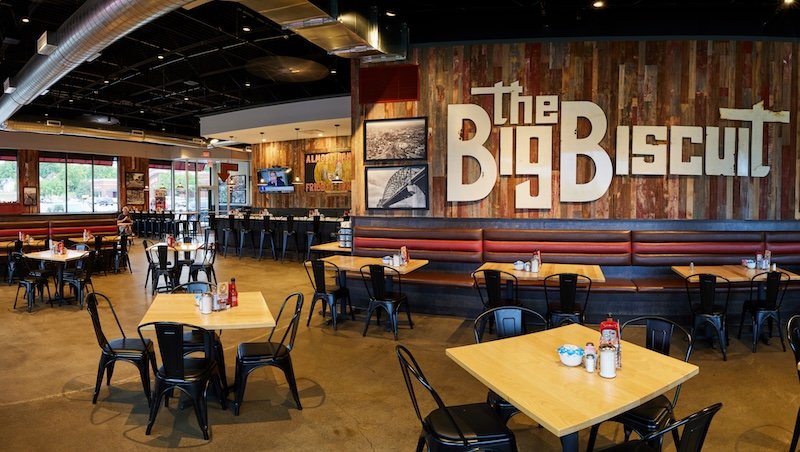
In this episode of the Restaurant Rockstars Podcast, Roger sits down with Chad Offerdahl, CEO of Big Biscuit, to discuss the systems, leadership strategies, KPIs, and operational disciplines helping a growing multi-unit brand scale successfully while maintaining culture, accountability, hospitality, and profitability.
This episode is packed with practical insights restaurant operators can apply immediately.
Key Takeaways
Why training systems drive consistency and retention
How operational KPIs improve accountability and performance
Leadership strategies that strengthen restaurant culture
The importance of transparency across restaurant teams
How simplicity improves efficiency and profitability
Why community involvement strengthens brand loyalty
How AI can support hospitality without replacing it
Training & Leadership Systems
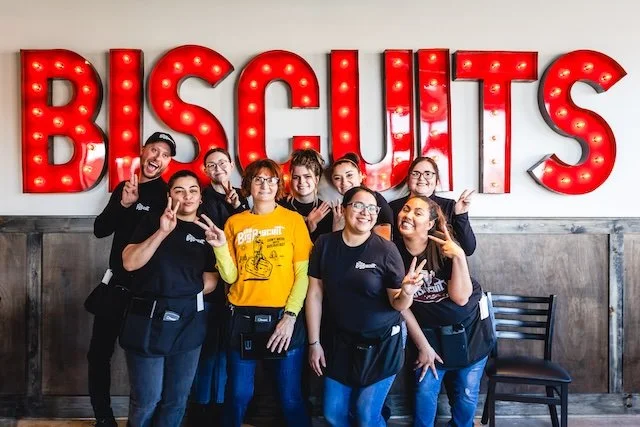
Chad shares how Big Biscuit digitized its training systems to create consistency across every location. The conversation explores onboarding, repeatable systems, real-time feedback, and leadership development.
“Frustration is the result of unmet expectations.”
Roger and Chad discuss why clear expectations, communication, and accountability are essential to building strong restaurant teams and reducing turnover.
KPIs, Accountability & Operations
The episode takes a deep dive into restaurant performance metrics and operational transparency. Big Biscuit openly shares KPIs throughout the organization, including:
Guest check averages
Sales per labor hour
Discounts
Kitchen waste
Table turns
Online reviews
The goal is not punishment…it’s ownership, visibility, and continuous improvement.
Labor, Retention & Culture
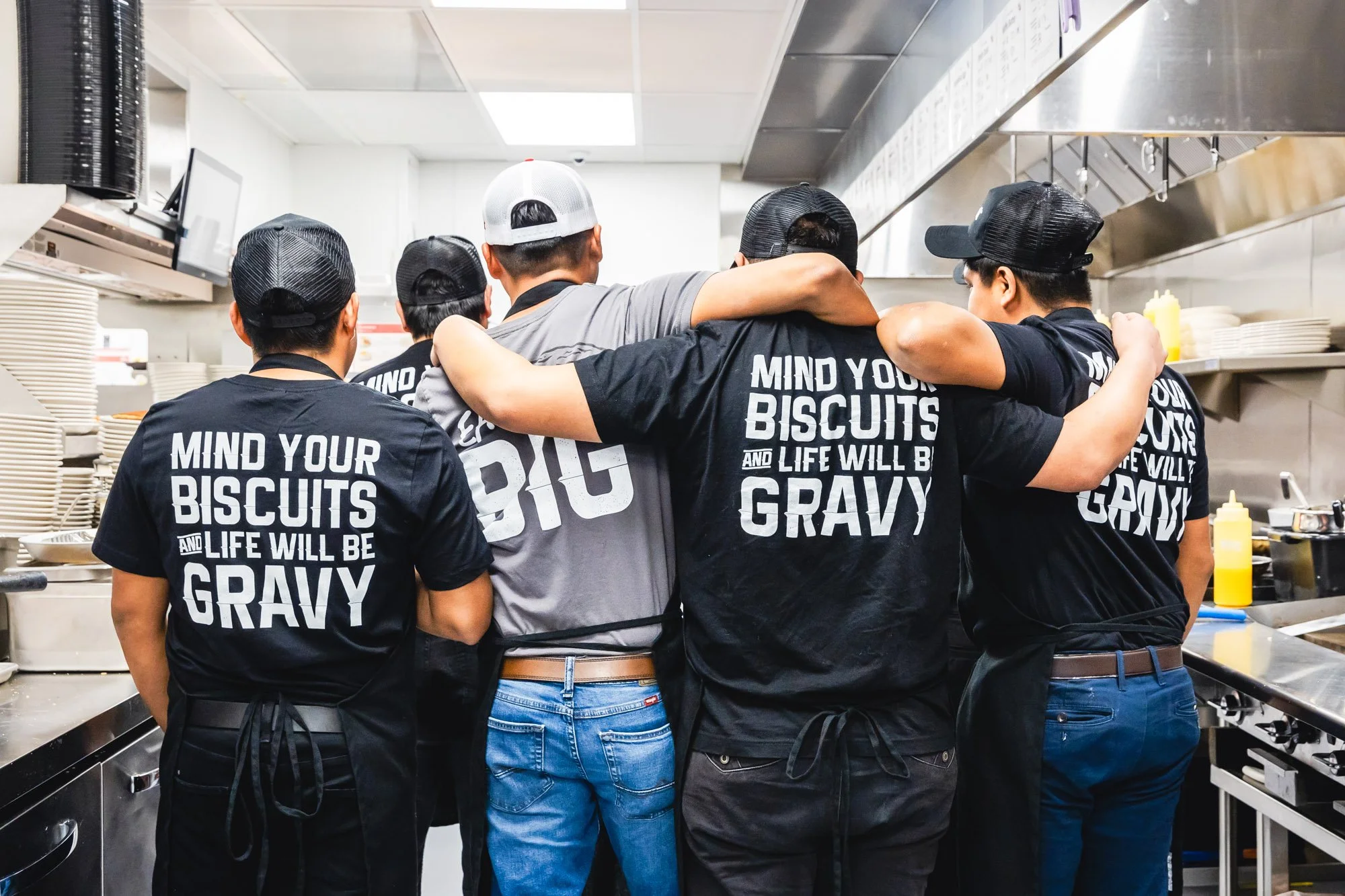
Labor remains one of the restaurant industry’s biggest challenges, and Chad explains how Big Biscuit focuses on:
Structured hiring processes
Strong onboarding
Employee recognition
Internal communication
Frontline feedback
Team engagement initiatives
One of the most interesting concepts discussed is their “Frontline Feedback” initiative, where executives regularly meet directly with restaurant employees to gather operational insights and ideas.
Driving Sales Through Simplicity
Instead of shrinking portions or cutting corners, Big Biscuit focuses on operational simplicity and incremental improvements that drive profitability.
Topics discussed include:
Simplified menus
Menu engineering
Catering growth
Suggestive selling
Faster table turns
Third-party delivery
Operational efficiency
Roger and Chad also discuss the long-term value of repeat guests and why loyalty matters more than constantly chasing new customers.
AI & Restaurant Technology
The episode closes with a conversation around AI and restaurant technology. Big Biscuit is using AI to support areas like:
Marketing
Review management
Accounting
Financial systems
Operational efficiencies
But Chad makes one thing clear: AI should enhance hospitality, not replace it.
Listen to the Episode
If you’re looking for practical restaurant systems to improve operations, leadership, accountability, culture, and profitability, this episode delivers real-world strategies you can apply immediately.
Guest:
Chad Offerdahl, CEO of Big Biscuit
Connect with our Guest:
-
[00:00:00]
You want answers to finding, training and retaining great team members answers to increasing sales, and how to maximize profit marketing ideas that create incredible loyalty and drive repeat business well, today's guest is running and growing a thriving business. He delivers all the key solutions to your biggest restaurant challenges.
Take notes, listen to the end, and then go rock your restaurant. Today I'm excited to talk to Chad Offerdahl, the CEO of Big Biscuit.
Chad, welcome to the show.
you are the CEO of a large, fast growing breakfast and lunch place. Spectacular website. You got it all going on. We're gonna talk about all today's restaurant challenges and what, restaurant operators are struggling with. Let's, let's open it up with something a little lighter. Do you have any crazy restaurant stories?
I can't believe that happened. I can laugh about it now. It could have been a disaster, whatever. Anything like that, just to get things rolling.
Oh, I think we know in this business there's always something new, and the moment we [00:01:00] think we've seen it all, we get proven wrong. But yeah, you know probably one of the earlier ones we had is our very first restaurant that we opened back in 2011. I obviously was running that one myself and I got woken up by a phone call, which was not uncommon.
You know, we all know how that's how it is in this business, but the, the phone call I got at 1:00 AM in the morning is from the fire chief of the city that the restaurant is in, and he's saying. Sir, we have a gas smell coming from your restaurant. We've evacuated the entire strip center. We need you to get down here right now.
So, of course, I fly out of bed, I'm flooring it to the restaurant. I get there, there's half a dozen fire trucks there. They're ready to break into the place. You can smell the, the the gas from the parking lot. So I, I get the door open, they go in and long story short, one of the grills, the pilot light had gone out and it was.
Still on for the gas. And it was, it was a scary situation post, post [00:02:00] the whole event. The fire chief was saying this was one of those where we were, somebody lit a cigarette outside this building was going up, you know, and it's just one of those things where it's it's a scary deal. You know, those, those things that you just don't expect
had our hot water heater turned on. I mean, whatever it is. I mean, it was, it was a scary situation. Probably one more from an operational focus that I am still scarred by to this day was what is now our busiest restaurant in the system. I was there for our opening week and, on the first Saturday, which for the breakfast business, Saturday and Sunday is a huge part of our sales. The first Saturday we start putting some real volume through the, the kitchen, right? And all of a sudden we're noticing, okay, the drain underneath the dishwasher is running slow. We're seeing it where it's going down, but it's going down really slowly and it's slowly rising and [00:03:00] rising with every load we run.
And we are jam packed. We're busy. We've got a line out the door, the dining room's full. We've got a full whack of staff. I mean, it is, it is game time and I just see it coming. I, it, it's, it's like a car crash that, you know, you can't look away, you know, it's coming like, okay, this is gonna get bad. And so eventually it starts getting to where it's coming up out of that floor sink.
And I just grabbed a squeegee, I put somebody else on expo. I put you know, our management in place. And I sat there. For the next three hours, squeegeeing that water to where it stayed in the dish area so it could continue draining. I slowed down the dishwasher as much as we could, like just wash what is absolutely critical.
But I remember to this day like, man, we are getting our butts kicked. And I'm sitting here trying to keep water from going into the dining room with a squeegee until the plumber showed up. Thankfully the plumber showed up and there was a piece of plastic that had gotten down in there during construction that he was able to remove.
But [00:04:00] it was just one of those where, like, it, I, if I couldn't keep the squeegee from getting into the dining room, I was like, I'm gonna have to shut down this restaurant. You know, like, this isn't gonna work. So, thankfully it ended up coming together, but it was, it was an exciting first weekend to say the least.
You know Chad, that's an example of True leadership leading by example. One, it was damage control, right? You jump in, it's all hands on deck. You direct people to do what needs to be done. The show must go on. also leading by example. You're not the boss, you're not the figurehead, you're not someone in the back office making other people solve problems.
It's like you're tackling stuff and the guest, right? Maybe the guest was never aware that this was going on and you made the show go on and you saved the night. So that's just an example of leadership. I'm glad you shared both those things, but I'm glad they both turned out well.
Well, thank you. Yeah, me too.
You know, there's some challenges that restaurants are still struggling with, rising costs, shrinking profit margins the ability to continue to offer value to guests. while we're [00:05:00] raising prices,
you claim impossibly large portions yet? How do you still offer value?
You know, I think that's a really good point is, you know, I think in our industry there's a big shift right now from a lot it really was a lot of like menu innovation and uniqueness. That was the trend for a while, but it really has shifted to value where our guests are looking for that. And so, yeah, there's a lot of different ways that we're combating that.
You know, first and foremost, it's. Are we taking good care of our training? Are we getting our staff trained appropriately to help drive the behaviors that will you know, improve our restaurant level economics? One thing we always want to be mindful of, and I preach this to the team constantly, is we're not gonna do this.
Shrink fla, shrink deflation crap. You know, it's, we will rise to the occasion. You know, we're always, there's always gonna be challenges when it comes to cost. So what can we do rather than just sit here and [00:06:00] do the cost cutting combat expenses, which, you know, we have to be strategic on. It's how do we drive the sales?
How do we get the sales per man hour up? How are we more efficient with our same resources? How can we get our sales up incrementally with the same costs? And you know, right now we're having great success with continuing to drive third party sales, third party delivery. Catering has been a huge opportunity for us to again, drive incremental sales with the existing labor that we have.
You know, and then simplicity. I, I, you'll probably hear me say that 50 times as we talk, but we really continue to stay focused on simplicity. A simple menu, fewer SKUs with a more efficient kitchen model. So that we have less waste, we have more operational efficiency. We can turn our tables faster, we can give a better experience to our guest.
All of those things add up to better unit level economics. And that's [00:07:00] those, those are really probably the high, high profile areas we're focused.
Those all are really powerful ideas and I'm really glad you mentioned each individual one, because they can all be executed within a restaurant with focus. And now we're talking about a system. You clearly have a system in place and we talked about, or you mentioned efficiencies and how you're getting, you know, sales up per store, location per person.
That begs the question is, and you mentioned training also, so we're gonna, we're gonna cover all these bases, but what about, what part does suggestive selling play in increasing check averages and are, are your teams trained to recognize opportunities and suggest things they know the guests will enjoy and appreciate and raise check averages?
Yeah, training. I mean, that's a, that's a major focus for us right now. For many reasons that we'll probably cover here today. But the better it informed, the better trained our staff are, the more they enj enjoy their jobs, the better they can drive the [00:08:00] behaviors that we need in the restaurant. So if they know what items.
Are, you know, most efficient for our kitchen to produce or have the best margin? Or like you said, our guests enjoy the most, which is the most important. You know, we're not just winning on that transaction. We're winning when they come back. You know, that repeat guest, if they really enjoy their meal, if they really enjoy their experience, you know, we talk a lot about lifetime value of a guest, right?
It's in this, in this industry. You know, it's, we have to fight for every sale. We don't have recurring revenue. We have to deliver every single time. And so it's not just win at that table and then move on. It's, we need to provide an experience that's going to get them to not only return, but tell other people about us and get them to return.
You know, it's that, you know, the overused cliche, squeezing a lemon. We're not focused on squeezing lemons. We're focused on getting more, more lemons. We want more people coming in the [00:09:00] door and we want them to continue to come back. So, you know, it's, that's, that's kind of the philosophy we focus on from our training standpoint, is empowering our staff from a sales perspective to know, how to do those things, how to drive the behavior so that they feel fulfilled in their roles, they make more money. The restaurant level economics are better. Yeah, it's, it's just a holistic experience.
You know that kids often determine where the family dines out, and they want the fun place. If you're a kid-friendly restaurant, GrubLab is completely reinventing kids' menus. Imagine licensed NBA, NFL, and Hollywood brands in augmented reality that brings the characters to life right at the table and collectible menus that rotate every few months so there's always something new with your look and your logo, all just $99 a month.
With GrubLab, families stay longer and come back more often. It's a real loyalty driver. Go to grublab.co to get started. That's [00:10:00] G-R-U-B-L-A-B.C-O.
That is such a powerful point. The lifetime value of a customer and that.we're gonna dive into marketing in a moment because this sort of leans on marketing, but so many restaurants out there are constantly spending money trying to get new guests in the door when they really should be focused on how do we get loyalty and repeat business and brand ambassadors, evangelists for our business that love us so much that not only do they come in more frequently, but they're telling everyone, you know, they're literally. They're not paid to do this. They do it because they love the place and it's their place. I'm really glad you focused in on that. That was a really powerful point. Let's shift gears a little bit and let's, let's move to the other big challenge because labor is also huge right now, and, and it's twofold because it's one, getting great people, and two, it's lowering turnover and I'm sure you've got a system for that too.
Let's, let's talk about that Chad.
Yeah, labor is you know, one, definitely one of the most challenging components in, in our industry. We have an [00:11:00] inherently transient you know, workforce. And so how do we combat that? How do we increase our retention, lower our turnover, and for the people who are with us, make them really enjoy their job.
And so that all comes down to how you show up as an employer. You know, it's you know, we believe in extreme ownership here at the Big Biscuit. You know, we're big Jocko fans, and when it comes down to our team, we believe that we either have selected the wrong person or we haven't trained them enough.
You know, it's all on us. And so we are very much focused on that. We can control the training and we can control who we select. You know, and so we put systems into place for both of those. You know, starting with the selection standpoint, you know, are we are we putting the right information out there?
Are we setting the right expectations? Do we have a, a really rock solid recruitment and interview process that helps us find the right people and then moving forward into [00:12:00] that are an onboarding process. The, the experience with an employee, a team member starts the moment. They, they apply. How quickly are you responding?
How are you communicating? What does the onboarding process look like? What expectations are being set? And then moving into the training program, training, training, training. If you don't have a solid training program and you're throwing your team to the wolves, especially, you know, going into, you know, busy times and whatever else.
You're just gonna create frustration, you know? 'cause frustration is the result of unmet expectations. And, you know, you, you, you as a a business owner or a leader, you know, restaurateur have expectations of what your staff needs to do. And if your staff don't know those, you're gonna be perpetually frustrated.
And so, a solid training program that's repeatable and easy to use cannot be understated. That and, and especially one that is. Referenceable. Like for us, we, we [00:13:00] have, we have everything digitized where everybody's using the same thing and it's all digital and it's in one place and they can reference it and we keep them accountable to it on ongoing trainings, things like that.
You know, another one as far as retention is for multi-location restaurant concepts, having consistency between locations where. If you have people who are working at multiple locations or transfer to another location, if they can't step in immediately and work that same position with the same set of procedures, you've gotta breakdown, you know, that's you, you've gotta, you've gotta make sure that you know, your systems are your systems, regardless of where your location is.
You know, and then probably the last thing I, I can think of to add right now is. We're just in a, a, a a time now where team members want to feel like their job is more than what their function is in the restaurant. Meaning they wanna feel like they're [00:14:00] part of something bigger. You know? So strong internal communication is one component of that.
We really focus on internal newsletters, announcements, recognitions, things like that to share. You know, anniversary milestones you know, wins for certain restaurants that, you know, we do a lot of internal competitions to, you know, see who can drive the best metric of this or hit whatever milestone. Share wins.
We have an internal company chat where the entire company can share wins and photos and things like that. And it's, since we rolled that out, it's been wildly popular. Sometimes it it's, it's quite a lot in there, but our team loves it. And then in addition to that community activation. We love being not just in our communities, but part of our communities, you know, giving back, doing donations, volunteering.
We do a ton of volunteer events that we get our teams activated on, that they can sign up for, and they love that. They love feeling like, Hey, the big biscuit is more than [00:15:00] what my job function is. It's more, you know, I'm, I'm able to do something meaningful. And all, you know, all of those things combined, you know, add up to an experience that make people wanna stay.
so many different best practices there and it also with recruiting versus hiring, and I'm really glad you used that word because so many people, and I've said this so often, and I don't wanna, you know, turn this into a repeat thing, but. So many restaurants are trying to hire versus recruit, and the difference is you're either getting someone else's C player or you're getting the best and you're very intentional about your hiring, which is great.
And I'm sure that you really vet these people strongly to make sure that they're gonna fit into your culture and that they're gonna be team players and that they're gonna show initiative. All these things are important. Then we also talked about the, the cross training that's important because you want people to be fulfilled and it's great that someone is a rockstar performer in one position.
And yes, you can transfer them to another store and they can fill in in a pinch, but wouldn't it also [00:16:00] be amazing if they could do another job besides their job? That keeps things interesting. And, you know, people showing initiative become future leaders in your organization. So you spoke to all of those things and I think it's great that, that these things are happening in your stores. What about mentoring and shadowing? You talked about the importance of onboarding, which I absolutely believe in, but you know, do you assign someone a new person with a buddy that kind of shows them the ropes and then, and they work with different people to, you know, dive into a new position, whether they're experienced or they're not experienced.
Yes, we do, and we do that at all levels through our organization. So from a server starting and having a dedicated trainer and also, you know, the, one of the managers that's accountable for their training all the way up to our executive team. Where we have dedicated accountability and feedback. You know, we believe in instant feedback.
We don't do annual reviews. We don't do periodic reviews. Like we just, we don't believe in that. Here it [00:17:00] is real time. We're gonna tell you what we, we like you're doing, and we're gonna tell you what we would like you to be doing better. You know, it's just, you know, that's, that's how you know, that's how you can have confidence.
You know, we get a lot of people from a lot of different companies and industries that come in. And they're afraid to make mistakes. They're afraid to you know, take a risk, so to speak. And because they, they go, well, I don't, I don't know if I'm gonna just, you know, walk in one day and be fired, or I'm gonna be whatever else.
Like, no, we have a culture of real time. I mean, even, and that, that is accountable all the way to my l my level of, I have an open door policy where, you know, it is both for me and everybody else on our leadership team. You can access us and we access you, and we do it in real time. In fact, one of our favorite things that we do that I love is.
Every we, we do this, it's called frontline feedback, where I get my executive team together, and we do this every week. We talk to a dedicated person [00:18:00] inside our restaurant, and it's just the executive team and whether it's a manager or a a, a, a store level employee, whatever it is, and we have a dedicated conversation with them to not only talk about their experience with our company, but we want to hear their ideas.
We want to get their feedback. We want them to be able to ask us questions. And this is in addition to us being in the restaurants and you know, interacting with our team. It's a dedicated time and it's, it's really impactful. We've gotten a lot of great ideas from our teams during those dedicated times, and it's become culturally known where if you get the opportunity to do a frontline feedback, which we, we rotate, like we, we haven't done the same person twice.
People get really excited 'cause like, oh man, I'm, I'm really looking forward to, I've got these ideas to share and I'm gonna get, you know, this dedicated time with the team. And, you know, we just do a lot of things like that where we, we make sure we don't get lost in the [00:19:00] minutiae of growing an enterprise.
It's at the end of the day. It's the basic things that drive the success of a restaurant. You know, it's what's going on in the building. Everything else outside of that is secondary. How well are we taking care of our guests? Is our food quality? Are we, are we delivering on our promises? Is our team happy?
All those kind of things. And that's where, you know, if we ever feel like we just are overloaded, which we know can happen all the time. It's, let's step back. What are the basics? What are the basic things and that comes down to just taking care of our staff. You know, it's, I, I've, I've said this a million times and people are probably exhausted hearing me say it, but the best way we can take care of our guests is to take care of our team.
Because that's, those are the people that are directly interacting with our guests every day. So if we can provide them an experience that they love coming to work, they enjoy what they do, they feel valued, they [00:20:00] feel empowered, they are going to deliver on our brand's promises and give our guests the experience that we intend.
You know, we were talking a minute ago about your guests being brand evangelist, but now you're talking about the team having such team spirit that they're sharing the love as well. love the fact that you encourage their ideas and asking them, how can we improve? And, you know, some people are, are hesitant to speak up because they think it's a dumb idea, but I think it's tremendous to just, you know, put yourself out there, give them the opportunity and what satisfaction comes from you implementing and executing an idea that one team member, whether it's a dish person or it's a line cook, or it's a leader, it doesn't matter.
Think about how powerful that is, and when other team members see that and they see that, hey, I can contribute to something bigger than myself and I can be part of something and I can grow, there is a lot of magic happening there, so I'm really glad you you mentioned that. Let's peel that back a little bit [00:21:00] more because you mentioned something that triggers the whole accountability.
You mentioned the word accountability, and that is so important. So many restaurants are wondering, you know, why are my people unreliable? And sometimes their performance is are spot on and sometimes it isn't. And they call out sick or they show up late, whatever it is. And I have to ask, it's like expectations must be clear and accountability must happen.
How do you make that work?
Catering is a powerful profit center for your restaurant. But are you still juggling catering orders through email, phone calls, and scattered messages? Guess what? Your customers notice. One missed detail, one wrong delivery, and suddenly a new or even repeat customer is ordering from your competitor.
Rally Catering puts all your orders in one place, online, organized, and accurate. Your team know what to do. Your customers can order anytime. Say goodbye to chaos and say hello efficiency. Stop losing orders. Keep customers happy. Make catering simple with Rally Catering. Get a free demo at [00:22:00] rallycatering.com/rockstars.
Just strong communication. You know, I'll, I'll, I'll reference back to that frontline feedback in, in answering this question is part, part one of the biggest values of making sure that you stay grounded in what's happening inside? The building is, you'll start to see trends in consistency. So you know, there's a lot of things we've implemented, especially recently that were a combination of observing it in the restaurant and hearing it consistently from multiple different people in our frontline feedbacks and going, okay, this is a trend.
We're getting this same feedback from different levels of our team, from different restaurants over time, we're seeing it. Here's what we need to address. It gives us something to attack, you know? And so for a while there it was training where it was pretty much everybody we talked to. It's like, yeah, I didn't really know that's how we did that.
Or I think our training could have been a little bit more hands-on. Or I think, you [00:23:00] know, whatever the, whatever the different feedback was that it's like, okay, there's something that's not working here. And so we went back and fixed that. We addressed it, we got it where, you know, that's how we. You know, attack problems is we're listening.
We've got our ear to the ground, and I'm, I'm sorry, I'm kind of re remind me of the, the, the question
The question is literally about setting expectations, which I think you answered, and then getting accountability to those expectations. And there's a system to that, and I'm sure you have one.
You want everyone to strive for excellence in everything they do because the guest sees everything.
This is the business of a thousand details. So it starts with expectations, but somehow the rubber meets the road with accountability. So, you know, share what you can.
Yeah. So from accountability, that's, that's a fun one because I think the easiest way you can do that is with clarity and transparency. So. Having it where everybody across the organization knows what we are looking [00:24:00] at and knows what matters. So we have in inside our company, basically an open book policy on the things we're looking at of what are the store level sales, what are the cogs, what are the guest check averages, what are, you know, sales by server by hour, you know, all these different things we're looking at that is accessible.
That's not just upper management with. You know, a piece of paper behind a desk you know, evaluating all the way down to the store level. You know, you, you can walk into one of our kitchens and our servers will see a sheet posted that shows all of the relevant data on them, where they rank, what their sales rank is, what their average GCA is, their discounts, how well they perform on contests, you know, all these kind of things where.
They know, okay, this is what matters. This is what they're looking at. Okay. And, and even, you know, our costs of goods in the kitchen, like that's not, you know, some corporate secret that we're hiding from our staff. In fact, it's guys, here's what we're paying [00:25:00] attention to. And then in addition to that, how do we combat it?
It's one thing to say, Hey, this is what matters to me. It's another thing to say, here's how we can drive the right behavior. You know, what are the behaviors that drive the results? You know, how do we get. You know, our waist down. How do we get our speed of you know, our table turns sped up? How do we drive our check average, all these kind of things so that the team knows?
And that way it's not it's not surprising, you know, for them to get feedback and say, Hey, you know, we're gonna reduce your section by one table because your GCA has fallen and we're gonna give it to someone else who has gone up. You know, it's, it's very clear. And so that, that clarity and transparency, I think is, is.
Really the secret sauce of helping your staff buy in. You're putting your staff in business with you when they know what matters.
That's beautiful and that, you know, that speaks to sort of a. Old school concept called Open book management, where you share a certain [00:26:00] amount of financial information with the team to let them know that this business is all about, you know, making money. It's about efficiency and that the profit margins in this business are so low.
And I remember a long time ago that people in one of my restaurants, when I first started, certain people were careless and plates would break and things would happen. And you know, the show must go on, of course. I realized that people thought that I was the owner of the restaurant and every time I sold a $20 steak, Roger puts 20 bucks in his pocket.
He's getting rich and you know, we're doing all the work. And I, I suddenly just created this very simple, you know, flip chart and I got everyone together and I'm like, okay, here's that $20 steak. And the, the labor against that steak is like four bucks and the cost of goods against that steak is five bucks and you just broke a $7 plate.
And that's $7 off the, and then the dumpster in the parking lot and the linens on the tables. And this is what we really make every time we sell something. Suddenly we empowered people. Like you used that word to really care and to really understand that it [00:27:00] takes everyone to make this place work. And I think you spoke beautifully about that.
So that's, that's tremendous. Let's go a little deeper into finances. 'cause you mentioned cogs of course, and you mentioned, you know, check averages and you mentioned sales per hour. And it's amazing that you're literally comparing server sales. First, how do they feel about that when you first did that? I mean, some people are competitive and some people not so much and it's like they're put on display for everyone else to see what the results are.
Does that work really well? Does that turn anyone off? Like, tell us about that. That, that was a really interesting idea.
You know in initially and ongoing. It was very exciting. But you know, for the ser, for, i, I keep using servers as the examples, but every position has applications in this data. You know, for the servers who weren't performing. Yeah, that wasn't quite as fun because it's now I'm on display, right?
It's like, oh, my guest check average is a dollar and 10 cents below. My nearest you know, coworker here, but [00:28:00] it's overall a positive thing because what we see that's just so cool is the teams actually rally together. They start sharing ideas like, Hey, you know, when I'm at the table and I, you know, see that they have a kid there.
I offer to get, I not, I, I not only offer to, you know, the, the kids maybe to 'em, but I say, Hey, do you want us to get a sticky biscuit out real quick so you guys can get something started for the kiddo and that helps me get that, you know, additional sale or whatever. You know, they, they just start rallying together to help each other.
You know, the ones that are higher up on the list, you know, if we have a, a cook who's performing better with you know, less waste, or a server who's hitting a higher GCA or whatever it is, like all of a sudden they become that source of knowledge. They become a natural leader themselves. Which just makes them feel even better.
So no, it's, it's been really cool. And then, you know, elevate that up to the manager level, you know, 'cause obviously managers have a ton of KPIs that they're responsible for. Having that clarity from store to store, market to market is really powerful [00:29:00] because we'll have managers. I mean, it is not a weekend goes by where I will see in our company chat or otherwise.
Stores challenging each other on their own to say, Hey you know, store so-and-so, or multi-unit manager so-and-so, let's go up, let, let, let's let's run a contest this week. Whoever gets sell the most donuts you know, the, the loser gets pied in the face, or, you know, whatever it is. It's, it's fun stuff like that where they just get excited about doing these things that are gonna make the business better anyway, that are gonna help our guests anyway.
It's it's, it's got just this fun energy natural synergy to it that, you know, now that we've gotten it where we have this open book policy, it's, it's kind of, you know, it just self fulfills. We, we make it easy for everybody to do what they need to do.
You're raising everyone's game here, and it's a healthy competition, not just within the store, but store to store. I mean, the whole thing is taking on sort of its own energy here. Did. Have you noticed [00:30:00] that, you know, the underperformers sort of strive harder and other people help those other people to meet those certain levels of expectation versus, oh, I just don't fit.
I'm gonna leave because I don't want to be competitive? I think, I think people by nature want to improve and when they see other people doing well, I think they wanna do well themselves.
it's fun to see, you know, the, the well performers step up and help the lower performers and the lower performers seeking out the higher level performers. But then there's also the component where, you know, not everybody is gonna be like that and they start to stand out really quickly.
Right, of, I gave the example earlier, you know, if we have a server who is. Just far below, you know, their table time. Their table turns are a lot longer. Their guest check average is lower. Their online reviews. 'cause we, I mean, we track online reviews by name. I mean, we, we look at all this data and if they're not living up to what another higher performer server, performing server is, we make those adjustments.
And it's, it's, it's a simple [00:31:00] thing. I mean, there's no. You know, it's nothing personal and, but it creates a good conversation where our managers can say, Hey, we're gonna give so and so this extra table, we're gonna pull one back on you. We're gonna focus on your training so we can get your numbers up, and then we'll get you more tables, or we'll get you more shifts, or, you know, whatever it is.
You know, same with cooks. It's like, okay, if we keep seeing, like, my gosh on our griddle station, we're just having a ton of waste on Tuesdays and Wednesdays when so and so is on the grill. You know, it's alright, we need to pull them off of that. We need to put them in a position they perform better and get them trained up and help them with that.
And either they rise to that occasion, they embrace the training, they level up their game or, you know, it's, it's at that point a natural evolution where we tend to separate ways, but it ends up being better for everybody because at least there's clear understanding. And back to your whole point here, there's clear expectations of.
They already know what matters. We've been clear to them on [00:32:00] what matters. We've gone out of our way to train them and even retrain them if they need to, and if they're still not living up to it. You know, that makes it a very simple conversation of just, you know, I, I don't know that this, you're gonna be happy in this position, and so maybe we find you a different position, or we find a way to separate.
Fantastic. Let's talk about some other efficiencies, store to store, and obviously you've got some economies of scale. Do you have one single supplier? Do you work with multiple suppliers?
We have a, a few suppliers, but we, we, you know, back to simplicity, we keep it as streamlined as possible. You know, we're we're not only a a, a corporate brand, but we also franchise. And so simplicity and consistency definitely matter. You know, economies of scale. We you know, as of you know, you and I talking right now.
Have 30 restaurants open. Here in about a week we'll have 31 restaurants open. And so we've got, we've, you know, we're we're still emerging but we do have e economies of scale. You know, we have a dedicated in-house supply chain [00:33:00] management person. And he is, you know, he adds a ton of value from that sense.
You know, we have, we have a lot of things that we can offer in different areas, whether it's operations, it marketing. Things like that, that allow us to do more with the same resources. And you know, but probably the, the, the easiest one from a restaurant perspective is supply chain keeping, keeping things streamlined, having you know, some, you know, someone or some people dedicated to your purchasing, to getting stronger contracts standardizing systems.
You know, we really focus a lot on keeping our SKU countdown. 'Cause that not only helps you know, make our, our operations simpler, but, you know, reducing waste, giving us better control, helping drive efficiency things like that.
Let's shift gears and talk about marketing. Do you have a specific marketing plan or strategy that's proven to work, does that stay consistent year to year? Do you continue to roll out new marketing [00:34:00] programs that work? Do you encourage the stores to come up with their own marketing ideas?
Tell us about marketing.
You know marketing is constantly shifting. But we've, we've basically just continued to live by the same principles we have, you know, our mission, vision and values as a company, our, our pillars of what matter to the big biscuit and what we stand for, that, that stays consistent. And then just the mindset of, you know, I think I mentioned this earlier, we grow by being a part of the community, not just marketing to it, you know, so being.
Humanizing our, our brand and our restaurant. You know, we are, we're we're real people who live in these communities. And we go and we volunteer and we roll up our sleeves. We show up to events, we bring food, we you know, surprise and delight, those kind of things that, you know, it's not just digital marketing, it's not just social media, it's not print, which all of those things have value and we employ those different tactics.
AB absolutely. But the ones that I think really [00:35:00] are. The most memorable and impactful are those where we are in the community showing up in a way that is not as easy to show up as just simply placing an ad. And that, that philosophy has stayed true for us throughout our, our journey. And then, you know, then kind of getting into more of the, the tactics and stuff.
We spend a lot of time. Marketing externally in our, in our industry, right, of going out and trying to you know, get, get the attention, get the awareness, you know, talk about our new items, whatever else that's important. But also what's important is marketing to the people that are already interacting with your business that are inside the building.
You know, I, I talk about this all the time with our marketing team of, you know, we literally have millions of people. Inside of our buildings on an annual basis. We need to be, we need to be communicating with them. We need to [00:36:00] thank them. We need to keep them updated on what matters. You know, and that, that has been so successful for us of doing that in-house marketing, whether it's, you know, through an email or a phone number if they provide it to us.
But also just in the building, how are we showing up on our table tents? You know, how are we showing up on our window cling. Are our menus. You know, our menus are a marketing tool, and I think that's often overlooked is your menu is probably your most predominant marketing tool. powerful.
You know, we've got, like I said, we know we we're about to be at 31 restaurants. How many people are looking at that menu on an annual basis? I mean, it is, it's incredible. So we spend a lot of time being very intentional on making it where. That menu accomplishes everything we need it to. It helps drive you know, sales on the things we wanna sell.
It helps our guests easily find the things they want, but also be able to discover different things, you know, 'cause breakfast is a very habit driven, ritual [00:37:00] driven meal where people tend to come in and order the same thing or very similar things every time. But if we create a menu that's easy to read, that's you know.
Image rich and you know, fun to look at. We, we see people branching out, trying new things, getting that beverage, getting that shareable, whatever it is. And so we spend a lot of time on what we already have in addition to, you know, trying to let people know who we are.
And I noticed you've got a retail merchandise program. You're, you're really, you're running a brand. In a business, And that creates loyalty and that attracts awareness to the brand and it brings people in and really catchy slogans. It's like people buy this stuff and gift cards, you're probably marketing those strongly as well.
all additional profit centers to the restaurant and you're, you're ticking all the bases. Chad, I think that's Tremend. let's finish with necessary technology. Let's start with AI because that's the biggest thing on everyone's mind right now. And some restaurants are diving in full [00:38:00] boat.
Some people are really on the sidelines waiting to see what happens and there's new ways you can use this stuff all the time. Are you guys using ai and if so, how?
Yes, we are. And I definitely, I, I have a few mentors in the business that I'm blessed to have that are AI just wizards that they've employed for their brands and. I truly believe, I don't, even though it's a cliche and we probably all heard it, if you don't embrace ai, the brands that do are gonna leave you in the dust.
And I truly believe that and Big Biscuit will not be left in the dust. So we utilize it in several different ways and we're leaning into it more and more on a daily basis. But our mindset on AI is that of it is not meant to replace human interaction. We are a very human interaction, heavy business.
That's what we are. We are hospitality, you know, it's, it's the experience you have with another human being. So it's how can we, back to what you referenced earlier, how can we utilize AI [00:39:00] from a operational efficiency economy of scale standpoint, you know, so we're, we're employing AI when it comes to our review systems.
We're employing AI when it comes to our accounting, bookkeeping, store level stuff. You know, all making it where our teams can do more with the same time how they're accessing financials, how they're how, you know, their speed of being able to enter in orders utilizing. AI for a lot of our marketing copy and things like that, training AI to talk like us, to cut down on how much time somebody needs to interact with something.
But at the store level, it is, it's meant to enhance the experience with a person, not replace it. And if you get too focused on it, 'cause it's easy to, I mean, you can, you, there's, there's a lot of ways we could, if we wanted to tomorrow, employ AI that would make things. You know, more, more efficient in the restaurant, but it would [00:40:00] take away from the experience.
You know, it's something we haven't done, and I'm not saying it's wrong for everybody, but it's wrong for the big biscuit is, you know, putting a tablet on the table, you know, and things like that. Like, that's just not us. We, the, the human interaction, the experience is really important. So there's, there's absolutely the embrace of ai, but to the correct extent and for the correct uses to.
You know, help our guests if they're, if they're trying to find more information on us on our, our website or via our, our telephone. We're utilizing AI in different ways to help them get that information faster. But that's, that's really our focus, not changing the experience.
I appreciate that answer very much. It should only enhance hospitality, never detract from it, and hospitality should never go away in our business. And you guys are doing all the right things. You know, you just spoke the playbook for. Any successful restaurant. We covered all those bases. We talked about [00:41:00] labor, we talked about margins, we talked about KPIs, team training, onboarding, competitive spirit culture.
We spoke all to all of that, so thanks for being a great guest on the show. Chad.
thank you Roger. It was a, a pleasure. I love, I love talking restaurant. I love talking business.
That was the restaurant Rock Stars Podcast. Thank you so much to our audience for tuning in. Thanks to our sponsors this week. Can't wait to see you in the next episode, so stay well, stay tuned and I will see you then.
work with some of the best minds in the business in the restaurant space. Jimmy Oikel and I are putting together an operator mastermind. Operators just like you solving today's most pressing operating challenges. We're gonna be talking about labor, shrinking margins, big needle movers, leadership, accountability, and getting the most out of your operation.
Meet twice a month and we're gonna talk all about the things that matter most for your business. You'll have a chance to talk about your personal challenges. You're gonna hear from other operators with their best practices and [00:42:00] solutions. We're gonna give you immediately actionable ideas to improve your business.
If you're interested, limited time, limited number. It's 15 people only, curated group. Go to restaurantrockstars.com for more information, and we hope to work with you

Catering is an excellent added profit center for your restaurant, but it’s all in the details.
With Rally Catering, customers browse your packages and pricing to order instantly. Orders arrive complete and ready to approve, with kitchen-ready production sheets and packing forms. Grow your catering business without missing a beat and without the chaos!

Grub Lab completely reinvented the kids' menu. Imagine NBA, NFL, and Hollywood brands in augmented reality that brings characters to life right at the table, and collectible menus with your look and logo that rotate every couple of months, so there's always something new.
Families stay longer, spend more and come back more often. Turn your kids' menu into a real loyalty driver