Inside Restaurant Operations at a 35-Unit Brand: Training, Culture & Margins
What Restaurant Operations Really Look Like at Scale
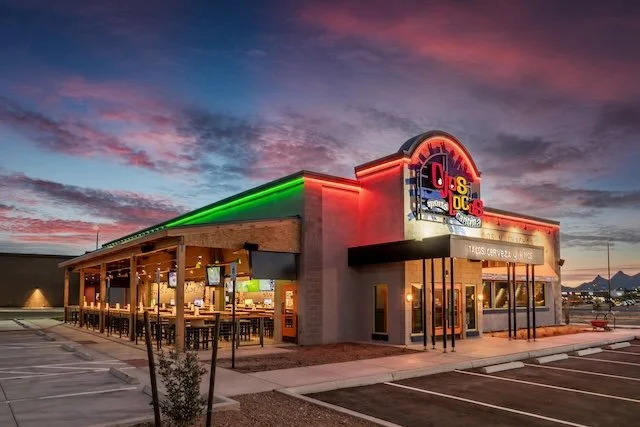
Running a restaurant today is a constant balancing act. Labor challenges, rising costs, and tighter margins are the reality for operators everywhere. In this episode, Roger sits down with Alex Sadowsky, Vice President of Training, Culinary, and Beverage at Ojos Locos Sports Cantina, a 35-unit brand that continues to grow while maintaining a strong identity. This conversation goes inside restaurant operations from a real-world perspective, covering how a multi-unit brand manages people, product, and profitability day to day.
Hiring and Training: Building the Right Team
One of the biggest takeaways is their focus on hiring for attitude over experience. The belief is simple: you can teach service, but you cannot teach genuine hospitality. Alex shares how their onboarding includes a buddy system and mentorship approach, along with flexible training timelines that allow employees to grow at their own pace. A major focus is creating a clear path from entry-level positions all the way to leadership roles, which has helped them retain team members for years.
Culture and Accountability Start with Leadership
When accountability is lacking, Alex makes it clear that it is usually a culture issue. Culture is not something you write down once. It is built every day through consistent leadership and small interactions. Knowing your team, showing appreciation, and creating an environment where people feel valued all contribute to stronger accountability. This approach helps shift the mindset from employees just doing a job to being part of a team that takes pride in the operation.
Managing Margins in Today’s Restaurant Environment
Margins are under pressure across the industry, and this brand is no exception. Alex explains how strong bar sales help offset rising costs, while strategic vendor partnerships and promotions support the overall value proposition. One of the most interesting points is their commitment to a scratch kitchen. While it increases labor, it improves product quality, supports the brand, and can help control food costs when managed properly.
Menu Strategy and Operational Efficiency
Their menu is intentionally tight, with fewer than 30 items. This allows for better execution, consistency, and efficiency across all locations. At the same time, they continue to test new ideas through localized limited-time offers based on regional demand and customer preferences. Instead of relying on corporate assumptions, they gather real feedback from guests and use that to guide menu decisions.
H2: The Numbers That Drive Restaurant Operations
Like any successful operation, the focus comes back to the fundamentals. Prime cost, including labor and cost of goods, is the primary metric they watch closely. They are also working toward more real-time visibility into their numbers to make faster decisions. A key priority is reducing administrative burden so managers can stay on the floor, where they have the greatest impact on the guest experience and team performance.
Leadership in the Trenches
A consistent theme throughout the conversation is leadership by example. Alex spends time in the restaurants working alongside the team, whether that means being in the kitchen, behind the bar, or interacting with guests. This hands-on approach helps maintain consistency across locations and reinforces the culture they are trying to build.
H2: Using Technology to Support the Operation
Technology plays a role, but only where it improves efficiency. The team is implementing digital recipe systems, video-based training, and tools that simplify communication and data management. The goal is not to replace people, but to support restaurant operations and free up time so managers can focus on leading their teams.
The Bottom Line
This episode is not about complicated systems or theory. It is a real look at how restaurant operations function inside a growing multi-unit brand. Strong culture, consistent training, attention to the numbers, and hands-on leadership are what allow them to scale while maintaining quality and performance.
Connect with our Guest:
@ojoslocossportscantina
-
This episode covers it all. Labor challenges, shrinking margins, rising costs, financial controls, marketing that works, and competition keeping ahead of the competition. My guest today is Alex Sadowski. He's the Vice President of training culinary and beverage for Ojos Locos Sports Cantina. We'll be talking all the standard operating procedures of any successful restaurant.
This is hard won experience from in the trenches. That's what Alex is dishing out, so stay tuned.
Alex, welcome to the show. Glad to have you here.
Glad to be here. Appreciate being on.
Ojos, Locos, scratch Kitchen you are Vice President of training, culinary and beverage, so you got quite a bit of responsibility, training being part of your title and purview. Let's talk about onboarding and training new team members. What's that process like? What do you look for in hires?
Do you hire for experience? Do you hire for approach and attitude and, and personality? And then what happens once you get 'em?
Yeah, that's, that's a million dollar question right there for everybody. Right? [00:01:00] So. We really have always been going for attitude, right? We want that kind of authentic flare. We call it coqueta service, right? So it's that kind of Latin hospitality that you can't teach. It needs to be innate. I can teach you how to serve, I can teach you how to be hospitable a little bit, right?
But if you're not, if that's not built into you. is it hard? So that's what we're really looking for. And then we're trying to get rid of every barrier you can imagine to make that happen. So interviews zoom in person, whatever it takes, we're trying to make the manager's lives easier and the server's lives easier.
Fantastic. So now that you've decided on getting a new person in the door and recruiting them and making them part of your company culture, what's the what's the onboarding? Like, do you do any mentoring and shadowing? Is there any kind of a buddy program? It's like how do you introduce them to the brand, what you're looking for, the hospitality you wish to impart on [00:02:00] the staff so that they impart it on the guests, all that kind of thing.
What happens?
Absolutely. So it is, it is a buddy system. Honestly we in the past didn't do a great job at it, so it's one of my big initiatives in the coming up year to make sure that we really make this happen. We are blessed, we have a lot of employees that have worked for us for 10 plus years, so obviously. The brand resonates with our employees.
It works. So how do we just start shouting from the rooftop, that kind of tribal knowledge and spreading it out. I have some great trainers all in different regions that can do that, open up restaurants, but as well as kind of that mentorship. And we really want to make it as close to one-on-one as possible, but at whatever pace the individual wants it to be.
So. The big thing that we're shooting for is how do we give the path from server all the way to GM or Area director and up, right?
Yep.
lots of opportunities at our corporate office. We just wanna empower everybody if they want to. They can [00:03:00] do whatever they want. So how do you kind of do that one day program, three day program, one week program. But if they want to complete it in a day, or they want to test out and learn everything and crunch it all, go right ahead. We're not gonna stop you.
So that's amazing. So you probably have, well you mentioned longevity. So you've got people that have been there 10 years plus, which probably the raving fans of your brand, they love working in your organization. They probably bring in new people that are looking for new gigs too. Right. So that's the recruiting piece.
Then once that happens, then I'm hearing that there's a balance between people that wanna move up and find new opportunities and those people that love the position they're in and they do a great job at it and you wouldn't have it any other way. Would you say that's true?
That's absolutely true. So
Hmm.
don't want to shoehorn somebody into a job they don't wanna do, but I also don't wanna hold somebody back.
Fantastic. So you recognize talent. That's true. Leadership for sure. Recognizing talent, nurturing, developing, all that kind of stuff. [00:04:00] Let's talk about. Accountability because when I travel to restaurant and food shows, and I speak across the country, I talk to a lot of restaurateurs and a lot of times they, they're saying, why don't people show up on time?
Or why do they call in sick? Or Why does it feel like we need them more than they need you? And that's a culture problem, and there's a breakdown there. How do you ensure accountability in your company?
I think you're spot on that that is a breakdown of culture, so that's kind of a loaded word too. Right? How do you instill culture? It's every day. And it's the little things, it's the soft skills, right? It's asking somebody how their day is. Do you remember their kids' names? Right? Do you remember? Hey, their brother plays soccer, right?
It's, it's all those little tiny soft skills day in, day out that make it or break it, and it really sets apart the truly great people from somebody that's just trying to go through a checklist and make it through. And I think. Once you really crack it, right? That's what [00:05:00] the, the beauty of the restaurant industry is.
It's like you're on stage, you're performing. So it's if you can get that magic to happen, does it feel good and it's addictive.
It really is, you know, long hours, hot kitchens, all that kind of stuff. Really demanding workplaces in some cases. Yet it's that camaraderie, it's that team spirit. It's, it's the friendships that you meet, it's meeting new people on the floor. All those things are just addictive in this business, and it's really a business of passion.
So we talked about some positives. You've got longevity of team. Do you have any labor challenges, rising costs, of course, labor shortages, lots of restaurants are still reporting. Is that happening at all or is it, are you relatively avoiding that?
Work with some of the best minds in the business in the restaurant space. Jaime Oikle and I are putting together an operator, mastermind operators, just like you solving today's most pressing operating challenges. We're gonna be talking about labor, shrinking [00:06:00] margins, big needle movers, leadership, accountability, and getting the most out of your operation.
Meet twice a month and we're gonna talk all about the things that matter most for your business. You'll have a chance to talk about your personal challenges. You're gonna hear from other operators with their best practices and solutions. We're gonna give you immediately actionable ideas to improve your business.
If you're interested, limited time, limited number. It's 15 people only curated group. Go to restaurant rock stars.com for more information and we hope to work with you.
No, it's it's a big problem. We live it every single day and it's not just us, right? We're all kind of in this together. I take the mindset though that there's no way out of it. I don't like the idea of all of the robots and trying to get rid of jobs. I want to find the people to fill those jobs. 'cause I think you need that human touch.
Are there any recognition, rewards, programs for outstanding performance? It's like [00:07:00] that's all part of the culture as well, like what keeps people inspired and motivated and like working toward a common goal.
Absolutely, and it's as little as you know, making lunch for everybody. We still believe in staff meals. The old school stuff works all the way up for, you know, world Cup tickets, trips, that sort of thing. But really, I want to make sure there isn't this huge barrier to get it too. So I like the little tiny rewards as long as the BI and along with the big rewards, right?
How about margins? Are they shrinking? Are you maintaining them? How are you offering value with rising costs and not continually raising prices? Or do you have to do that? Like gimme that balance.
So we have done pretty well on the margin side actually, 'cause we're blessed with really strong bar sales which helps offset kind of everything, right?
For.
Top line, top line hides everything. So but. really trying to tackle kind of the value proposition part by [00:08:00] offering really good specials, partnering up with a lot of vendors, trying to figure out a way in order to drive that value proposition while maintaining those margins.
So really delicate balancing act, right? How do you there and look at traffic and still try and drive that bottom line, that margin, because that's what pays the bills.
What are the KPIs that you monitor pretty regularly and your general managers in the stores are watching every single week just to keep costs in line and keep profits where they need to be.
we're trying to run it almost like an independent restaurant. So we're just looking at the prime costs all day, every day.
Great.
trying to get them in a place to have them be able to do real time, as close to real time p and ls as possible. So right now we're down to weekly. We might be able to get to daily. Through the theoretical, through act versus actual getting your invoices in, scanning 'em, in, finding different digital ways to take that off of their plate. Right? But really it's how can you tell what's [00:09:00] happening in your business as close to real time as possible is what's gonna save us. So the KPIs, just like everybody else, right?
We're really living by food cost, beverage cost, labor traffic. We're really monitoring overall just, just. We'll give certain stores kind of as taskforce taskforce stores some different KPIs but you know, turnover manager training. How many people have they developed? How many people are we bringing up? Huge swath for a manager to take care of, right? But when you get down to it, it's really that, that prime cost, cost of goods, labor, and then we can figure out the rest for 'em.
So let's talk about systems and important systems like inventory control and waste reduction and effective ordering. Like there's a system for that. How would you describe that? Passed down to each individual location. And do they report, you know, do the GMs report back to you or is that another person in the chain?
Catering is a powerful profit center for your restaurant. But are you [00:10:00] still juggling catering orders through email, phone calls, and scattered messages? Guess what your customers notice, one missed detail, one wrong delivery, and suddenly a new or even repeat customers ordering from your competitor. Rally Catering puts all your orders in one place.
Online, organized and accurate. Your team know what to do. Your customers can order anytime. Say goodbye to chaos and say hello, efficiency. Stop losing orders. Keep customers happy. Make catering simple with Rally Catering. Get a free demo at rallycatering.com/rockstars.
Nope. They, they report to me as well. I help with all of that stuff. 'Cause I happen to be one of the younger people on the executive team, so if it's got a cord to it, I probably have to help fix it. So Because we're a scratch made kitchen. It's pretty complex. So we're trying to take that complex world, that whole menu bar, everything from scratch daily, and how do we get that into those different layers? We're using R [00:11:00] 365 right now for inventory. Really works out great, but when you get down to it, it's all based on the old pen and paper menus. The individual recipes, right? So it's all kind of baked into those things. are we getting the product in raw, or what case size is it? Then we're breaking that entire system out. How many lemons do you get? How many limes do you get? How many cases do we have to juice today? Right? And we're trying to make that be as teachable and easy for the managers to understand. So I'm going to them and saying of, Hey, here's this recipe. Make it for me. And then we're trying to see what the pitfalls are or those barriers are in that, how do we change our wording, right in the the inventory system. Hey, your day is busy. Mondays are rough. You're gonna be there at six o'clock in the morning and start counting stuff. do I do to save them an hour minutes? And how can we help centralize [00:12:00] something, right? How can I get an accountant to help us cover all 35 stores? Save each manager an hour of their day on that Monday. Invaluable. Totally worth that person's salary here at the office. So literally everything that we're looking at is from that lens, even including music, TVs, the management of them during big sporting events. We are trying to figure out how best can we keep a manager on the floor managing, not necessarily taking care of this administrative stuff.
There is some that they have to do just 'cause they're the frontline worker, but how do we keep 'em managing?
Well, I always used to say, your office is on the floor. It's not in the back office. You know, and it's absolutely true. Sure, there's some administrative duties that have to happen, but literally when the guests are there, you're there and you're ensuring a great experience. You're overseeing a thou, I call it the business of a thousand details I talk about all the time, and it really is, and you know what I'm talking about when I say that.
When you have scratch made everything, is it [00:13:00] more labor intensive, and how are you finding that balance with cost of goods and, and labor based on your approach to putting out the best quality product you can.
It absolutely is more labor intensive. I think that we do get credit silently or vocally, right from the guests because of that authentic, call it camita ra, that taste right, that home cooking. You can't really. Put your finger on it necessarily, but you know, it's that much better than getting the stuff that's coming out of a jar or package. It's really helped our margins, right, as far as cost of goods go, but you're paying a little bit more for the labor. So how do we really balance that labor efficiency, especially in the kitchen? And it's just all those systems kind of, we touched on a little bit, right from. What piece of equipment are we gonna have?
What location does it look like? What does your walk-in look like? All of that kind of building out and saving steps and efficiency needs to be built in from the beginning.
I think you can also frame it as [00:14:00] part of marketing because again, that that reputation that you've built, the scratch made your guests appreciate it. They talk about it, it's social media. It's like people come back for that. So it's got a marketing value, even if it's a little bit more labor intensive. So I think it all offsets.
So I think you're doing the right things there.
And it, it really, I mean like during c. It proved out, right? It saved us 'cause we could get the raw material, but necessarily the manufacturers that were making this stuff, they were all shut down. So we're our own manufacturer. We're making our own tortillas. We're making our own salsas, right? Just get me some onions, tomatoes, give us a knife and let us run.
Do you have a lot of control over menu development? Is that a real big part of your job?
Real big part and more of the menu strategy, long-term innovation. It's kind of what I've always really loved about this industry, right? Is that what are the trends coming down? What are some of the local guys, smaller, independent restaurants? What are they doing? Great. What's the next big thing, right?[00:15:00]
How do you get to, to have the beria tacos, the que iberia three years before everybody else. And when you hit one of those things, it's another one that's addicting. You're like, oh I was right. God, I, I'm nailed it. You have some Es right, but everybody's gonna have it when you're trying to stay a little bit more on the edge.
But really we do have a tight menu. I wanna keep the core pretty tight. We're sub 30 items right now. And I think it's a pretty sweet spot. We're really efficient when you see kind of the overall produce and, and food that we have coming in almost nothing frozen except french fries and ice cream. Right. And it's, it's. It's tight. So how do you take those current skews you have, turn 'em into something new that's really trending. Regional Mexican cuisine is going up more and more. So how do we tap into that more Latin, broad Latin flavors trending up huge. How do we tap into that? That's the stuff that I really love to do.[00:16:00]
Wow, you're making me hungry. That's fantastic. So again. It's cross utilization of ingredients across multiple menu items. There are staples that are tried and true rock solid. You never take 'em off the menu 'cause your guest would kill you. But there are new items that come in from time to time. Any LTO type things, tell us about that.
Absolutely. And we're trying to stay as the least amount of Chain-ey as possible, is how I would put it. Right. So
Yeah, state.
the.
Go ahead.
I am telling these guys, right? Like, hey. We can do a regional thing for your city. Like in LA we're about to run a new LTO just for them because it's what every restaurant has in la, right?
We're looking here in Dallas, in Houston, just launched crawfish. have to have it all during Lent, you have to have crawfish. So how are we gonna make it the best we can and give it that? And Tina kind of flare to go along with it. Let's do it. So really we're looking at kind of that [00:17:00] decentralized. platform as kind of our test bed for new items that might hit the menu permanently.
So how do we get that LTO clock going? What threshold does it hit? What do sales look like? Does it have a broad enough reach? Can we roll that onto the permanent menu, take away some of those dogs that are on the menu and just keep this thing fresh, but still a very small, very concentrated menu.
What's the testing process like? Do you involve like really raving fan guests to say, Hey, what do you think of this menu item? Is it kind of a focus group thing or do you try it against the corporate committee and say, what do you think? Like what's the process there between role. Something new out and and thinking it's gonna go to all the locations and be a hit, right.
We are trying to fight desperately to not do the corporate committee thing because the brilliant part of it is all of our people here in the office know that they're not our core consumer. So you have to have food in front of people that are regulars, that are your guests, and you have to listen [00:18:00] to 'em. They're gonna tell you how they feel about. Everything. So how do you just get that feedback and listen to it? I've had really good success with kind of a normal stagegate process like some of the big companies use running through a focus group, running through a tasting panel, knowing what those trends look like, it can give you a pretty good magic eight ball, but nothing beats real life food. Going to a guest and getting their feedback.
Terrific. That's a great approach. Total winning approach.
Let's talk about technology and necessary tech.
Are you using AI to any degree?
Absolutely, and we're trying to leverage it even more and more really to, again, just be as efficient as possible, right? So how do we take. And combine all of our spreadsheets. How do we start breaking down analysis? How do we solve for that kind of emails? Just sync for some of these people, right? 500 emails, 600 emails in a day. And can you use AI to break it out, respond to half of them, or just bring it to [00:19:00] somebody's attention and speed that up? We are rolling out digital recipe books, iPad based with videos. to all locations. It'll eventually be in the bar as well. And all of training will live on that. So our learning management system, little test modules, things like that. We already had that digitized, but this is gonna be way more in somebody's hand, way more kind of tick, tucky generation friendly, right? Smaller chunks, really easy to digest.
Any other technology that's driving, business or making things more efficient for your guests or your team?
I mean, we're really trying to leverage a lot of the AI stuff too on the supply chain side, which I think will help a lot of issues. At least spot you know, a potential issue ahead of time. So we can get on a phone with a good old fashioned person and say, Hey, it looks like you need a truck on the road right now, and we're spot in the air before it gets to the restaurants.
So I think, we're gonna see a lot more [00:20:00] efficiencies come down on supply chain side as well as kind of that, you know, the, the inventory stuff, all that back of the house, officey things, whatever we can do to automate better.
So Texas, there's probably quite a bit of competition in that state as well as in other states because obviously Mexican is a hot concept. I had a Mexican cantina myself. Back in the day and it was such a fun thing to, you know, walk in the door and, you know, experience the vibe. And I was, I'm still a big fan of margaritas.
I'm just curious about the competition. Do you monitor a competition? You play your best game, but stay ahead of what they're doing. But you always gotta know what they're up to, right.
You know, you have to have your, your finger on the pulse of what everybody else is doing. And I think it's really healthy to have some aspirational competition ideas as well. Right? So if you are saying, okay, for us, you're a sports cantina, know. What does that look like? Well, what is the fine dining Mexican restaurant doing as well?
Are they doing [00:21:00] something cool? Can we get some ideas from 'em? Can we pick that out and turn it into something that works for our own brand? like to get down to Mexico at least quarterly if I can, 'cause I want to go to the cantina there. What's going on? What's happening, what's trending there?
Is there a favorite place in Mexico. You like to go? Do you go back to the same place? Do you travel the country?
I've traveled pretty much everywhere. Every single state, single city. I love Mexico City itself because it concentrates all of those
cuisines to be able to be way more approachable. But man, it's hard to beat when you're sitting in Oaxaca having some mezcal, and it's really hard to beat when you're sitting in Michoacán eating some carnitas on a street cart from somebody's family that's been doing it for a hundred years.
So. I think it's Mexico City as often as I can, but then every once in a while, at least once a year, get out, go see a cool little city, go talk to the locals, drink a beer, hang out with them. Can't be beat!
[00:22:00] Awesome. that's all part of the culture and it all comes back to your your brand.
do the stores do their individual marketing or do you have corporate marketing programs that they all follow?
We like to do both, right? Because kind of what we've talked about these individual communities, you gotta keep it pretty local. So we have a local store marketing team that involves the servers and we really get out there and we'll do some other corporate stuff, kind of higher level, but we really like to pile onto that local stuff 'cause it's what's really driving the traffic and making people fall in love with the brand and come back 2, 3, 4 times a week.
it's a cantina and sports bar. You must sell a lot of beer. Are they mostly Mexican beers or do you have a cross section of you know, variety?
Variety, and it really is driven by the local market. We've seen a downturn in craft beer overall, but that's kind of the overall industry right now. But we sell every.normal beer that you could imagine. We do lean a little bit heavier to the Mexican stuff, but do we sell quite a [00:23:00] bit of American beer.
Shockingly
Nope. Yeah.
As I came on board,
And draft end bottle or just draft?
draft and bottle and almost a 50 50 split and we're really seeing a growth in cocktails as well. So, I mean, we knew margaritas were gonna do great, but
Absolutely.
Yeah.
some of these times we're running specials on, on some of these, you know, high-end tequilas, things like that. It's just mind-boggling.
The amount of drinks that we're selling right now.
there's an overall decline in our industry of alcohol sales, right? They're saying that people are. Going toward mocktails, or sometimes they're drinking only on weekends, and then when they go out in the middle of the week, it's like they're having non-alcoholic beers or non-alcoholic wines.
And then there's a big trend toward that. Are you seeing much of that?
In our brand? No.
Not,
I've lived it in a previous life, definitely saw it.
yeah.
I'm seeing is that it's more of the premiumization, right? So it's people saying, you know, I'm gonna go out and I'm gonna have [00:24:00] two or three, but they're gonna be good and it's gonna be with good tequila. If I'm doing tequila or I'm gonna get a ice cold, big beer.
The beer that I want.
So when you say a big beer, are there unique vessels or glassware that you're using as part of your program? Tell us about that. 'cause that's a hook unto itself as well.
Absolutely. So we take draft beer super seriously. We have frozen mugs all the way up to 22 ounces. That mug to live. Two days in the process to be frozen to get it to your lips. So
Wow.
know that if you're having that beer that has been in a process for 48 hours before it got to you, serious.
We also call ourselves the Casa de Balones. So we have soccer balls and giant beer towers on every single table, 60 ounce or a hundred ounce, and it's really unique. We'll bring out those frozen mugs with you, but it adds to that kind of party vibe.
What does hospitality mean to you, [00:25:00] Alex?
I always go back to. did my grandma make me feel when you sat down at her table? Right. So I had a mentor way back when that would say, it's like you're going to your grandma's house and she's gonna wrap you in a warm blanket on a cold night. That's what hospitality feels like to me. it's different for everybody, right?
But I think that that kind of really resonates. It's how do you make somebody that's having a bad day turn it around just from you them. Way or another, whether it's helping 'em with a, a cold beer or getting 'em the food they want, or just simply saying, Hey, you know, Roger, glad you're here. that can turn somebody around.
What's the history of the brand.
So we started here in Dallas in 2010 and really it was meant to serve the Hispanic market that was really underserved here at the time.
Mm-hmm.
really Latin Sports Bar existed here, but. The founders love Mexico, go there all the [00:26:00] time. And they love that cantina vibe, right? That party, everybody's having a good time.
You can kind of, it's the cheers part, but with the Mexican heritage, right? So you leave it all at the door, you walk in, everybody knows your name. It's awesome. really, we've taken that and run we're up to 35 locations right now in five states, and we're gonna keep growing and keep pushing into some new territory. But we're gonna maintain that kind of authentic sports cantina we go.
It's a really good combination and you know, you're bringing me back to college when I was in a fraternity and one of my fraternity brothers actually had a condominium on the beach in Acapulco and we did spring break there twice, and that was the whole vibe. It's like right down the. Street where a dozen of these canteen is, and you walk in and it's a combination of locals and tourists, and the bar is like packed and you know, the beer is flowing and the margaritas and all that kind of stuff.
And then the food is so authentic. So I'm, I'm hearing that there's authenticity also behind the food and, and [00:27:00] you're clearly involved in the culinary side. Let's talk about that, you know, the menu itself and the authentic traditions of Mexican cooking and cuisine, the Latin heritage, how true to the brand?
Is that, and how important is it?
It's incredibly important and we're just gonna keep pushing even further into it,
Mm-hmm.
right? So. I don't think we ever really got credit for how scratch and how authentic we were trying to be from handmade tortillas every single shift. We had a tortilla lady in the back, and we need to be shouting that from the rooftop,
Yeah. Sure.
making aguachile with a recipe straight from Jalisco. We're, we're doing ceviche every single day. Every, everything is so fresh, so scratched. Now I'm blessed because we have those long-term employees. So when I go in and say, Hey, I think we can do this better and more authentic, and then I can just go to them and say, what's your recipe?
What's your mom's recipe? Let's take a look at it. Let's kind of compete inside the four walls and come up with the best thing [00:28:00] possible. And then it's me kind of being the cheerleader, going back to the training part, right? Saying, no, we can do it. How many are we really gonna sell in one day? 20, 30?
Come on. We can make it fresh. We can do it the hard way 'cause it's the right way.
Each of the locations unique unto themselves, are they different? Are they similar? Do they have a local focus?
Is absolutely similar, and I think our development guys have done a really good job at that. So. building ground up everywhere we are. You know, taking second gen, third gen restaurants in strip mall parking lots or kind of underserved communities and bringing a cantina to 'em, kind of what we were built on, right?
We, we went into a, a restaurant row here in Dallas that nobody thought was great, and it's still one of our top performing stores. It's the flagship. It's unit number one how do we take that same mindset and bring it everywhere? We've really kinda leaned in more towards that blue collar worker a good way.
[00:29:00] So we are doing little touches throughout the entire building. That points back to a lot of trade work, right, where it's cast iron piping around the bar as your kind of foot rail. The dividers for all of our communal seating are levels. Drywallers use wheelbarrows in front is kind of the cigarette ashtray. And it started because that's just where our wheelbarrow that we used for construction on the first one got stuck and it just kind of made sense. So fill it was sanded.
Let's move on.
See, I would call that a hook, and that's part of marketing as well. You know, those unique touches that the guests just kinda look at it, it catches their attention and they remember it, you know, and it's all part of the experience. I.
I think it adds to that authenticity without necessarily trying to club people over the head with it.
Nice. So you've got a corporate position, but it sounds like you travel to the locations as well. Are you doing that and how are you maintaining consistency? Do you secret shop [00:30:00] these stores? Like tell me about your, your day-to-day role. It probably changes all the time.
Absolutely. Yeah, shoulder to shoulder is hard to beat, right? We have all this technology. We can do digital training, we can do stuff by Zoom. But really, I like getting in there, working shoulder to shoulder. I started as a dishwasher and worked my way up. I'm not leaving that right.
Yeah.
with bar behind the bar, same thing.
I want to go and shake some cocktails and pour some beers and ask the regulars how we're doing, what do they want, what's going on. I had the pleasure for, you know, an opening in Chino, California. I was there during the Dodgers World Series run, incredible vibe, and the staff was all having a good time too.
So really hard to beat that. to person one-on-one training, even though I have all the other trainers and we have some other layers there. To your point on, you know, it's a corporate position, but you gotta be in your restaurants. It's the only way to make it work.
So you're rolling up your sleeves, you get behind the bar, you get in the [00:31:00] kitchen, what do you do?
Both
All the, yep.
what, depends what's needed, right? And it's depending on kind of what will have the best impact to them to show that the people here at our office care. their position, know the job that that person's doing, and that we really are there to support them. How do we make them succeed?
Fantastic. That's excellent. Excellent. So there is no typical day, right? Do you spend a lot of time in, or what do you do when you're in corporate? I mean, are you thinking ahead? New menu planning beverage programs? All that. What is, what does an overall typical day look like for you?
Lot of curve balls all day, every day, all week, seven days a week. And it doesn't stop because I for these people that are in these positions, managers that are closing at two o'clock in the morning
Right. Yeah.
and they have a 9 1 1 and they need an answer, like right now, my wife hates it 'cause, 'cause I'll sit there and [00:32:00] answer 'em, but I'm like, Hey, this manager deserves it.
Hmm. That's, that's called support behind the scenes. Wow. You're open late is, is all, are all the locations open till 2:00 AM Certain states
some
that.
certain states and, and really by certain cities too, just kind of depends on the demographic and and day part really. Right. So Mondays, you know, maybe it's midnight, other days it's gonna be 2:00 AM.
Sounds like a super fun place. The mugs, you talk about the 22 ounce mugs, are those for any guest or is there a a formal mug club that you have in the stores?
Nope, any guest, so we wanna bring it to everybody, right? And we want that guy, landscaper, the plumber, somebody that's sitting out there, HVAC guy that's been on a roof all day in the heat. It really good when you have a ice cold beer after a shift like that. And how do we deliver that every single time?
That is so cool. Yeah, I mean, there's so many things that are just catching your attention everywhere you look, and it's all part of the [00:33:00] experience. You're definitely delivering experiences, not just serving food and drink despite the high quality of your products. That's awesome.
it's been great talking to Alex. Thank you so much for being a great guest on the show.
Thank you, Roger.
That was the restaurant Rock Stars podcast. Thanks audience for tuning in. Thanks sponsors this week. Can't wait to see you all in the next episode. Stay well. Stay tuned and I'll see you then.

Catering is an excellent added profit center for your restaurant, but it’s all in the details.
With Rally Catering, customers browse your packages and pricing to order instantly. Orders arrive complete and ready to approve, with kitchen-ready production sheets and packing forms. Grow your catering business without missing a beat and without the chaos!