7 Restaurant Operating Systems That Protect Profit and Build a Stronger Team
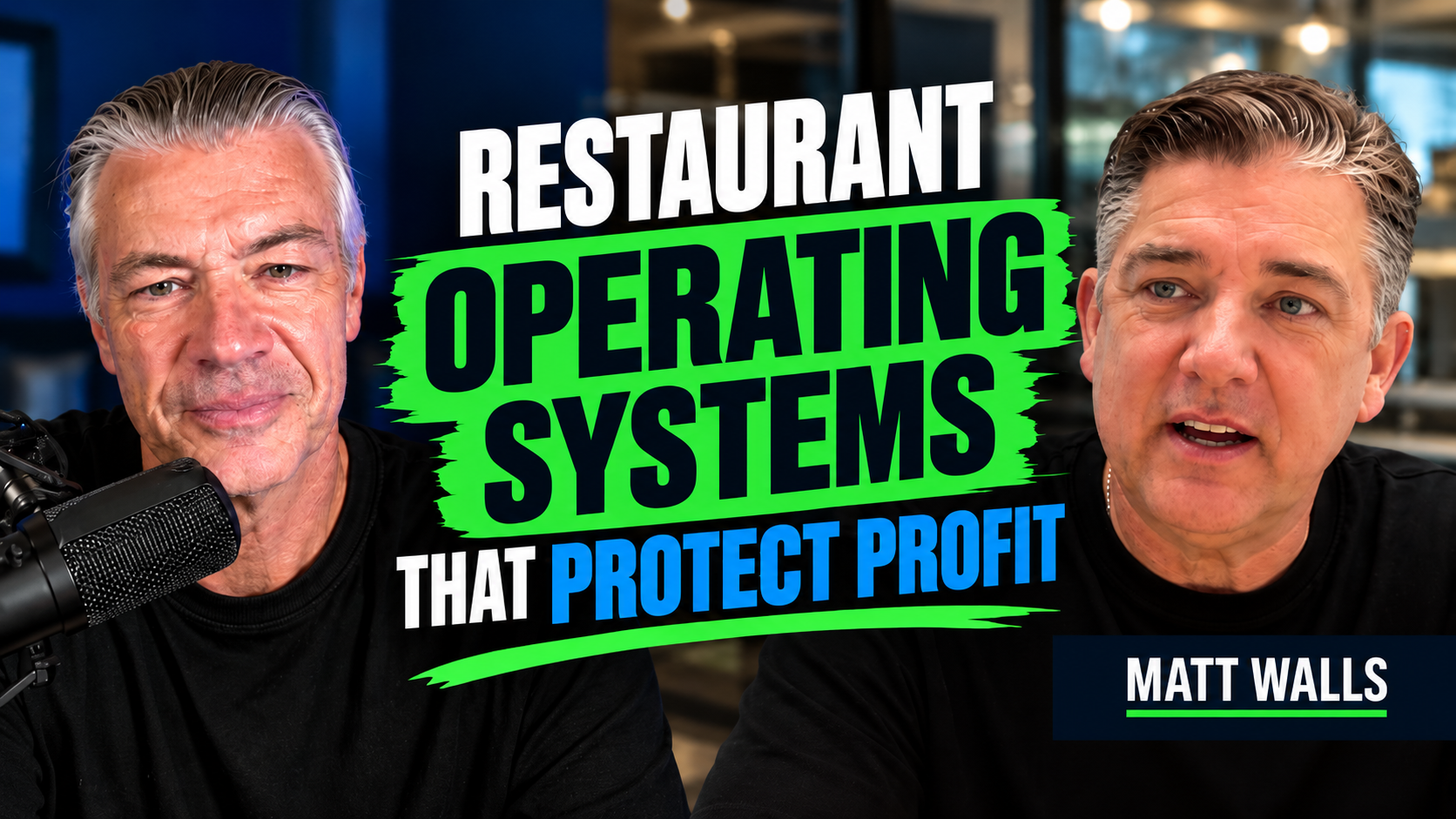
What restaurant operating systems have the biggest impact on profitability?
In my conversation with restaurant executive Matt “Walls” Walls, one answer became clear: profitable restaurant operations depend on more than controlling food cost. Strong restaurants build repeatable systems around people, labor, food cost, guest value, innovation, leadership and technology.
Those systems create consistency. And consistency helps protect margins without sacrificing the guest experience.
Matt has spent his career leading restaurant operations, and when I asked him which operating system matters most, he didn't start with inventory, scheduling or food cost.
He started with people.
Here are seven restaurant operating systems and strategies from our conversation that operators can use to build stronger teams and more profitable restaurants.
1. Build a Restaurant Recruiting and People System First
A strong restaurant operating system starts with recruiting the right people, developing them and building a deep bench of talent.
Matt's philosophy is to build a team that understands the culture, goals and mission of the organization. Once that foundation is in place, the restaurant is better equipped to handle the inevitable challenges of daily operations.
That led us to an important distinction between hiring and recruiting.
A "Now Hiring" sign might generate applicants. That doesn't necessarily mean you're recruiting the right people.
Matt described a much more purposeful approach. Rather than casting the widest possible net, recruit for the specific people and roles your restaurant needs.
He compared it to building a sports team: if you need a quarterback, recruit a quarterback.
As Matt put it:
"You hire for jobs, you recruit for a career."
That's a completely different mindset from desperately trying to put warm bodies on the schedule.
The takeaway for restaurant operators is simple: don't wait until you're understaffed to think about recruiting. Build a pipeline of people who want to grow with the business.
2. Control Restaurant Labor Costs by the Hour, Not Just the Week
Restaurant labor costs should be managed at the hourly and daily level, not only as a weekly labor percentage.
Restaurants can have plenty of sales and still make very little money.
When I asked Matt where he would look first if an operator told him margins were getting crushed, he went directly to two of the biggest restaurant expenses: food and labor.
What interested me most was how surgically he looks at labor.
Instead of simply reviewing a weekly labor percentage, Matt evaluates labor hour by hour and day by day, establishing a dollar allowance for individual periods.
He also pointed out how easily restaurants lose labor productivity on the "shoulders" of a shift and during slower periods between lunch and dinner.
That's an important distinction.
You can hit your weekly restaurant labor-cost target and still have periods throughout the week when you're overstaffed, inefficient or paying people without enough productive work to justify the expense.
The better you understand those periods, the more opportunity you have to reduce unnecessary restaurant labor costs without sacrificing service or hospitality.
3. Protect Restaurant Food Cost With Portion Control and Smarter SKUs
Restaurant food-cost control depends on consistency: portion specifications, purchasing, vendor pricing and thoughtful inventory management all matter.
Matt shared several places he looks for food-cost leakage.
One is SKU rationalization.
Limited-time offers can become expensive when they require a pile of new ingredients that add inventory, complexity and potential waste. Matt's preference is to develop LTOs using as many existing SKUs as possible.
He also emphasized vendor pricing and portion control.
That immediately reminded me of my first restaurant.
We served one size of wood-fired pizza. I watched three different employees make the same pepperoni pizza. One used 12 slices, another 13 and another 14.
The spec was 12.
One or two pepperoni slices don't sound like much. Multiply them across thousands of pizzas and suddenly a tiny inconsistency becomes real money.
Small restaurant profit leaks become big ones when they're repeated thousands of times.
That's why portion specifications, purchasing controls, inventory discipline and consistent execution matter so much.
4. Increase Restaurant Guest Value Without Constant Discounting
Restaurants don't always have to lower prices to create value. Increasing the benefit a guest receives can improve perceived value without training customers to expect discounts.
This was another part of our conversation that I loved.
Matt defined value in a simple way:
Benefits divided by price.
Instead of immediately lowering the price, ask whether you can increase the benefit.
For a loyal customer, that might mean a little extra protein or another benefit that costs the restaurant relatively little but has meaningful perceived value to the guest.
Matt's concern with constant discounting is that once you get into that cycle, it can be difficult to get out.
I've believed the same thing for years. Once guests become accustomed to a discounted price, it becomes much harder for them to see the same value in paying full price again.
Matt takes a similar philosophy into suggestive selling.
Rather than mechanically asking, "Would you like fries with that?" his teams try to understand what the guest is ordering and make suggestions that genuinely enhance the meal.
He gave a simple example: rather than asking a guest if they want something to drink, ask what they would like to drink.
The goal is to approach the interaction like a host rather than a salesperson.
That's hospitality instead of an upsell.
And when you do it well, the guest can spend more because they see more value, not because your staff pressured them into adding something.
5. Build a System for Frontline Restaurant Innovation
Some of the best restaurant ideas can come from employees working directly with guests, so operators need a system for capturing and testing frontline ideas.
Restaurant owners and executives don't have a monopoly on good ideas.
Matt believes some of the best ideas come directly from the stores.
At Roti, he created a culinary competition that allowed employees across the organization to compete with their ideas.
One of those ideas became Roti's Hot Honey Harissa sandwich.
The product came from Chef Manny at the Hyde Park store. Matt explained that it performed well with guests, generated social-media attention and delivered a strong margin.
Even better operationally, it required only one new SKU.
But the competition accomplished something bigger than creating a successful menu item.
According to Matt, it encouraged employees to think about the brand as their own. Team members began bringing him ideas and asking him to try what they had created.
That's ownership.
Your people are in the trenches every day. They see things you may never see from the office.
Give them a voice and create a repeatable way to turn good employee ideas into action.
6. Develop Restaurant Leaders Before You Promote Them
Restaurant leadership development works best when employees are given increasing responsibility before receiving the next title.
There's a huge difference between being a manager and being a leader.
Matt also made an important point during our conversation:
Not everyone wants to become a manager.
Some employees want to advance. Others may be outstanding at what they currently do and have no desire to manage people.
A good restaurant leader understands the motivations of each person instead of pushing everyone toward the same career path.
For people who do want to advance, Matt believes in coaching them, giving them manageable objectives and gradually increasing their responsibility.
He also cautioned against promoting too quickly.
At Roti, they may give a GM some supervisory responsibility over another store before formally moving that person into a multi-unit position. That allows both the employee and the company to find out whether the next role is really a good fit.
I love that approach.
As Matt puts it, you find out whether someone can handle the "and" — their current responsibilities and something more — before handing them the next title.
And remember: a rockstar GM who doesn't belong in a multi-unit role is still a rockstar GM.
Recognize the Restaurant Leadership Behaviors You Want Repeated
Matt also believes employee recognition should be timely and pertinent.
If someone takes great care of a guest, helps another team member or fixes something before being asked, recognize it when it happens.
You're not only rewarding that employee. The rest of the team sees exactly what kind of behavior gets recognized.
One thing Matt specifically looks for is an employee who doesn't just identify a problem but comes to leadership with a possible solution.
In one of his stores, an employee pointed out a problem with order-ahead theft and immediately suggested how they could fix it. Matt recognized him in front of the team for acting like an owner.
That's how you begin building an ownership mentality throughout your restaurant organization.
7. Use Restaurant AI Behind the Scenes and Keep Hospitality Human
AI can help restaurant operators analyze data, identify trends and improve efficiency, but technology should support human hospitality rather than replace it.
Of course, I had to ask Matt about AI.
Matt described using AI to identify trends and exceptions in KPI data that could otherwise take an analyst hours to uncover manually.
He also discussed using AI to better understand competitive activity, follow industry trends and support catering outreach and tracking.
But his philosophy about where restaurant technology belongs is what really stood out to me.
Matt wants technology working behind the scenes while the interaction between the guest and team member remains human.
As he explained, he uses AI where the customer can't see it so the parts the guest does see can remain as authentic and human as possible.
I couldn't agree more.
You never want technology to replace hospitality. You want it to enhance it.
Use restaurant technology to become smarter, faster and more efficient.
But don't use it to eliminate the personal touch that makes hospitality hospitality.
What Restaurant Operating Systems Protect Profit?
If I had to boil our conversation down for a restaurant operator, I'd focus on these seven areas:
People and recruiting: Build a talent pipeline instead of hiring reactively.
Labor management: Track productivity and labor costs at the hourly level.
Food-cost control: Standardize portions, SKUs, purchasing and execution.
Guest value: Add meaningful benefits instead of relying on discounts.
Frontline innovation: Give employees a system for contributing ideas.
Leadership development: Test increased responsibility before promoting.
Technology and AI: Use technology to improve operations while keeping hospitality human.
No single system creates a profitable restaurant.
The power comes from getting all of them working together consistently.
Systems Create Consistency. People Bring Them to Life.
My conversation with Matt reinforced something I've believed throughout my restaurant career:
You can have great food, a great concept and a packed dining room and still leave tremendous profit on the table if the operation behind it isn't dialed in.
Recruit deliberately.
Develop your people.
Watch labor closely.
Protect your food cost.
Create value instead of automatically discounting.
Listen to the people closest to the guest.
And use technology to strengthen hospitality rather than replace it.
Because ultimately, restaurant operating systems aren't about turning your business into a machine.
They're about creating the consistency that allows your people, your hospitality and your restaurant to perform at their best.
Hear the Full Conversation With Matt Walls
Want to go deeper? Listen to my complete conversation with Matt Walls in Episode 505 of the Restaurant Rockstars Podcast for more on restaurant operating systems, profitability, recruiting, leadership, culture and AI.
Ready to simplify, streamline, and elevate your restaurant operation?
Join The Profitable Restaurant Operator Academy:
https://www.restaurantrockstars.com/joinacademy
Watch the Interview
Free Restaurant MasterClass
Get the systems, tools, and training you need to improve your team, operations, and profitability inside The Profitable Restaurant Operator Academy.