Restaurant Operating Systems That Protect Profit
What if the biggest threat to your restaurant's profit isn't food cost, but a lack of operating systems?
In Episode 505 of the Restaurant Rockstars Podcast, Roger sits down with restaurant industry veteran Matt "Walls" Walls, whose career has included Domino's, CKE Restaurants, Caribou Coffee, Roti, and Edible Brands.
Walls believes strong restaurant operations start with people. Instead of simply hiring employees to fill shifts, successful operators recruit people for the right roles, build a deep bench of talent, and create opportunities for those who want to turn restaurant work into a career.
Roger and Walls dig into the numbers too, including why labor should be managed down to the hour, where restaurants quietly lose productivity between shifts, how portion inconsistency eats into food cost, and why adding too many SKUs can make a seemingly successful menu promotion less profitable than it appears.
They also discuss a different approach to restaurant value. Rather than relying on constant discounting, Walls explains how operators can increase the perceived benefit of an experience, encourage guests to spend more naturally, and create menu items that are both exciting to customers and profitable for the restaurant.
You'll also hear how one employee-generated idea became a successful Roti menu item, why the best ideas can come directly from frontline team members, and how recognition can reinforce the behaviors you want throughout your organization.
Finally, Roger and Walls talk about AI. Walls shares how Edible Brands uses AI behind the scenes to identify trends, analyze KPIs, understand competitors, and support outreach, while protecting something technology should never replace: genuine human hospitality.
In This Episode
Why great restaurant systems start with the right people
Hiring for a job vs. recruiting for a career
Building a deep leadership bench
Controlling restaurant labor hour by hour
Finding hidden labor loss between peak shifts
Reducing food cost through portion control and SKU rationalization
Why discounting can damage perceived value
Increasing guest spend through hospitality instead of robotic upselling
Creating profitable LTOs without adding operational complexity
Turning frontline employees into a source of menu innovation
Developing future restaurant leaders without promoting too quickly
Why employee recognition should happen in the moment
Teaching the "why" during restaurant onboarding
Using AI to uncover trends and opportunities faster
Where AI belongs in restaurants, and where the human touch still matters
Key Takeaway
The strongest restaurant operations aren't built around one magic KPI or cost-cutting tactic. They're built around systems that align people, labor, food, leadership, guest experience, and profitability. Technology can make those systems smarter, but hospitality still comes down to people serving people.
Connect
Matthew Walls LinkedIn: https://www.linkedin.com/in/walls/
Edible Brands LinkedIn: https://www.linkedin.com/company/edible-brands-llc
Website: https://ediblebrands.com/
About Restaurant Rockstars
The Restaurant Rockstars Podcast helps restaurant owners and operators build stronger teams, increase profitability, improve hospitality, and run more successful restaurant businesses.
Ready to strengthen your operation?
Want to dial in your KPIs? This course walks you through it step by step…
Pinpoint your weak spots, run a tighter ship and increase your profits FOR GOOD. An easy-to-learn and understand crash course in critical restaurant numbers to set you up with the RIGHT cost controls and maximize your profit. This course includes SPREADSHEET TEMPLATES so you can get started right away!
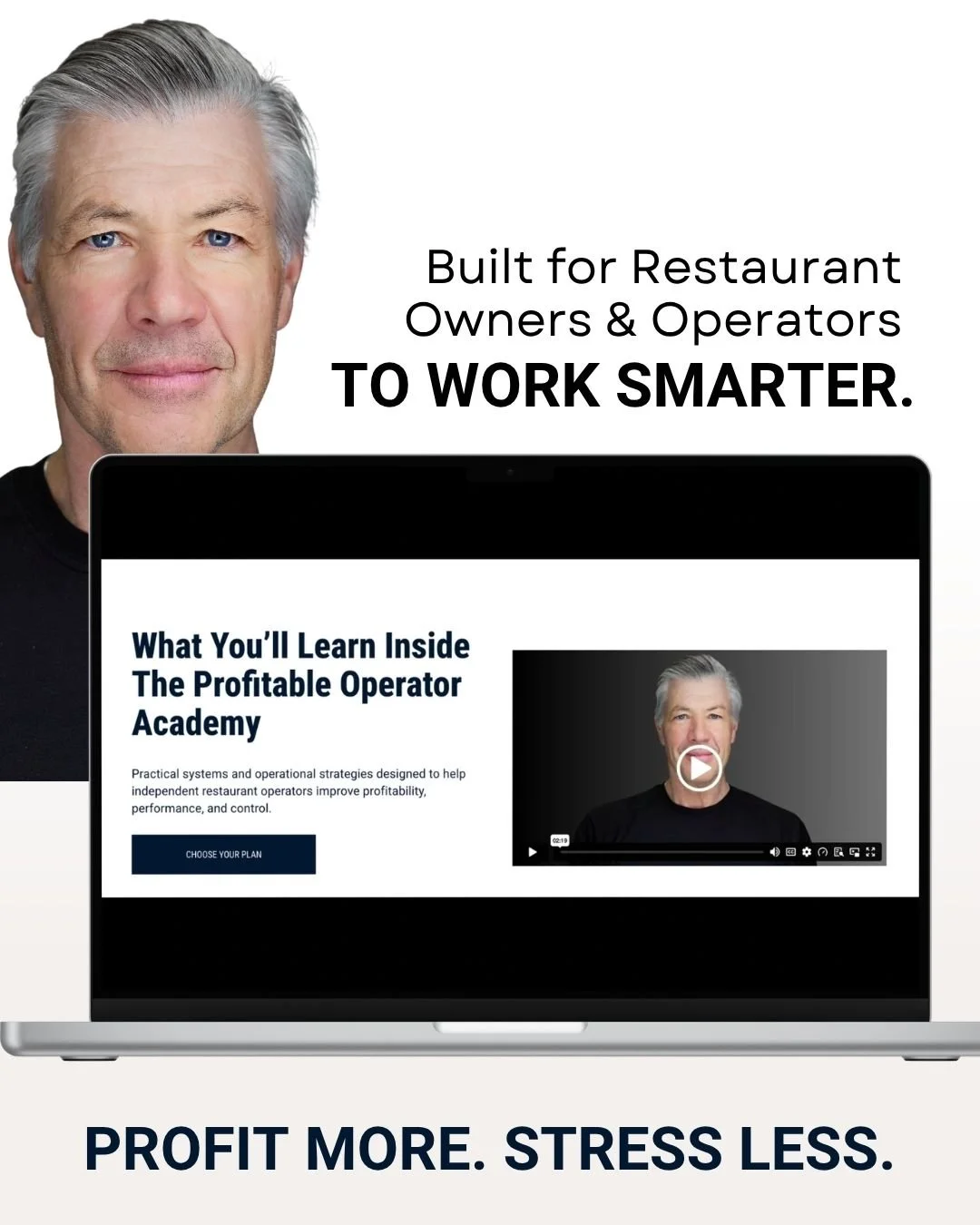
Run a Smarter, More Profitable Restaurant.
Discover the proven systems & solutions that drive sales, train staff, and maximize your margins.
Explore The Restaurant Academy now: https://restaurantrockstars.com/joinacademy

Smithfield Culinary serves up perfect proteins for every dish, every daypart like Smithfield’s new ready to eat select bacon, new ground chorizo or the broadest portfolio of pork. When you partner with Smithfield, you serve what you love and your guests will love what you serve.

In a busy restaurant missed calls mean missed sales opportunities. Yelp Host is an AI phone answering service that handles reservations, waitlists, and takeout orders 24/7. Yelp Host Speaks 17 languages, handles multiple simultaneous calls, answers questions, books tables and sends everything right to your kitchen.

Restaurants always need Capital when THEY need it! Problem is you don’t have time to wait, you need the cash now! Forward Financing has funded more than $5.4 billion to over 100,000 small businesses, and 10,000 restaurants just like yours. Forward funds anywhere from $5,000 to $500,000, often with same-day FUNDING.
Connect with Restaurant Rockstars:
LinkedIn Restaurant Rockstars: https://www.linkedin.com/company/restaurant-rockstars
LinkedIn Roger Beaudoin: https://www.linkedin.com/in/roger-beaudoin/
Facebook: https://www.facebook.com/restaurantrockstars/
Instagram: https://www.instagram.com/restaurantrockstars
X: https://x.com/RestaurantRock1
Listen to the Restaurant Rockstars Podcast on Your Favorite Podcast Player:
iTunes - https://apple.co/2WaKyqV
Spotify - https://spoti.fi/3xGuOd0
Stitcher - https://bit.ly/3iFGAAb
Soundcloud - https://bit.ly/3lYBhho
-
What if the biggest threat to your restaurant's profit isn't food cost, it's a lack of operating systems that dial in your operation? My guest, Matt Walls, Walls as he's affectionately known, has built operating systems across Domino's, CKE Restaurants, Caribou Coffee, Roti, and Edible Brands. His philosophy is simple: hire for a career, not a job.
Walls unpacks how to build deep leadership, control labor down to the hour, protect margins, create value without discounting, and turn frontline employees into your best source of innovation. Plus, how AI can uncover opportunities without replacing the human hospitality your guests remember and come for.
And may I ask, if you find value in our show, please subscribe to our YouTube channel or your favorite podcast player. Now, on with the episode
Welcome back to the Restaurant Rockstars podcast, and Walls, great to have you on the show today. How are you?
Roger, I'm doing great. Great to see you
Well, you've spent a career, you've got a solid gold resume, but you spent a career building systems, and I love that word systems, with Domino's and CKE Restaurants and Caribou Coffee. What to you are the most important operating systems that any operator needs?
Uh, it all starts with people. It all starts with your team. And so I think the most important system that, that I've found is really a system that builds a great bench. a great bench that has a great culture, because at that point, as you reach diff- you know, you see difficulties in the business, you have the right team that can, that can navigate those, you know, those unexpected situations.
And only a great team and a great bench will allow you to get there. Once we start talking about the in-store food and labor and things of that nature, those, those typical things we talk about in restaurants, it all comes back to whether the team is aligned to the goal and to the mission, and whether you have the right talent on board.
So I, I think that's the most critical piece is, is, uh, the, the talent. Um, not just the talent development piece, but also the recruitment piece. Making sure you're recruiting for the roles that you really need and the culture that you want.
You know, I'm really glad you brought up that word recruiting because so many operators are struggling with labor right now, shortages of labor, retention with labor. And I see still, wherever I go, I see now hiring signs in windows, in restaurants, in all kinds of businesses, and I don't believe that's, that's not recruiting.
That's trying to hire. So it's really about recruiting and, you know, there's so many different ways you can do that, and I did so many years ago just by asking my team, "Who do you know that's an A player that isn't happy in their current job that might..." Because we're gonna build a culture. You know, this isn't just about, "Okay, you got a job.
I expect you to do this." No, we're gonna build a real team environment with respect and recognition and rewards and all those things. So I'm really glad you brought up the recruiting thing. You know, do you see that too? I mean, how are your stores handling that? Are you having any labor issues?
Yeah, you know, really two different brands. So if you look at the Roti side of the business, that's our Mediterranean build your own concept. Uh, I'll tell you, the, the tenure there is amazing, and it's because we have that phenomenal culture. And to your point, Roger, a lot of it's through referrals. It's someone's friend that they worked with at the last restaurant or whatever that may be. Um, we're very purposeful with our, our recruiting there. And so it's not the broad net, you know, hope we can get as many applicants in as possible and then weed it out. We, we specifically go after certain people, and it's like building a sports team. if I need somebody that needs to, to be the quarterback, that's what I go recruit for. if I need somebody that's gonna work the offensive line, that's who I recruit for. So we make sure that we go out and we get the right people for the roles we need in that store. But then we look at the broader bench as well. So for instance, we have 10 stores in Chicago. I look at that as a 10-store team. And so when I'm developing someone at one store, I'm thinking about how they might be able to help me in another store later on, and showing that development also brings in really good talent. most folks want a career, and I don't think a lot of folks look at restaurants as a career. They look at it as a job.
Yeah. Stepping stone is somewhere else. Mm-hmm
you hire for jobs, you recruit for a career. And so that's the way that I look at that, and that's the reason why we have such a, a unique culture at Roti. You know, on the Edible side, we do some hiring just because of the seasonality of the business. So if you think about 10 months of the year, it's pretty status quo.
But then there's February, Valentine's Day, and there's May, Mother's Day, which are our Super Bowls. And so, you know, we absolutely do some seasonal recruiting around those times of the year. There's a lot more part-time employees, uh, at Edible Arrangements due just to the nature of the business, the kind of cyclical nat-nature of the business.
So I would tell you, we handle the two a little bit differently. But if you think about traditional restaurants, which really is what Roti is, we do recruit for career rather than hire for jobs
leadership and culture and the importance of that system. Let's move on to finances. Now, sales, not every sale is a good sale. Restaurants can be getting sales but not making any money. If you walked into any of our audience's restaurants tomorrow and the owner said, "My margins are getting crushed," what would you look for first, and then what would you advise that person?
Uh, well, I mean, the first thing I would look at is, is there food and labor? Um, you know, the, the way that I look at labor is by hour, by day, so I'm very s- surgical on, on how we, uh, schedule our labor. I also look at it more as, uh, uh, dollar allowance per hour. So, you know, if, if a store is allowed to have $50 worth of labor from 8:00 to 9:00 on a Monday morning, what they get. anything above that is just not acceptable. And, and we build that, uh, you know, based not only upon their peer set, but also based upon their abilities in the store. So if last week they ran a 42, uh, you know, during the first hour of the week, I'm gonna try to get them to run a 42 or a 41 this week, and always try to be improving on that. So I think a lot of times restaurants lose labor in those shoulders, early in the, in the shift, later in the shift. A- and then there's always the, the in-between shifts, you know, between lunch and dinner, 2:00 to 5:00. A lot of stores struggle with, uh, the productivity during those periods of time. The way that we do it is, is that we run one shift till 2:00.
We have a skeleton crew from 2:00 to 5:00 prepping for that evening. We bring in another shift at 5:00. So we minimize the labor loss in the middle of the afternoon. I think from a food perspective A lot of it comes down to SKU rationalization. you know, I see a lot of folks, especially when they're trying to do an LTO, they bring in a lot of SKUs, and those SKUs can just naturally cause some, some, uh, food bleeding. And so really what I'm looking for is how can I optimize my LTOs by using mostly the same SKUs that I have today. And then of course, going to my vendors and showing them the SKUs that I'm purchasing and trying to get more competitive pricing across our markets. And that's, that's something we do on a weekly basis.
We compare the pricing we get between different markets and then work with our vendors to ensure that we're getting the best pricing, um, in those markets. So it really starts at the supply chain, but then goes all the way down to menu creation. And then of course, it's a lot of coaching in the stores to make sure that we're having good portion control. Uh, in the build your own space, portion control is huge because we don't-- we're not putting a patty on a bun. Uh, we're act-- we have a bowl and we're putting in rice or putting in fresh proteins, and your three-ounce scoop might be my five-ounce scoop. And not only is it a, uh, a food cost perspective, but it's also a customer perception perspective.
And so Roger has the five-ounce scoop and I have the three-ounce scoop, customers may actually think that I'm short-changing them when in fact I'm actually giving them the standard and you're giving them too much. So it's a really, it's a really unique place in the build your own segment because it is about food cost, but it's also about making sure customers are getting the, the appropriate amount every time. So I think from the middle of the P&L, that's what I look at. From a sales perspective, you're right, not all sales are great. Um, I tend to think that you can take less profit margin on sales that are acquiring new customers. So any sort of promotion that I do, whether it be inside the loyalty app or outside of it, I'm willing to take less profit margin on that acquisition 'cause that's just...
that's, that's a rich customer base for us to be able to, to nurture and to harvest later on. Once I get people into our system, I, I'm less concerned about giving them discount. I'm focused more on value. And what I mean by that is, is that value really is benefits divided by price. And so if I keep my price the same, I just need to increase the benefit. so for my loyalty customers, that might be giving them a little bit of extra protein on a meal. It might be giving their kids a free meal when they come in to eat, things of that nature. Um, but I'm much more of an advocate of giving away a little bit of food cost, uh, to, you know, to make sure I'm getting loyal customers than to give up top-line sales. Uh, I think once you get into the discounting world, it's a, it's a cycle that's hard to get out of
Yeah, I learned a long time ago, once you discount anything, no one really sees the value in the regular price anymore, so that's a very valid point. You know, there's a lot to unpack. You mentioned many things. You talked about negotiating with suppliers, very important. Keeping them honest. They work for your business.
You gotta honestly look at your invoices every week and call them on spikes and things, and just make them know that you're watching. Then you also talked about portion controls. That brings me back 30 years ago. I've told this story before, but my first restaurant was a wood-fired pizzeria, and we had one size pizza only because that's how they do it in Italy.
And I watched three different people put three different amounts of pepperoni slices on the same pizza. I saw one do 12, one did 13, another did 14, and I went to my kitchen leader and I said, "What's the spec call for?" And she's like, "It's 12 slices." And I'm like, "Well, we've been open for three weeks. How long has this been going on?"
So think about the lost food cost there.
absolutely
and then I think we also talked about sweet spot with labor. You know, you definitely have a sweet spot, and that's something you've got to monitor every single week. I used to do it... I, I used to look at overall payroll cost for a percentage, and then I looked at kitchen labor also, 'cause it's the most important.
And then the sweet spot was always figuring out if we have relatively stable sales week after week, which we did, not every restaurant does, of course, but if you do, then there's a certain optimum amount of labor in order to achieve that level of sales, where the guests are getting great service, the quality is there, no one's running around in chaos.
And if you can hit that number, you're shooting for that every week. So you brought up all these great, great points that are just key operating philosophies. So that's, that's fantastic. Let's talk about food cost versus profitability, because this, this industry is obviously obsessed with food costs.
Everyone talks about food costs. Labor's important. Together with beverage, that's prime cost, of course. But yeah, it's great to have a, a low food cost, but that comes through portion controls. That comes through low waste and spoilage and theft. But really, it's about how much profit can you make off of every item, and, and is your menu dialed so that you're making a similar profit in each category on everything, so that you really don't care what sells as long as you're moving all the merchandise.
Yeah,
know? So you, you've seen that, too, i- in your career. Um, what other KPIs... You, you talked about looking at the middle of the P&L, but what are the k- the key, key K- KPIs that you could recommend our audience really look at every single week to stay on top of?
Smithfield knows that to meat lovers, a great serving of their favorite cut is so much more than just food. It's an experience. That's why Smithfield is committed to offering you the perfect protein for every dish and every daypart. Like their new ready-to-eat Smithfield select bacon, where chefs won't leave a mess and patrons won't leave a trace.
Or new ground chorizo, letting you serve up tasty, smoky heat. And turn to Smithfield for the most comprehensive portfolio of pork products such as bacon, ham, sausage, and more. When you partner with Smithfield, you'll serve what you love, and your hungry, carnivorous patrons will love what you serve. For more information or to order products, visit smithfieldculinary.com/smithfield.
When your restaurant is slammed, the last thing you need is the phone ringing nonstop, but every missed call can mean a missed reservation, a missed takeout order, and a missed sale. Yelp Host is an AI phone answering service built for busy restaurants. It can answer calls 24/7, handle reservations and wait lists, answer customer questions, and now take takeout orders using AI and send those orders straight into your restaurant's POS with no commission fees.
Yelp Host speaks 17 languages, handles multiple calls at once, and integrates with OpenTable, Yelp Guest Manager, and major POS systems. The results are real. Buttermilk Ranch saved about 80 hours of labor every week, and The Metropolitan booked more than 500 tables in just three months. So while your team is busy running the restaurant, let Yelp Host handle the phone.
Learn more at business.yelp.com/rockstars.
Yeah, so s- sales, food, labor, that drives the ship. So I mean, of course, we have to go after those three. Any sort of customer metric that you have, um, help us balance those three out. So to your point, food costs are great, but if your customer sentimentality is, is that you give low portions or the food quality is low,
Right
then you're missing the, then you're missing the whole point. Um, I think also, you know, I, I look at, um, the cleanliness of the store. You know, ex-Yum guy, so cleanliness, hospitality, accuracy, maintenance, product quality, speed of service, right? CHAMPS. I mean, that's what
Yes.
after.
Mm-hmm
it's a great backbone for every organization. So as we work through our operations, we think in that very similar mentality, going from the sidewalk through the back of the store, and not just looking at it from a standards perspective, but looking at it from the eyes of the customer, which is, is the most critical. And one thing I love to do, Roger, is to take my GMs after a shift and sit down in the lobby, sit down in the dining room and ask them to look around, because they never do it. It's a totally different perspective because you see things at different angles. When you're, know, when you're standing up the whole time and you're fr- behind the line, you only see a certain view. you sit down like the customer, you see a totally different view. And, um, and so that helps, that helps them understand why some of the NPS scores or CSAT scores, whatever they're relying upon, um, are the way that they are. And so we talk about top line, we talk about the middle of the P&L, we talk about CSAT. I think it's very important for restaurateurs to, um, focus more on their rents, uh, today. And so not a traditional KPI you'd see on a scorecard, but certainly very important to the profitability of, of a franchisee. And you think about a lot of the legacy freestanding restaurants, brands that are out there today, they're struggling mightily because their rents now are a much higher percent of their overall sales
No question about it. You know, value came up in our conversation so far, and obviously with shrinking margins, prices have to... Well, restaurants are raising prices, and at some point the value proposition is lost with the service and the hospitality you're delivering versus the value of the meal you're serving for the price you're charging for it.
How do restaurants or how are, how is your company maintaining margins? I mean, you've got leverage 'cause you've got obviously lots of stores. We have sindle- single independent operators listening here with one or two stores that don't have that kind of leverage. But again, margins shrinking, value has to be delivered.
You can't charge $35 for a cheeseburger. You know how it is. It's like, where's the balance there? What do you see?
Yeah. Well, I, I mean, I think QSR led the way years ago with the combo meal, and that was really their opportunity to
Yeah
value, um, you know, through increasing the benefit disproportionate to the price. So, you know, people saw that the large Coke and the large fries were worth three or four bucks.
McDonald's would charge $2 for it, and that was a great value. That was the perception of the customer. Um, there's an opportunity for, uh, independent restaurateurs as well as chains like ours, uh, to adopt similar measures. And so the idea that we can increase the value proposition for a franch- or for a customer really is what's critical. And if that means adding a, you know, a salad to something or adding a bread product or something of that nature, which has perceived high value, but you can actually charge a little bit extra for that and grow your ticket, I think it makes a ton of sense. And I think, are willing to pay more.
They just don't want to be upsold. It's... They want to make it... They want it to feel organic, and so that's the way we focus in on any sort of value that we do. We try to hit a sweet spot on our value proposition where the customer feels like there's so much value in that, I'm going to treat myself and get a little something extra. That little something extra is them upselling themselves. other thing we do at our restaurants, especially on the Roti side, is we help, we help our customers build menus. So we don't just say, "Would you like falafel with that?" And, and, you know, just kind of blindly suggest things. We think about actually what they're, what they're building in front of us, the bowl they're, they're building in front of us, and we offer them suggestions to enhance their meal. And through that enhancement, we may actually get a higher ticket, and I think that's, I think that's the right way to go about it because the customer feels like they're a part of the decision to increase the price rather than it being forced on them.
So I'm also hearing... Well, I'm not hearing much about suggestive selling of the people that interact with your guests because you feel like it's not an organic situation. Is that correct, or is there any suggestive selling that happens where we think it's better service if we inform our guests, especially new guests the first time that might not know our menu, to suggest something they might enjoy?
Where's the balance there?
Yeah, I think that's it. I think I- there is suggestive selling, but it's not just a
Ja
suggestive selling. We actually think about what the customer is ordering. if I s- if I see a, uh, a gentleman like me, right? I'm a bigger guy. Um, he orders a bowl with, with steak on it. I'm absolutely gonna say, "Would you like an extra portion of steak on that?"
Absolutely. Uh, my wife, who's very health-conscious, you know, I might suggest to her that some of the, the different sauces that she can try, and it may not even be an upsell at that point, but I'm just trying to help her go through the menu so she can better understand that. And then, for instance, when it comes to drinks, we don't ask them if they want something to drink. We ask them what they would like to drink.
There you go. All right.
a ho- as a host, if, if
Mm-hmm
to your home, if I come over to your home, Roger, and you serve me dinner, you're gonna ask me what do I want to drink, not do I want something to drink. and so it's really about the interaction. It's about being hospitable. And hopefully through that hospitality, customers will see more value in spending more with us, rather than us just kinda being robotic and saying, "Would you like fries with that?" Right? We're trying to be more thoughtful about our suggestive selling.
Very good. So I like, there's two words that I really loved in the business. One are hooks, right? Hooks are things that are unique and special and different that set you apart from the competition. Maybe they capture the guest's imagination. Maybe there's wow factor in this particular hook, and it's a signature item.
And hopefully people pull out their cameras and they share it on social media 'cause it's something cool, you know? And then also cash cows. You know, those thi- you mentioned perceived value, so a cash cow obviously has very high perceived value. You can charge really good money on the menu for it. It's very highly profitable, but it doesn't cost you a lot to sell.
And if you can combine those two things where your hooks are really hugely popular sellers, yet they're hugely profitable as well, then obviously your food cost goes down, your profit goes up. Do you think about things like that? Is that how your LTO strategy works? It's like, what, what do you do at Edible Brands?
that's abs- that's absolutely it. You know, it, it truly is win-win. I mean, that's the way we try to think about this. So if we have a great product that customers absolutely love and it has a good profit margin for us, you're, you're absolutely right. We're gonna drive that as hard as we can.
We rolled out the Hot Honey Harissa sandwich earlier this year, which in our, in the, you know, in our, of our channel of the industry is pretty unique because mostly it's bowls, right? It's either a salad bowl or a rice bowl.
Yes
um, a lot of great social, uh, media impact from it. Uh, we partnered with Mike's Hot Honey, uh, to actually make the sauce, and it was a ra- uh, just a raving success with our customers, really good profit margin for us. And so i- it's just one of those feel-good products where we're sitting, we're sitting across, immediately it's coming up on Instagram. People are taking pictures with the sandwich, like we absolutely loved it. then, and then me, looking at the bottom line, uh, I couldn't sell enough of those sandwiches. And so what-- we absolutely look at our menu. We curate it to make sure that the customers feel like we're listening to their feedback. We're giving them the products and the items that they want. But at the same time, I know that for us to continue to offer those things, they have to be profitable for us. and that's part of the SKU rationalization as well. I... You know, the Hot Honey Harissa was only one new SKU. That was the beauty of it. So I also look at the opportunity for us to, uh, minimize the impact on operations because that's also a hidden cost that people don't think
Oh yeah, right. The prep time, the labor, all that that goes involved in a new product. Yeah.
that's exactly right
Is that hot honey sandwich now a permanent menu item, or was it an LTO? And what happens when you come up with an LTO and it's a grand slam home run? It stays on the menu permanently, or you create that pent-up demand where you roll it out every so often and then it brings people back for it?
You know, there's a balance there too
Yeah, no, you're exactly right. And that... We, we did roll it out LTO. We pulled it away. Um, for any of our fans listening, it's coming back.
Oh, good
uh, so the way we do it, Roger, is, I mean, we, we, uh, send out every LTO with the intention it's gonna be out there for eight to 12 weeks. I mean, that's, that's the way that we look at it. Uh, we have a relatively high consumer frequency, so eight to 12 weeks, the average customer's gonna have it two to three times. Um, so they're able to give us feedback on whether they like the product or not. Um, and I would tell you that some of these LTOs that we roll out are gonna be every year LTOs.
We're rolling out our harvest bowl this, this, uh, fall. Um, fresh butternut squash, you know, really, really flavorful, uh, uh, bowl that comes out, you know, every year in September. We'll bring that out every year, and then it'll just be in the fall because of the unique scope of the LTO. But things like the sandwiches, you know, if, if customers are telling us that they want it back, um, that's what we want to hear, and we have two options.
We can either go, um, and put it on evergreen, uh, which is what we're gonna do with hot honey harissa, uh, or we could actually put it on the shelf and pull it out at opportune moments when the business may need an injection. Uh, we're so early in our life cycle that we don't think that we have the, you know, the equity yet to be able to play with that, you know, pulling things off the shelf and putting it back on.
So we're gonna roll out any LTO that's successful. We'll add it to our menu, um, so that we can, uh, you know, just continue the customer frequency that we are getting during that LTO period of time. But I think as we mature, we may start putting some of these LTOs on the shelf and pulling them out when it's opportune
You know, in most organizations like yours, and I'm only assuming of course 'cause I don't know your organization well, it, everything comes out of the chef's mind or the executive chef in the test kitchen and all that, and then sometimes there's a focus group and all that sort of thing. Do you encourage ideas across your stores where anybody can come up with an idea?
Maybe they saw it somewhere. Because, you know, are there really that many original ideas left? Like, you might be a server or a counter person and you absolutely love something that you get at a restaurant and it's like, "We should duplicate that. It's amazing." I mean, can ideas really come from anywhere? Do you encourage that?
Restaurants always need capital when they need it to renovate or expand, buy equipment, grow your brand. Problem is, you don't have time to wait a couple weeks for a traditional bank to make a decision. You need the cash now. So thanks to our new sponsor, Forward Financing. Since 2012, Forward Financing has funded more than $5.4 billion to over 100,000 small businesses and 10,000 restaurants just like yours.
Forward Financing has earned 4.6 stars on Trustpilot, so you can make the decisions and play your best game. Whether you need to cover payroll, replace that kitchen freezer, or add a new addition, Forward funds anywhere from $5,000 to $500,000, often with same-day funding. How much do you need to improve your business?
Head to go.forwardfinancing.com/restaurants and see how much capital you may qualify for today
Roger, you know it. The best dishes in a restaurant aren't on the menu. They are not, and we know... And we knew that. And
Yeah.
into Roti, you know, it's-- I got to tell you a little bit of the story.
Please
you know, when, when I was working in Minneapolis with my former company, the, the roti right across the hotel, or right across the road from the hotel from me was, uh, my every night jam. I, I went to roti every night. Absolutely loved it. Came-- fell in love with the brand. And I was there one night, Roger, like eight thirty at night. I was like, "Somebody ought to franchise this thing." Here I am a couple of years later, franchising this thing. And I-I've brought a
Wow.
mentality into Roti. I love talking to the people behind the line. I love talking to general managers. I ask them what they eat, what's the sauce combination that they come up with. So last year, I rolled out a culinary competition. So all of our stores were able to compete against one another, and it was just kind of like a, you know, a bracket type system where we got down to five folks.
We brought them all into Chicago, and the hot honey harissa actually came from that competition.
There you go
How cool is that? So Chef Manny at our Hyde Park store in Chicago, he came up with the, uh, with the sandwich. he's, he's a rock star now because we got to put him out on, you know, he got to do the photo ops and all that cool stuff.
But what it did more importantly was it encouraged everyone else in the organization to think about the brand as their own. And so this year, we're having our culinary, culinary competition again in October, and I'm already getting hit by GMs and team members like, "Hey, Walls." I go into a store like, "Hey, Walls, come try my new barbecue sauce.
You know, I need you, I need you to try this." So it's really a cool culture. And I will tell you, you know, our, um, our executive chef here, Chef Courtney, she's a phenomenal chef, but she loves getting feedback from our general managers and our team members about what they really like to eat. And then she brings it back to the kitchen and productionizes some of these to see whether it's something we can replicate across the stores.
So, um, yes, good ideas can come from anywhere, and I think the best ideas come from the stores
Awesome. Let's, you know, this is a perfect segue to really talk about leadership because you started this conversation by talking about that system being the people, and the people are the foundation of your business, of course. In my mind, I've mentioned this so many times, but there's a huge difference between a leader and a manager and delegation and empowerment.
So you look for a certain amount of people. It's very important that you recognize talent, you nurture that talent, you develop it, you move people up in the organization. You talked about people can go from this store to that store, and you really develop from the inside out, which is great. What is the key to accountability?
Because restaurants are struggling with... Well, h- this is another thing you mentioned. It's like this is a stepping stone in many cases to something else. A lot of people don't think of the hospitality business or restaurants in general as being a career path. But the culture you mentioned could be the foundation that gets someone really passionate about this business.
If they see a clear path forward, a career direction, there's no limit to where they can go. They don't need a formal college education. They can literally go anywhere. So let's talk about that critical leadership piece. What do you look for, and how do your leaders develop your people?
Yeah. I, I think the most important thing that a leader can understand about everyone on their team, whether they've recruited or they're recruiting someone or whether they're already on the team, is just understanding the fears and motivations of each employee You know, the, the motivations of some may
Mm-hmm.
just to have a paycheck to pay for the bills.
I, I get that, and, you need folks like that on your team as well. So, so let's, let's make sure that those people aren't being pushed on the career path that they don't, they don't want. That's the other thing. We always think everybody wants to be a manager, and not everyone does. And so I think that's, that's a critical piece.
But those folks that are motivated by wanting to be a general manager or have above store, uh, opportunities, it's helping them understand what that really means. You know, I think a lot of folks in the store look at general manager, and they think that they're just the one that walks around and barks out orders. They don't see the work that happens behind the scenes, late at nights, on the weekends, the phone calls with me. They don't
Mm-hmm.
of that piece.
Right
so I think making them understand, here's what that really means. Here are some of the sacrifices that you'll have to, to deal with that you don't have to deal with today. You're mill- you know, you're, you're actually bu- you're running a million, $2 million, $3 million business. Um, it's a, that's a big deal. So I think that's the first thing. And, and once they understand that, it's putting the right things in their path for them to accomplish to be successful, um, and giving them a lot of coaching. You know, we are a coaching, uh, a coaching culture
Excellent. Mm-hmm
you know, we give them, uh, manageable objectives, typically something that would take, you know, less than a period to achieve, and then we just give them feedback along the way. Now, it's their career. It's their... They set up the one-on-ones. They set up the discipline to, to meet with us to make sure they're getting the coaching.
If I have to go to them and coach, um, then they've missed part of the, they've missed part of the assignment, and so super important that they take that into their own control. A- and then also understanding that it's not necessarily a linear path. So I mentioned earlier how we may move someone from one store to another.
Mm-hmm. Yeah
you know, a store that does $1 million in sales is not the same as a store that does $2 million. so there are a lot of different challenges, especially on the labor side, a lot of different challenges there. Going from a suburban to an urban store, very different as well, and vice versa. So, uh, we really like to make sure that we well-round people out so they're ready for that next opportunity.
And then I think the last piece of leadership is not being overzealous to promote. Make sure that you promote people at the right time. And so that's the reason why that bench is so important for us. We have a, you know, we have a two or three-layer deep bench at, at our, uh, Roti stores, and we do that on purpose so that we never have to overreact. If someone decides that they're gonna self-select and move out of the business or, um, they decide that they want to actually demote themselves, you know, a GM sometimes, work out, and they still want to stay with the brand but not be a general manager. We want to make sure that we have a very easy progression plan and succession plan so that the business can can act with the, the act, you know, the exact same, uh, kind of cadence that it did prior to that decision rather than have to overreact.
And that, that usually creates a lot of ambiguity for not only the management team, but the staff in the stores as well
You know, you, you again, you're going really deep into a subject that, that I totally agree and, and believe in. One, there's two different kinds of rock stars. There are those that wanna move up, and those that are doing a rock solid job, and that's all they wanna do, and it's the leader's job to recognize that.
So that's really, really important. And then you mentioned don't be too quick to promote, which is also solid advice. Do you, uh... Well, the, uh, the obvious opportunity is giving someone an additional responsibility that isn't a new title. It's simply, "Hey, can you take this on? And if you execute it and achieve it well, there's gonna be reward for you, and it's some sort of an incentive."
And that sorta separates those people that really want to be something more, and the more they do, the more initiative they show, they're in line for the next promotion. You're not just automatically making someone a manager or leader or whatever it is just because they've been here for five years, and it's like they'll leave.
It's like you gotta give them little steps to move forward. So I'm sure that happens, too
Yeah, that's exactly right. I mean, I, I think the best example is when someone wants to go from a general manager to a multi-store leader,
letting them be the general manager of their prime store, but then being the, uh, general manager of another store or maybe just being supervisory over a GM at another store. And so that's the tactic that we take here. So I'll go back to Chicago. I have 10 stores, but really it's, it's six city stores and four suburban stores. what we'll typically do is we'll take a city store GM, and then we'll give them supervisory, rights over one of the suburban stores, for instance. or if they're at a high volume, give them supervisory over a lower volume store. And that's really so they can start getting the different aspects of the business and how you manage those differently. And what we see is, is we see those that can handle what I call and. it's not or. They can handle the and, so they can handle their current business and something else.
Definitely
that really prepares them. And then the other thing is, is that if they're not successful, that's good for both of us because I also don't want to promote someone into a position that where they won't be successful. And again, they may think that they're, they're store leader quality. They're not.
They're just a rockstar general manager, and I need those as well. Um, so yeah, I think the, the addition of responsibilities without necessarily promoting, certainly is a great way to prime people for the next role, but also to do a little bit of try it before you buy it make sure that this is gonna be a good fit both for the organization but for the employee as well.
Great advice. Let's talk about any individual person within any store. Are there any significant, um, or powerful effective recognition rewards programs that, that, you know, really recognize people for going above and beyond, either helping a guest or a teammate or solving a problem or whatever it is? I mean, just recognizing people for morale is a big thing
Yeah, I think so. I think there's three things you recognize people on: uh, being customer maniacs, being great team members,
that term
and, and just fixing things when they're, when they're ... before they're asked to be fixed. I mean, that's really what it's all about. And so we're really big into spot recognition. You know, recognition needs to be timely, and it needs to be pertinent. so customer comes through, someone helps them with a tray out to the table, they come back. That's an opportunity for the general manager to recognize that for two reasons. One, recognize the good behavior, but two, show the rest of the team that is the type of behavior that gets recognized positively, right?
That's, that's absolutely required in our business. our folks in the stores watch what we do. The general managers, the people that walk in from corporate, they watch what we do, and they mirror those behaviors. You know, I think the, the team member recognition, we probably don't do enough. We give so much credit to being customer maniacs or, you know, just doing what's right for the customer.
What, what about doing right for your team member? The person that takes out the trash without being prompted to go do it, even if it's not on their task list. Someone that picks up that extra shift and, you know, doesn't complain about the fact that they do it. Whatever that may be, those are the team members that I'm always watching. always watching those folks. And then I think the last piece is, is just, I, I don't, I don't recognize people that can bring up problems because I think anybody can do that. I love team members that come to me with problems and couple it with a solution. I love it. I have some, I have some stores, we have some older stores, and the, you know, the way our, our, uh, order ahead area is positioned isn't really the best for today's world. it's, it's out by the door. We don't have good oversight, for instance. And I walked into a store, talked to a team member, and one of the first things he mentioned to me was, "We have a, we have a shrink issue because our orders will disappear sometimes from, from that. And here's ... And Walls, here's what I think we should do." Music to my ears. That's exactly what I want to hear. So in front of his entire team, I recognized him and thanked him for acting like an owner,
Awesome
not only for identifying the problem but coming up with a great solution. So I, I think, I think we just need to make sure that we recognize people when they do it because it codifies the behavior that we want
I'm hearing you give your people a voice no matter what their position and their opinions matter, and that in many cases, them being in the trenches, they see things you don't necessarily see on a m- micro level, and it could be a huge thing that goes across the chain. One little idea could really make an impact,
What about onboarding? Because onboarding is so critical to retention, right? And the experience you give them and how comfortable you make them feel and how you maybe have a mentoring and shadowing program in place, and you really take their hand and not just throw them to the lions as soon as, because they're a warm body you throw on the floor.
How does that go?
Yeah. I, I think the part that gets missed a lot in training is, is the theory. We don't tell people why they're doing something. We tell them to go put a couple ingredients in a bowl and mix it, pour it into a squeeze bottle, and that's it. But here's why it's so important that we're making this by hand. Um, here's the reason why it's important that we are segregating shellfish from steak, right? There's some people that can't eat shellfish. Like, we
Mm-hmm.
them the reason why
Sure.
We have two sets of tongs for this reason. we go through the theory, people understand why they're doing it, so it's not mundane.
It's not just a task I've been told to do. There's purpose for the reason why I'm doing it. So I think that onboarding process that we take is so important because we do teach them why, and we also don't speed up- speed them through it. you're... And that's again, the difference between hiring and recruiting. If you're hiring, you're always behind, you're trying to get warm bodies in there just to do tasks. That's not what I'm going after. I'm going after people that want to come into the business and actually be a part of the team, and so because of that, I'm willing to invest time up front, typically 14 to 21 days in a lot of cases, where I'm not really expecting a lot of productivity out of them. I'm asking them to learn the business, and then when they learn the business, what happens is, is I get rewarded with great tenure. our tenure, especially on the Roti side, our GM tenure is, is crazy. I mean, I'm, I've got, I got folks that have been GMs for eight and nine years, and you would think they were complacent general managers.
They're not. Uh, they're huge advocates of the, of the brand, I think, A, because they have real ownership of their stores, and B, because we don't see them as just folks that are churning through labor. We allow them to actually build these really cool teams. And you go into any one of our stores, and you can tell it's Roti, but you can also feel the culture of the general manager, uh, which is pretty cool 'cause I can, you know, I can kind of sense that this is, this is Alex's store, and it
Yeah. They put their own stamp on it. That's called ownership, you know? That's a wonderful thing. When they feel that kind of ownership and that kind of pride, and they don't deviate from the consistency or what makes the brand the brand, but they make it feel like something warm and inviting, and they know their guests by name, and it's like, it's just, that's culture too, right?
That's,
you're so right.
it's so c- cool walking in, customers calling our, our team members by name. It's so, I mean, it's just so cool. You don't get that at a lot of places, but it's just this cool culture that we've built
Business of relationships. I don't need to tell you that, Walls, but it sounds like the guests obviously are treated like VIPs. Every, every new person that walks through the door is treated like a regular. It's like you get to know them, you make friends, and it's a built... You know, it's a business of relationships, and that's what makes it passionate.
I mean, food brings people together, and everyone comes together for the same reason. You know, celebrating occasions or just getting out 'cause you didn't feel like cooking, but you wanna go to that pl- It's that "Cheers" formula. I've said that so often, but you wanna go to that place where everybody knows your name,
That's
and that's a special place, and that's how you create loyalty, for sure.
Last question, Walls. Let's talk about technology because it's moving forward at light speed. How are you starting, or have you been using AI for a while, and what benefits are you seeing from that?
Yeah, we, uh, we're a Claude shop here at, at Edible Brands, and so, uh, we use it extensively. And, and actually the, the main way that I use it, and we use it above store, is just to pick out those trends that we wouldn't be able to see ourselves. I mean, that's really what I'm talking about.
Okay. Yes
whether it be loading in my...
loading in my my KPIs, whatever that may be, and really looking at those exception-based type of call-outs that, that Claude's able to pull out for me in seconds that might take an analyst of mine, you know, hours, uh, to go pull out, you know, as well. It also helps us really understand the competitive landscape. So we can, we can better understand what our con- direct competitors are doing, but what the overall industry's doing in a particular market. Staying ahead of trends or at least being close behind trends, uh, is a great way for us to, to use AI. Um, and then we've just developed a, a, a large set of tools that our teams can work on together.
So we have this great outreach program for our catering, uh, where my entire team is involved with reaching out to potential customers of ours, and we can put all that information into Claude. We can track our performance, almost kind of like building our own mini CRM system.
Yeah
but then what we can do is we can also track, you know, whether we've done the secondary outreach.
Did we send them the handwritten note? Um, did we make the formal phone call? Did we send them a bouquet of flowers? So all the things that are important to us. So one thing that's super important to our DNA is no matter how much technology we use behind the scenes, want the interaction between the guest and the team member to be human-to-human interaction. think that that's part of what makes us so special. I, I don't ever want to take that away, because again, my job is to be hospitable and to curate their menu, not just to try to make it as efficient as possible and for the bottom line. And so I use AI where the customer can't see it, so that we can focus in on making sure that the, the parts that the customer does see, that the guest does see, is authentic and human as possible.
Yeah, I love that. That's the personal touch you never wanna lose. You never want technology to replace hospitality. You only want to enhance it. So
exactly right. That,
fan-
right. You're
fantastic. Well, Wiles, you've been a great guest on this show. You added so many nuggets of operating systems and just the nuances that make a restaurant special and productive and profitable and, you know, build the guest experience and repeat business.
So thanks for being with us.
Roger, thanks so much. It was a great day. Appreciate your time
Thank you so much. Thanks to our audience for tuning in. That was the Restaurant Rockstars podcast. Thanks to our sponsors this week. Can't wait to see you all in the next episode. Stay well, stay tuned, and I will see you then.