Restaurant Leadership: How to Build Stronger Teams and Consistent Performance
Why do great restaurant employees quit, average employees stay, and high performers suddenly stop performing?
Strong restaurant teams require more than talented employees. They need clear expectations, consistent standards, meaningful recognition, and leaders who take the time to understand their people.
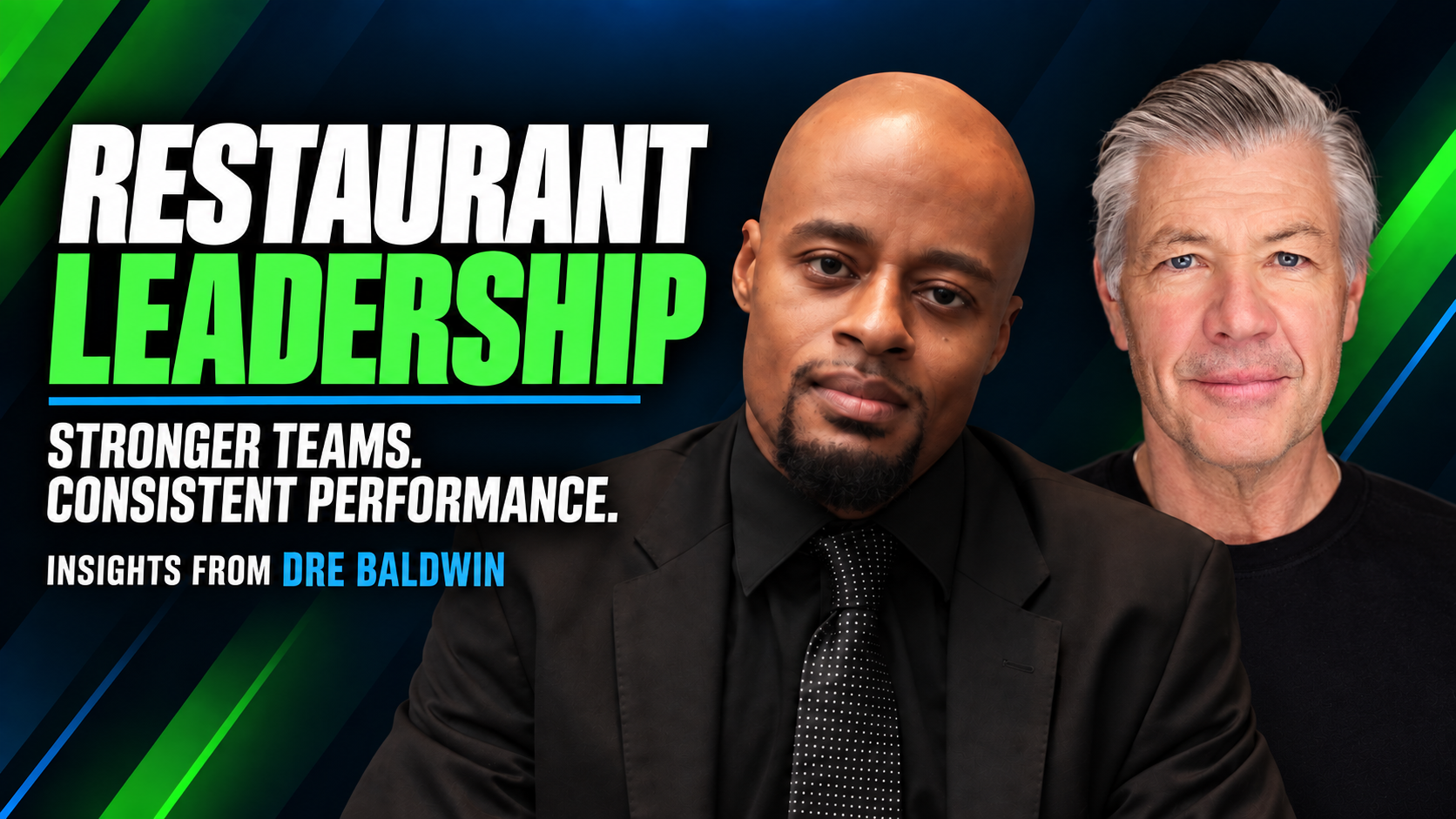
Restaurant Rockstars founder Roger Beaudoin recently sat down with leadership and performance expert Dre Baldwin to discuss how restaurant operators can build accountable teams, inspire stronger performance, and create a culture where great employees want to stay.
Dre is the founder of Work On Your Game®, a system used by executives and organizations to install discipline, decision-making structure, and execution reliability. A former professional basketball player, four-time TEDx speaker, and 43-time author, he helps leaders operate with clarity, authority, and measurable results.
[Watch or listen to Roger’s complete conversation with Dre Baldwin.]
Trust Your Employees, but Verify the Results
Dre’s first recommendation for restaurant leaders is to trust capable employees to follow the restaurant’s processes, while still confirming that those processes were followed.
He describes this as “trust but verify.”
Verification confirms that the work was completed correctly. It also shows employees that the restaurant’s standards will be consistently checked and reinforced.
Without that reinforcement, Dre says businesses can experience “execution drift.” People naturally begin moving away from established procedures when no one is confirming that the procedures are still being followed.
Accountability does not have to mean constantly micromanaging employees. It means setting expectations, trusting the team to meet them, and verifying the results.
Invest Time in Your Team
Restaurant leaders cannot expect employees to grow and improve without investing time in their development.
That investment may come directly from the owner or from a trusted manager, but Dre believes there is no substitute for helping people develop.
Leaders also need to understand why each employee is there.
Some employees are working primarily for the paycheck. Others value the camaraderie of being part of a team. Some want to advance into management, while others may be learning skills they can eventually use in another industry or business.
Once a leader understands what an employee wants, the restaurant can provide responsibilities and experiences that move that person closer to their goals.
The employee benefits, the restaurant benefits, and the relationship becomes more meaningful than simply exchanging work for a paycheck.
Leadership Is More Than Holding a Title
Roger and Dre discussed the difference between being a boss and being a true leader.
Dre explained that a boss or manager can tell people what to do because they have authority. A leader inspires people to take action because employees believe the action also benefits them.
That kind of leadership requires employees to believe that the person in charge cares about why they are there.
People are more willing to go above and beyond when they know their leader sees them as an individual, understands their goals, and wants to help them grow.
Give Great Employees a Reason to Stay
Dre argues that people do not always leave jobs because they are not making enough money.
They may leave because the work is no longer challenging, because it does not feel meaningful,, or because they do not believe they matter to the organization.
Restaurant leaders can address those problems by investing in their employees and learning what motivates them.
Roger also pointed out that not every strong employee wants to become a manager. A talented line cook may be perfectly happy continuing to perform at a high level in that position.
The goal is not to push every employee toward the same definition of success. It is to understand what matters to each person and give them a reason to remain engaged.
Motivating and Retaining Gen Z Employees
Younger employees have grown up with smartphones, social media, and immediate access to new opportunities.
Dre noted that when something no longer interests them, they can quickly swipe to the next thing. That same conditioning can influence how easily they move from one job to another.
This makes employee buy-in especially important.
Dre recommends speaking with younger employees the same way you would speak with someone twice their age. Ask what they are there for and what they genuinely want to get from the experience.
When employees know that their leader cared enough to ask, the relationship becomes more personal. That connection can create greater buy-in than a relationship based entirely on instructions and authority.
Establish the Standards Your Restaurant Needs
Roger raised the challenge of employee phone use during restaurant shifts.
A restaurant may want a firm rule prohibiting phones on the floor, especially where guests can see employees. Some operators hesitate to enforce that standard because they worry that employees will object or leave.
Dre believes operators must decide what type of business they want to run.
A strict phone policy may discourage some applicants, but it can also filter for employees who are willing to operate within the restaurant’s standards.
Another owner may relax the policy because they are concerned about losing people. Dre describes these as two different approaches: one based on abundance and the other based on scarcity.
The operator ultimately has to decide which standards are necessary and accept the results of that decision.
Discipline Is More Reliable Than Motivation
Dre makes a clear distinction between discipline and motivation.
Motivation is inconsistent. It comes and goes, and leaders cannot predict when it will appear or how much of it someone will have.
Discipline is based on structure.
Structures do not have bad days. When people consistently follow an established structure, they can continue performing even when they do not feel motivated.
Dre describes discipline as the foundation of professionalism. A professional shows up and completes the work consistently, regardless of mood or circumstances.
The same principle applies to an entire restaurant. Consistent organizational performance must be built on structure, not occasional bursts of motivation.
Prepare for Decisions Before Problems Occur
Restaurant leaders regularly face unexpected problems and time-sensitive decisions.
Dre recommends what he calls “doing your homework.”
This means considering the situations that could occur before they happen. Leaders should think about what could go wrong, what challenges other businesses have faced, and how the team should respond if a similar situation arises.
When the problem occurs, the leader or employee has already considered an appropriate response.
This preparation makes it easier to act quickly and consistently without becoming trapped in paralysis by analysis. It also helps ensure that the entire team understands how common situations should be handled.
Delegation Versus Empowerment
Dre defines delegation as assigning someone a task, showing them how it should be completed, and checking the finished work.
Empowerment goes further.
An employee becomes empowered when the leader can hand over responsibility without continuing to check every step.
Dre also noted that delegation can be part of the empowerment process. Giving someone a new responsibility allows that employee to begin developing the skills needed to handle it independently.
Roger explained that he would initially delegate responsibilities while determining whether an employee could consistently handle them. Once that person proved capable, empowerment could begin.
For Roger, empowering strong employees eventually became part of his exit strategy. He developed people who ran the restaurant as though they owned it, allowing the business to operate without his constant presence.
Why High Performers Sometimes Plateau
Talented employees can perform exceptionally well and then suddenly stop improving.
Dre says leaders need to investigate why the change occurred.
The employee may have reached their current capacity. Something outside of work may be affecting their performance. The expectations may not have increased, or the employee may no longer feel challenged or recognized.
Communication is essential.
A leader cannot solve the problem without understanding what changed, what originally motivated the employee, and what might inspire that person to move forward again.
Recognition Can Drive Performance
Dre believes recognition matters more than many leaders realize.
People will go to great lengths to be recognized positively in front of others. The recognition might involve a bonus, public praise, a milestone, or simply having their name mentioned during a team meeting.
He encourages leaders to create multiple forms of recognition instead of relying only on a traditional employee-of-the-month program.
Recognition becomes even more effective when it is connected to measurable actions that support the restaurant’s key performance indicators. Employees can work toward something personally rewarding while also improving the business.
How Roger Used Recognition in His Restaurants
Roger shared two examples of creative recognition from his own restaurant career.
In one program, he gathered the team for a brainstorming session and asked employees to suggest ideas that could improve efficiency, reduce costs, or increase profits.
When an idea created measurable financial results, Roger gave the employee responsible for it a portion of the benefit for as long as the idea continued working and the employee remained with the restaurant.
Some of those employees remained with the restaurant for decades and continued receiving additional money because their ideas kept producing results.
Roger also created a program called Difference Dollars. Team members could nominate coworkers who had gone above and beyond for a guest or teammate.
Roger would gather the team, explain what the employee had done, and publicly present that person with $20 and a Red Bull.
These programs gave employees recognition while encouraging them to take greater ownership of the restaurant’s success.
Building a Bulletproof Mindset
Dre’s Bulletproof Mindset grew from his experience as a professional athlete.
It centers on discipline, confidence, mental toughness, personal initiative, leadership, and communication. These internal qualities affect how people show up and how others respond to them.
Dre now connects these qualities to what he calls “power presence.”
He explained that much of human communication is nonverbal. People respond not only to a leader’s words, but also to how that leader carries themselves and the energy behind the message.
In leadership, employees often decide whether they will follow someone based on everything surrounding the words. The words then reinforce the impression the leader has already created.
Your Systems Should Work Harder Than Your People
Dre believes the operation of a business should not depend entirely on the presence or talent of one individual.
When every decision depends on one owner, manager, or employee, that person becomes a bottleneck.
Dre illustrated this with an experience at a restaurant in Miami Beach. He ordered a chicken wrap that included avocado and asked for the avocado to be placed on the side.
The employee repeatedly needed to ask a manager whether the restaurant could accommodate the request. The manager initially defended the decision by referring to restaurant policy and consistency.
Dre’s response was that a consistent customer experience should include giving the customer what they reasonably requested.
The situation was resolved in a few minutes, but the same system failure could happen repeatedly throughout the day. Other guests might become frustrated or decide not to return.
Roger connected the story to the lifetime value of a customer. One unnecessary breakdown in hospitality can create consequences that extend far beyond a single transaction.
Systems should create consistency, but they should also help employees serve the guest. A system that repeatedly slows down reasonable decisions may be costing the restaurant without the operator realizing it.
Work On Your Game®
Dre developed Work On Your Game® from his experience as a professional basketball player.
He began sharing basketball training videos on YouTube in 2005. Players eventually started asking him questions about discipline, confidence, mental toughness, and taking personal initiative.
Those ideas became the foundation of Work On Your Game®.
Dre explained that discipline helps people perform when they do not feel motivated. Confidence develops through preparation. Mental toughness helps people continue after setbacks, and personal initiative helps them move forward without waiting for someone else to create the opportunity.
The phrase “Work On Your Game” began with a video Dre recorded after an early-morning workout. He told the players watching that improving their performance required them to stop watching videos and begin working on their own game.
The phrase resonated because it applies far beyond basketball.
Restaurant owners, managers, and employees must continue working on their game if they want to improve their leadership, performance, and results.
Stronger Teams Begin With Stronger Leadership
Restaurant leadership is not simply telling employees what to do.
It requires operators to establish standards, invest in their people, verify performance, recognize contributions, and create systems that allow the team to succeed.
When employees understand what is expected and believe their work matters, they have a stronger reason to contribute.
When managers prepare for predictable problems and empower capable people, the restaurant becomes less dependent on one individual.
That is how restaurant leaders build stronger teams and more consistent performance.
About Dre Baldwin
Dre Baldwin is the founder of Work On Your Game®, a system used by executives and organizations to install discipline, decision-making structure, and execution reliability. A four-time TEDx speaker and 43-time author, he helps leaders operate with clarity, authority, and measurable results.
[Watch or listen to Roger’s complete conversation with Dre Baldwin.]
Connect with Dre:
http://X.com/DreAllDay
http://LinkedIn.com/in/DreAllDay
http://Instagram.com/DreBaldwin
WATCH THE INTERVIEW:
Build a Stronger, More Profitable Restaurant
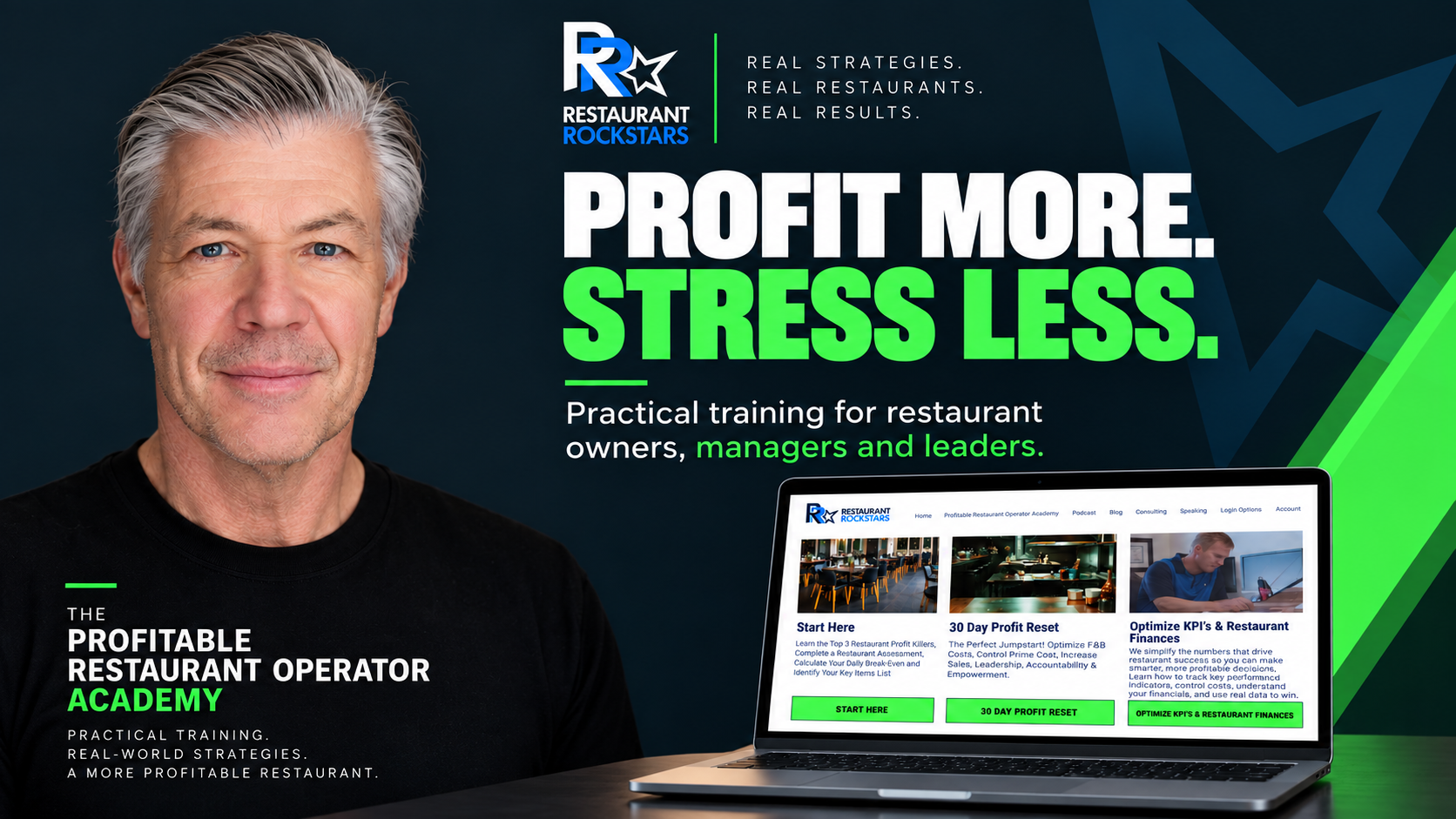
Get the systems, tools, and training you need to improve your team, operations, and profitability inside The Profitable Restaurant Operator Academy.