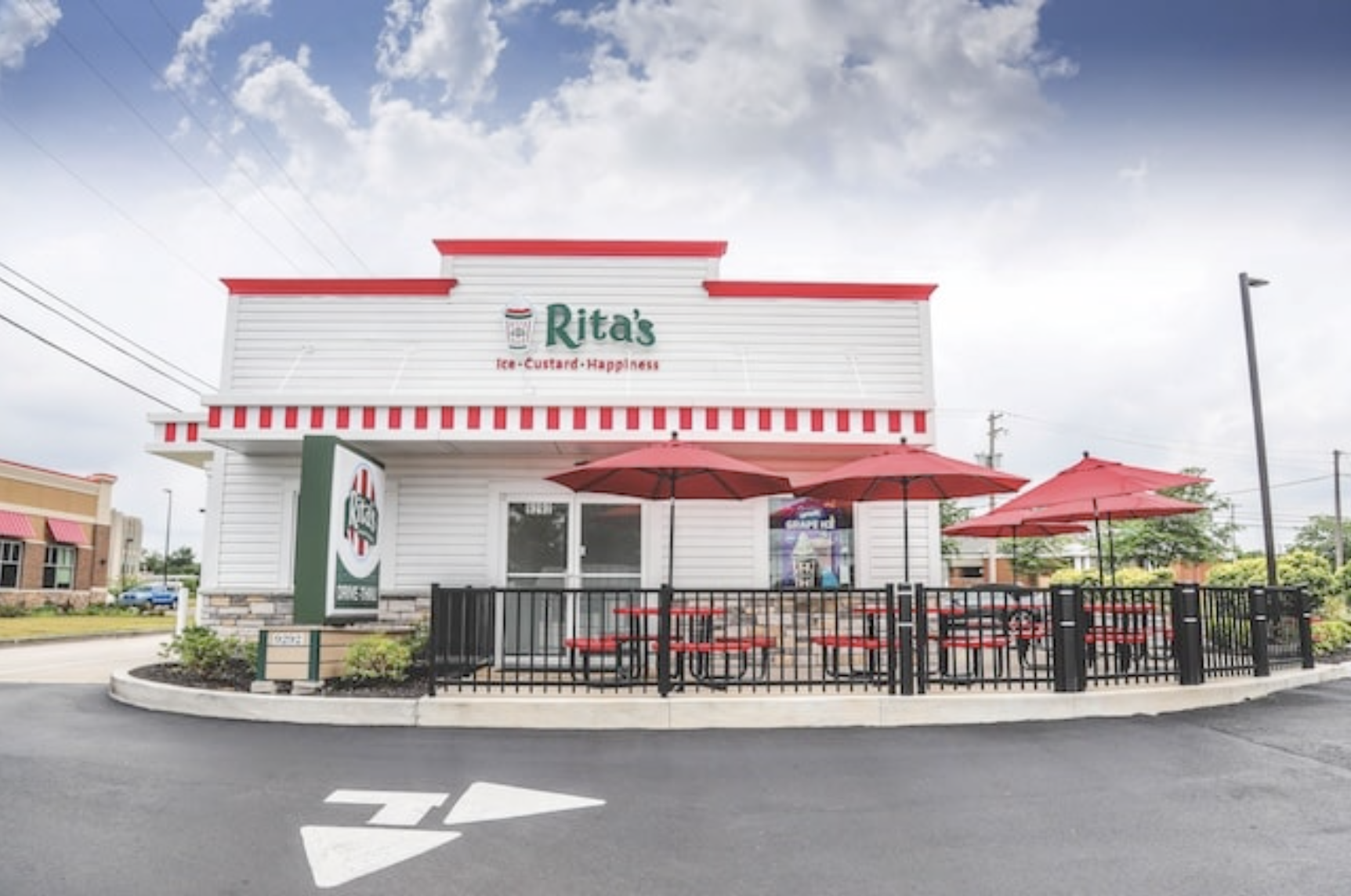
In today’s episode of the Restaurant Rockstars Podcast, I’m talking shop with Lawrence, a seasoned hospitality executive who’s helped grow one of the most recognizable dessert brands in the country – Rita’s Italian Ice & Frozen Custard – to more than 600 locations.
But don’t get this twisted, this conversation isn’t about franchising hype or copying someone else’s concept. It’s about restaurant fundamentals, smart decision-making, and the kind of thinking independent restaurant owners need right now to protect margins, simplify operations, and build a business that actually works for their life.
We dig into why simpler restaurant models are outperforming complex ones, how community connection drives repeat business, and what operators can learn from concepts built on low labor, low waste, and high guest satisfaction…no matter your format.
If you’re feeling squeezed by labor costs, overwhelmed by complexity, or stuck working in your restaurant instead of on it, this episode will get you thinking differently.
In this episode, we cover:
Why simplicity is becoming a competitive advantage in the restaurant business
How low-labor models protect margins without sacrificing guest experience
The power of community involvement as real restaurant marketing
What long-lasting restaurant brands get right from day one
How independent restaurant owners can apply big-brand thinking—without losing their soul
This is a must-listen for any restaurant owner who wants to run a more profitable, efficient, and enjoyable restaurant, not just survive another season.
One of the biggest takeaways from this conversation is that the future of the restaurant business isn’t about doing more, it’s about doing the right things better. As operators, we’re constantly being sold new systems, new tech, and new ideas, but profitability still comes down to fundamentals: labor efficiency, smart forecasting, product quality, and guest experience.
This episode challenges restaurant owners to step back, question long-held assumptions, and look at their business through a sharper lens. Even small shifts in how you think about staffing, service flow, or community engagement can create outsized results over time and that’s where real, sustainable restaurant success is built.
Connect with Our Guest:
https://www.instagram.com/ritasice/
https://www.facebook.com/RitasItalianIceCompany/
https://www.linkedin.com/company/rita’s-italian-ice/
Stay tuned, stay sharp, and keep rocking your restaurant.
Run a Smarter, More Profitable Restaurant.
Discover the proven systems & solutions that drive sales, train staff, and maximize your margins.
1:1 Coaching Option Now Available.
Join The Restaurant Academy now: https://restaurantrockstars.com/joinacademy
Connect with Restaurant Rockstars:
LinkedIn Roger: https://www.linkedin.com/in/roger-beaudoin-21590016
LinkedIn Restaurant Rockstars: https://www.linkedin.com/company/restaurant-rockstars
LinkedIn Roger Beaudoin: https://www.linkedin.com/in/roger-beaudoin/
Facebook: https://www.facebook.com/restaurantrockstars/
Instagram: https://www.instagram.com/restaurantrockstars
X: https://x.com/RestaurantRock1
Listen to the Restaurant Rockstars Podcast on Your Favorite Podcast Player:
iTunes - https://apple.co/2WaKyqV
Spotify - https://spoti.fi/3xGuOd0
Stitcher - https://bit.ly/3iFGAAb
Soundcloud - https://bit.ly/3lYBhho
-
Lawrence Brown. spent his career scaling some of the biggest names in hospitality, and now he’s helping to guide this iconic brand into its next phase of growth.
We’re gonna talk all about franchising, the simplicity of this brand, the soul of this brand, and why sometimes the most powerful business models are the ones that make people smile. Let’s get into it.
Smithfield Culinary is committed to offering your restaurant the perfect protein for every dish at every day. Part. They know that to meat lowers a great serving of their favorite Cut is more than just food. It’s an experience. Take Smithfield’s new, ready to eat, select bacon where chefs won’t leave a mess and your guests won’t leave a trace or their new ground.
Chori. That lets you serve up tasty, smoky heat. Turn to Smithfield for the broadest portfolio of pork, such as bacon, ham, sausage, and more. When you partner with Smithfield, you serve what you love and your guests will love what you serve. I taste Smithfield products at many restaurant shows, and they’re always delicious.
To order or more information, go to smithfield culinary.com/smithfield.
Lawrence, welcome to the show today. How are you?
Great. Thank you. How about yourself?
Fantastic. So glad to meet you. It’s great to talk about hospitality. I love talking shop with operators, and you have a particularly interesting story. Tell me about your hospitality backstory
Of course, well, actually I started a little bit prior. I would still say it has a twist of hospitality, but my background after college, I was in the Air Force a couple years, went back, got my master’s. I then spent a couple years working for a bank of a real estate company, always focusing on the hospitality restaurant sector, as well as in real estate.
About 15 years ago, I made the transition over. To what was originally Burger King eventually became restaurant brands. I started off as the CFO and Head of Real Estate for the North America Division, and then got the opportunity to run a couple divisions for the Burger King brand, as well as Tim Hortons in the US internationally before my final role heading up business development for the Americas.
I left to go over to do corporate development as a chief development officer, fat Tuesdays. And then I had the opportunity to do a similar role at Procter and Gamble’s franchising, arm tie cleaners, and tie laundromats. Didn’t, didn’t envision leaving. Really enjoyed the opportunity, but I got an amazing call from Linda Chadwick, our CEO of my boss, and got really excited last January to join Rita’s as a chief development officer.
Just. Being a part of such an iconic brand and really something that’s super interesting to me. And as I always say, I, you know, when I think about leading something up, I have to be able to see myself running it. And Rita’s is definitely a brand that, you know, maybe someday in a second life I could see myself as a franchisee.
Fantastic.
let’s, let’s dive in and let’s talk about Rita’s Now. It’s a 600 store brand. What about that concept lent that kind of growth?
I mean, what, what is it about Rita’s that makes it just so you know, explosive in growth and so popular for franchisees?
Well, first of all, I take a moment to celebrate. We just over the weekend, hit 600 stores and we still have five more openings through this year, so we’ll end up at 605 35.
So really I think the first thing is the product. The re’s Italian ice is like nothing other. It’s based on granita, which comes from southern Italy and the Al Mafi coast.
It was brought over by Italian immigrants and handed down in the case of ours, generation after generation. Bob Tumolo founded in 1984. He started out only with Italian ice, highest quality, fresh made daily with real fruit, nothing like it in a hot summer. Spring or fall, and then he eventually added high quality custard to it to make our signature product the gel.
Fantastic. That’s amazing. You know, the first question comes to mind because here in Maine, traditionally we see ice cream, but every now and again I see a frozen custard store or stand. What’s the difference between traditional ice cream and frozen custard?
Great question. And for those who haven’t had it, first of all, I say go out and try it, and I’d secondly say, try ours because I will put it up against. Any of the competitors out there. The key differentiation though is that it has a high quality basically butter fats as well as creams that go into it, as well as egg yolks that are part of the product.
So it makes it creamy and thick. Most importantly though, because it’s so thick and a hot summer, if you see, you think that those, you know, kids with a cone and it’s all melting down their hand when it comes to custard, it just holds itself because of that, those ingredients.
Well, you know, that’s a real competitive advantage, isn’t it? Because on Hot Days, everybody wants a product like that. But you’re right, ice cream is constantly melting unless you’re in a refrigerated space or air conditioned car or something. It’s like, yeah, and everyone’s got the napkins. Terrific. All right.
Well, that’s cool. Besides the product itself, which I’m hearing is outstanding, you are one of the country’s top performing and most influential restaurant brands, and you’ve been ranked pretty, pretty good on that list. What reasons, besides the, the actual product, anything else that stands out?
Well, I think our guests love it and what that translates to our franchisees love it as well. You know, having spent many years in QSR, you know, what we always focus on is it’s super simple. We basically sell two products, custard and ice. Those two products make everything there, which ultimately lends itself to a low cogs as well as a low labor model.
So it makes it fun and easy for our franchisees that’re running it. Our guests, when they come in, they’re just excited. You know, we always say. What makes us successful is in the suburb suburbs, rooftops families, and they’re coming to us for that moment to either celebrate or pick me up, but ultimately different than other interactions that you might have with your QSR.
Like, I want my coffee quick, I want my burger quick. No, it’s, it’s a moment of just sit down and unwind and we bring that and celebrate that together with families and kids.
So it’s 40 years old. Tell us a little bit about the history. It goes back what, 1984 or something.
Correct. So Bob Tulo, Philadelphia firefighter you know.
Okay. Yeah.
Incredible individual. He basically said, look, I, you know, work really hard, but I have some down days I’d love to figure out and, and work and build a secondary business. Well, essentially his, his mother, grandmother, family had been making this incredible Italian ice and the idea came to him and said, of course, you know, I wanna start selling it.
So he started selling it actually out of the side of his house. You go to the first and original store in Bensalem, pa, you could still see store number one and it’s, we say the side of a house. You literally can see the house here and right. Connect to it is the original Ritas shop. He was so successful he eventually expanded to a couple stores and then in the late eighties people came and said, I’d love to do a Ritas as well.
And he started franchising. And the rest is history.
You mentioned Granita and the whole philosophy, not the philosophy, but the recipe
Yes.
Is that from his family? I mean, was it passed down generationally and it brought, it came over from Italy and here we go. We got an authentic product.
Exactly. That’s what’s so amazing.
Oh, super. I’m totally getting it. So we talked about expansion and we started from one store.
What was the growth rate going back to 84. And did it immediately take off and he had company stores or the family had company stores before it became a franchise?
Yes, he initially had you know, he grew, you know, store by store.
Yeah.
Once he got to just under 10 stores, he got enough, you know, people who were interested and he started franchising it. Very much focused. And our base today is in the Mid-Atlantic, around the, the Philadelphia area. And we’ve always believed in, you know, growing the right way.
So not just trying to hit a number to the number. So we’ve methodically, you know, historically you were growing, you know, 10 to 20 units a year. Most recently we’ve been growing above 30 units a year.
That’s definitely a hometown product that’s expanded outside of Philadelphia, but if you mention Rita’s anywhere in Philadelphia, everybody knows what you’re talking about and then far beyond it as well. I.
Yes.
How do you maintain the soul of the brand and the consistency and you grow and you don’t fix what isn’t broken, but it’s expanding rapidly in 600 stores.
I mean, that’s quite a chain, know? How do you maintain that initial soul? I mean, obviously you vet your franchisees very carefully and you know, and, and you train them in, you know, the store operations and everything. But let’s talk about the soul. What is the soul of Ritas?
So the soul of Ritas is all about families and communities. Where we see ourselves successful, as I said, as I mentioned, was all about being in highly densified suburbia. You know, we look for average households for higher. We wanna be involved. So how do we maintain? We teach, we support, we help, we do onsite training before for a week.
Everyone’s required to come as well as then train at a local store and go out and support for, for grand opening. But we really see the most successful shops are our franchisees and we call our store shops in. Community. So being involved in religious institutions, schools, as well as sporting events, and that’s such a key connection with Ritas and putting that together just creates and reverberates this soul.
But I think the key piece is, is being involved, supportive, and having our onsite training at our headquarters and then at their shop.
And the community aspect is certainly a give back, but it’s certainly great marketing as well, just to keep the brand out there and to keep people, you know, top of mind.
Yes it is. I mean, we always say once you get someone to try it, right? We have a program called Taste A Ritas. What’s beautiful again is our ice has a very attractive margin, so we get it into someone’s mouth, they try it, they get hooked. So it’s really easy, you know, sampling it at sports and other community events to, to get people, you know, loving the product.
is that part of the marketing strategy where someone, you know, gets introduced to the brand by a tasting somewhere in the shops themselves or at events?
Yes. So we do a bunch of that, especially outside of, in our new markets or emerging markets. We’ll have people go out with gots, which are basically mobile insulated items to go out to different events, PTA sport events, to, to try it. The other thing about our product that’s key is that it essentially has a shelf life.
Maximum of 36 hours because it degrades. It’s not a food safety issue, it’s just the quality of it starts separating. But what we always do when we, when we have this product and we think about it and we say, okay, if we produce a little bit too much, we’ll go out and we’ll do happiness drops. So we’ll drop that off to your local fire department.
Obviously the historical connection Police,
that’s great. First responders, and that’s a great give back as well. Very
Yes.
let’s talk about relevance so many restaurants that were 10, 20, 30, 50 years old and their customers aged out. Would you say that this is an ageless product? Little kids, older people, like everybody loves Rita’s and that is one of the reasons why it’s so popular.
Yeah, so I think the thing is we have something for everyone, right? Our, we always say, you know, our menu ranges from your, we have sugar free products. We actually have some shops that serve kosher products as well. All the way to your, you know, highly rich delectable concretes, which is custard with add-ins, and we’re constantly doing co-promotion there with whether it be Oreos, Reese’s.
This past year we helped Skittles launch their popped product, all of these things in co-brand to just continue to make ourselves relevant and exciting.
I did see custard cookies on your website. One was an Oreo and I think the other was a chocolate chip. And then you’re also doing pints to go and all these things. So you’re retailing as well as selling things over the counter, which is another profit center. That’s terrific.
the other thing that’s shows how much we focus on franchising, profitability and cogs. The pints actually came from the idea that machines need to be broken down every seven days. We have custard in there. What’s the first, when you take, when you take the product out, you fill the pints and you put ’em in the freezer and they have another 30 days.
So it’s just a way that we can let our guests take stuff home, but also enhance profitability for franchisees.
you mentioned Granita as the base of the product, but I thought I also saw some type of smoothie product that looked really delicious and it’s some of the in ingredients with, with fruit in it. Like what’s, what’s the difference between I’ll get an Italian ice with the fruit in it, or I’ll get a you know, it looked to me like a smoothie.
Explain your menu.
Yep. So great question. So again, those two products, custard and ice, make everything. So essentially we have a blendini and a misto, right? So essentially what they do is they take Italian ice and custard at different ratios and create a drink that you can then. Take to go, which is great. If you’re driving, you’re going through the drive through, or you know, a lot of people, you know, just love to consume in the drink form nowadays.
So it, it just brings those two products together depending on which one and different ratios.
And you also have, if we’re talking about the custard product, I found this interesting. I saw what appeared to be like the soft swirl product, but, and then you also had the hard ice cream product, or it looks like hand scooped product. Is it, does it taste the same? It’s just a different consistency.
Yep. So in some select stores we do offer hand scoop product. There’s very select markets on the west coast that it’s very big. So we have it as an option. All the only difference of it is, is that it comes outta the machine and the temperature is brought. It’s mixed with some add-ins and the temperature’s brought down a little bit cooler.
So it’s a little bit harder than it would come outta the machine.
I know you’re repurposing older spaces that used to be banks and dry cleaners and coffee shops, which I think is sort of a hook also. Some of these spaces must look really cool. Is there a typical square footage right now because you got low labor?
We talked, there’s low cogs as well, but it’s a really efficient model. us about the different locations.
Yep. So as far as size as well, our ideal footprint is anywhere from 800 to 1200 square feet. That being said, we’ve gone as small as 500 square feet and we’ve gone up to 1500 square feet. In an overall space, when you get over that, essentially a lot of times what we do is either the landlord will.
Reuse the space for something else, or the franchisee becomes the landlord and rents out the other concept. But essentially we have that flexibility to flex up and down within the space, and most importantly, go what we call adaptive reuse so that we can really focus on franchisee investment that will ultimately help them have a more attractive long-term business.
How much do you get involved in the franchise part of this? I mean, you’re the chief development officer, so I’m curious what your role is, but do you also get involved working with the franchisees or that’s a whole separate person?
Yes. So I essentially, as, as the chief development officer, I’m, my, myself, or my team are with. Franchisees the first, second, they’re a prospect. They come in and have that conversation with us. So someone from my team myself is walking them through, actually this morning we had to meet the team day. So part of the process, that’s the last step.
I’m part of that. Once they officially sign on, I also lead up the as the CDO, the real estate and construction team. So they immediately get handed over to the real estate team, which helps ’em find a site. They find a site. The construction and design team will work with them to make sure it makes sense, help them put together a permit set, go through permitting, and ultimately open it.
Myself and the team will eventually, at that point, hand it over to operations to get the store fired up and ready to go.
So a system for sure. Can you describe the training process when you bring a new franchisee and you said the whole team comes in, how long is the training? What do they learn? And obviously they’re indoctrinated in the history of the brand and then the product, and then making the product fresh on site, or is it delivered, say commissary style?
Tell me about that.
Yes. So all product, I wanna say all 90% of our stores because we do have some satellite options. But 90% of our stores will make the product on site. So it’ll have the ice machines and the custard machines. In our headquarters in Trevos pa, we actually have we have a full test kitchen as well as a mock front of house shop.
And then in the back we have a classroom. So. The at that point, you’ve already signed up to be a franchisee. We set up the training to occur, you know, one to two months before you actually open up your shop. You’ll come in, you’ll spend a week, Monday to Friday. There’s a test at the end. You have to pass it.
You could take it multiple times, but yes, you have to pass the test. And it is all about number one, you’re gonna make the product. Number two, you’re gonna learn about food safety. Number three, you’re gonna learn about. How you can manage teams and ultimately be successful. So we’re working with you on all aspects of the business.
We’re making the product to food safety, to best practices in ways that you can be successful from labor, scheduling to operating hours, to marketing. All of those pieces will be part of the training.
I don’t want you to give away any secrets, but is it a relatively simple process and, and the consistency is easy to stay on par making the product itself.
Yes, it is. I mean, because of the, you know, one, the product is simple and the technology that we have. So, you know, in the back of house we have a KDS kitchen display system. It has all the recipes. So as you’re making, you can pull up the recipe card and boom, you can see it, you make it, you pour it into the machine essentially.
It will based on the type of flavor of ice, it has to come out in certain consistency. But again, you learn that and it’s pretty simple at that point to then make it and then get it ready to serve to the guests.
You mentioned there’s 36 hours roughly shelf life. Are they making batches, say the night before? Early in the morning, and how much do they make in advance to serve in a typical day and what’s leftover before they make a new batch?
So what we, what we have is we have four different sizes of batches. You can make a quarter, half, three quarters, or full batch. That’s also something you learn on training to forecast for demand. Generally what you’ll do is say it’s Monday, you’ll make batches for Monday. That will last all the way through Tuesday night.
And your forecasting demand based on projected sales and all of those pieces. But again, you can make smaller or large, depending on what the actual volume would be.
How much labor’s required in a store? Say I’m a new franchisee and I want to sort of be the GM of my own store or my own shop, I should say. How many people are required in a typical
store?
Hey, rock stars. If you’re running a multi-location restaurant or a franchise, you already know the problem. You’ve got data everywhere, tools everywhere, and still way too many decisions landing on your plate. I like to keep on top of new technology. That’s why I’ve been paying attention to Atlas. No.
Atlas Nova is like having an A-I-C-M-O and an A-I-C-O-O built into one platform. It connects your POS and marketing data tells you exactly what matters, and then actually helps execute campaigns insights, next best actions, all without adding headcount, less guessing, less busy work. Better results. If you want your business to run smarter, not harder, check out Atlas Nova at www.atlasnova.ai/rockstar and get 20% off using the code Rock Stars 20.
That’s rock Stars with a capital R 20.
generally we have rosters around 15. Also a little unique for us. We call ’em our treat team members. We generally have 15 treat team members. Now they don’t work at all at the same time. That’s another beautiful thing of us. We’re generally about one third, which you’d see in a standard QSR, you know, in slow periods time you can work with one employee.
And as you kind of ramp up to more, you know, busy periods in time, you know, and if you have a drive-through, it could flex up to five potential employees at any period in time.
Drive-throughs are, well, the typical drive-through, and I’m not talking about a McDonald’s, but that’s a typical drive-through that people or a Starbucks type thing. But now we’ve got standalone drive-throughs that are these small locations where people pull up, place the order on one side, drive around.
Is that kind of what it is? Similar to say, coffee shops is a really popular coffee chain in the Northeast here called Aroma Joe’s. It’s off the charts and my kids are addicted to it, and that’s simply the model. There’s a small standalone building and there’s a new one popping up every minute. Is that the new model forward?
These are gonna be a lot of standalone, say drive-throughs.
Ultimately going back to the adaptive reuse, we do have a prototype, as you mentioned, like Aroma Joe’s that has a freestanding drive through that we can do, if we find a nice little pad site like the coffee shops, we can go into extremely small acreage spaces, you know? Downwards of, you know, 0.3 to 0.4 of an acre.
But again, we also try to look for spaces that’s second generation. So whether it’s an end cap, it was a former dry cleaner, it was a former coffee shop. It could have been an end cap bank or a freestanding bank or any of those locations as well. Our first preference is always existing because of time and costs, but yes, we do have prototypes to do down, down.
And there’s certain locations that are proven to do better than others. Is it shopping malls? Is it downtown areas? Lots. Parking is important. I mean, what are the criteria? And every region is different, of course, but there, there’s a magic formula to this. I’m sure.
Yes, the first start is just, you know, population density of families. After you figure out that we’d like to be near places where families are gonna visit you posts. So if you’re nearby a school, if you’re nearby a religious institution, if you’re nearby a bunch of sporting fields, that’s a place where we see a huge amount of success.
And we generally try a look and see, okay, how can we be part of that, you know, moment of, okay, you just finished your soccer game, you know, stop by for half hour to grab a treat and then go home.
Brings me back to being a kid when the ding-dong cart would come by, you know, or the ice cream truck. Is there any plan to do that? Or can franchisees get a truck also and take it to events?
Yes. So we have a mobile program. You have to have a shop because the truck doesn’t actually produce anything. The ice needs to be produced from a machine. And similarly, our, the custard as well from a machine different than a lot of other shaved ice places. Our product starts as a liquid form and then forms up to the actual semi solid state that creates its fluffiness and its flavor.
But if you have your standard shop. After a year, and you’ve proven yourself in operations, we allow you to acquire either a trailer or a truck that you can take to different events.
I’m sure that’s very popular too, and people, well again, it’s marketing as well. It’s taking the product to the people and they’re familiar with their local shop, but it wouldn’t it be great when you’re at a sporting event and you walk out of a football game and there’s the Rita’s truck, right? It’s like it’s impulse.
it’s opportunity to get it into their mouth and have them try it.
Right on. Let’s talk about the individual shops. We talked about the different repurpose spaces, which is unique unto itself on the outside. Are all the shops on the inside consistent, or are they unique in any way? Do they pay homage to the local community? Like what are the parameters around decorating your store?
First, a unique thing about us is, I don’t wanna say us, but similarly, we prefer a walk up shops instead of walk-ins.
Okay.
to say that we won’t do a walk-in, but there’s a couple of reasons why we prefer that. The first thing is, is that you walk by and you see a line, your kids see a line, it creates fomo.
Oh yeah, I want to go grab something. The second piece is that from just a cost perspective, it’s less space to build out. It’s less space to condition. Many times you don’t have to offer a bathroom to the guest. So all of those pieces allow you to be a lot more cost centric as well as if you have it a walk in.
It makes it a little bit harder to run with one employee versus a walk up from safety perspective.
I think we already talked about the efficiencies, but the investment must be much less as well than say a
Correct.
obviously it’s clearly much less than a Burger King or a McDonald’s or even a Pizza Hut or you
Yes.
those franchises. So a lot of benefits here for sure then, and it’s easy, you know, very little barriers to entry.
Now what about the qualifications of people coming in? Are you looking for experienced operators who have run other businesses before? Do you train them in the business side of things?
Yeah. So I think the first and most important thing is that the people come in, they love our product, and they’re passionate, right? Nothing’s more important. I always say, you know, people ask me, what’s the most important thing when you’re looking at a franchise? Say you need to identify the brand and love the product because you’re essentially getting married to it.
And you’re gonna be doing it, you know, our agreements are 10 years and hopefully you’re up for another 10, for 20 and, and et cetera. So you need to love the product. You need to be outgoing, be able to manage teams and manage people. And then additionally, you know, do you have to, okay, I was a prior manager owner here.
Not necessarily. If you have transferrable skills, whether it be from, you know, business world or you know, something else, that could be great. And then lastly, just have the capital to be able to invest. We generally look for a minimum cash of, liquid of 150 and 400,000 net worth because there is an investment in it.
Talk about leverage company-wide and buying power and ingredients and all those types of things. you mentioned the low cogs, is it pretty much standard across the country based on, you know, these large relationships where you’re buying huge quantities for all the stores and you have those relationships in place?
Yes. So we essentially, we, we help support and we run the supply chain. So all of the mixes sugars, custard, all of that comes through us and third party supply chain companies. We work with, you know, Balford JMZ bunzle that ultimately we buy as a system and then supply out to our franchisees.
Have there been any labor challenges? I mean a lot of restaurants are struggling with labor, not only getting good people, but you know, reliable people and not being short staffed. Obviously you’ve got a lower labor model, but are stores finding, what are the challenges they’re finding in today’s restaurant economy?
What’s actually really unique and exciting is not only that we have low labor, but our treat team members are generally high school and college kids, and we’re a preferred place to work. And the reason is because at the end of the day, and having worked in the back of house and a burger place, it’s hot.
You have a bunch of buttons, you have hundreds of sandwiches to make, fryer, broiler, all of these things when you go into the back of house of an ice cream shop, everything. Everything’s ready. You get to wear t-shirt and shorts, by the way. You know we don’t mandate salary, but you know, generally our, our treat team members with tips ’cause they can get tips or making up to $15 an hour or they’re seeing their friends.
It’s just, it’s an easy place. And what we see a lot of times is actually the reverse is happening. Where you talk about, you know, in a lot of you know, QSRs, the turnover. When we in the north, some of our shops are close to the season, it gives us an opportunity for the, the man, the owners, and the managers base to re out to staff and invite back the people that they would like to work there the next year.
That was my next question. There is some seasonality to the product, of course, especially in the north, and you’re looking at more Sunbelt states for new growth opportunities. Of course. What’s a typical downtime for a northern store? Like what’s the season really, obviously besides summer, does it extend into fall and it’s still a popular product,
Well, that’s one of the reasons why the drive-thru is so amazing because it allows you to extend the season. And as you probably can attest to going to the coffee shop with your kids, is that half the time people are going in there in their December and they’re getting a frozen drink, right? But if you have to go outside to walk up window, you might be less inclined versus going through a drive-thru.
So what we’ve seen is shops that are, you know, call in Cleveland, Ohio, Michigan, that drive throughs, they’re open 11 to potentially 12 months of the year. Now the reverses, the standard shops, you know, they don’t have that. They’ll close generally, you know, sometime in late October, and then they’ll reopen for our, what we call our Super Bowl, which is the first day of spring.
Next year it’ll be March 20th, where every single shop opens. We give out, we give out free ice, and people line up for hours to get that, and it just reminds ’em, Hey, Rita’s is open again.
Some of the stores are using third party delivery platforms in their stores. Is there any problems with traveling? Well, the product itself, does it need to get to the final destination? I mean, we already talked about the custard doesn’t melt like standard ice cream, but is the, the product travel well?
So it’s a great question actually. When we were fortunate enough, we launched it just pre COVID and one of the biggest doubters that in question our CEO, she was, Linda was saying, I don’t know, this is not gonna travel well, right? It’s gonna melt. We have a frozen product. Having worked in other brands, you know, sandwiches and fries generally don’t travel Great.
Pizza fried chicken travels a little bit better, but we put together, we put together a science of it that actually it travels extremely well because as soon as that third party order comes in, we make it and we put it into a freezer that’s a closer temperature, so it brings it down. Then the third party delivery company comes, they put it into insulated vessel and they deliver it there.
So it arrives almost just as good as if you got it within the shop.
Fantastic. Excellent. What’s the future?
Yep. So this year we, you know, by the end of this week, we should be at 35 shops. Our goal is to continue to ramp that forward to 45, 50 plus shops a year. We currently have 65 shops in the pipeline for next year. So super excited about that. You know, the team has done a lot of work to find new franchisees and work with existing to get them in the pipeline, start finding shops.
I think the other thing is we’re just gonna see a lot more of this adaptive reuse. I mean, I’m not saying anything new or surprising throughout the media. There’s been a lot of big brands that have announced closures this year. I think basically. Post COVID, a lot of people overbuilt the market.
Retail was all time low vacancies, a lot of different chapter elevens, sevens, et cetera. I think that’s just gonna present more opportunities for us to be smart and selective and ultimately find great sites for our franchisees to continue to growth. And as you said earlier, looking into the Southeast and for further into the Midwest as well.
Sounds like a really fun company to work for too, and it looks like you’re having fun. Is there a typical day as the chief development officer, or is every day different?
I mean, I think the only, I usually travel every other week, so usually I’m either, you know, on the road meeting with franchisees or, you know, prospective franchisees looking at real estate, all of that. But generally, you know, my day is spent, half of the time putting together, you know, I would say probably about quarter to half the time working with my teams, working on plans, working on execution and the other time, you know, working externally on trying to ultimately fulfill our goals, whether it be with partners or new franchisees.
Fantastic. Well, what a great concept I’ve really enjoyed talking to and God, I gotta try this product. What states aren’t you in right now at 600 stores?
Well, I think the, I mean, right now we’re not, we’re not in the Pacific Northwest in some of the, you know, central North area, I don’t think. I think the closest shop to you is in Massachusetts,
I travel quite a bit myself, so I’m sure I’m gonna run across the a Ritas. I’m not gonna look for it.
Yeah. Well that would be amazing and I would love, if you ever get the opportunity, you’re in the Philadelphia area to be our guest and come in for a couple hours, try the product and walk around and see the magic.
City of brotherly love. Right.
Yes.
Fantastic. Lawrence, it’s been a pleasure having you as a guest on the show.
Thank you, Roger. Absolute pleasure.
That was the restaurant Rock Stars podcast. So glad you’re with us. Thanks for tuning in. Thanks to our sponsors this week. Can’t wait to see you in the next episode. Stay tuned. Stay well, and I will see you then.
Hey, it’s Roger here. Listen, running a restaurant is tough, but making it wildly profitable doesn’t have to be. If you’re tired of struggling with cash flow, low margins. Staff that don’t sell are just feeling overwhelmed. You’ve gotta check out my restaurant profit. Fast track. It’s inside the Restaurant Academy, and I walk you through exactly how to master your numbers, train a rockstar team, and scale with real profit centers that work.
Join now@restaurantrockstars.com slash join academy and unlimited staff accounts are included. Let’s start making your restaurant super profitable.
Thanks for listening to the Restaurant Rock Stars Podcast. For lots of great resources, head over to restaurant rock stars.com. See you next time. I.